 Kwizi: Oli dayinoso ki?
 Olutalo lwa dayinoso
 Empaka z'emisinde gya dayinoso
 Emizannyo emitono egya dayinoso
 Alubaamu ya sitika
 Enkalala za dayinoso eza TOP
 Mpa ekyewuunyisa!
Miragaia
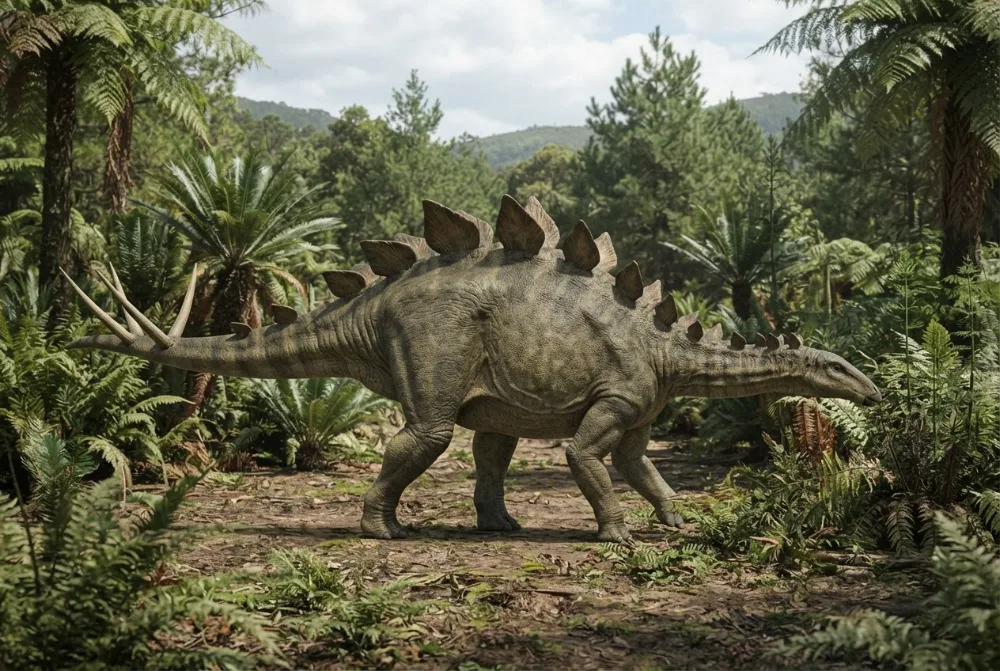
Miragaia was a stegosaur, a plant-eating dinosaur with plates and spines on its back. It had an unusually long neck, much longer than most other stegosaurs. This gentle giant lived in what is now Portugal and the United States during the Late Jurassic period.12
Yabeerawo ddi?
Yali munene atya?
Yali muwanvu kwenkana wa?
Yali mugulumivu kwenkana wa?
kuteebereza
 obuwanvu ng'embwa 6, ennyindo ku mukira🍌obuwanvu ng'amenvu 36 nga gaddiriŋŋana🏃yandidduse mita 100 mu sikonda 24 (omuntu asinga embiro yeetaaga 9.6)
Miragaia yali munene atya bw'ogeraageranya ku GGWE?
Kubala kwokka mu browser yo. Tewali kiterekebwa wadde okusindikibwa wonna.
Yali wa mbiro kwenkana wa?


Ebyewuunyisa
Miragaia had at least 17 neck vertebrae, giving it a very long neck for a stegosaur. Most stegosaurs had fewer than 13.1
The name Miragaia comes from the village where it was found, Miragaia in Portugal, and also means 'wonderful goddess of the Earth'.1
Miragaia belonged to a group called Dacentrurinae, which includes its close relative Dacentrurus. Scientists used to think many stegosaur fossils from Portugal and Spain were Dacentrurus, but now they know some are Miragaia.1
A nearly complete skeleton of Miragaia was discovered in 1959 in Atouguia da Baleia, Peniche, Portugal, but it was not described until many years later.1
Miragaia shared features with a stegosaur from Wyoming called Alcovasaurus longispinus, suggesting that a land bridge once connected North America and Iberia (Portugal and Spain).1
The plates on Miragaia's back were probably used for display, and the spines on its tail (called a thagomizer) could have been a weapon against predators.1
Omumenyi w'enfumo
Enfumo: Miragaia is sometimes thought to be a species of Dacentrurus.
Amazima: Scientists now agree that Miragaia is a separate, valid genus, different from Dacentrurus in many ways, such as its longer neck and different vertebrae.1
Eri abakugu mu dayinoso
- Erinnya lya ssaayansi
- Miragaia
- Yatuumibwa
- Mateus et al. 20093
- Ekibinja
- Dayinoso ez'ebipande
- Ekika / ekibinja
- Stegosauridae3
- Engabanya
- Ornithischia > Stegosauria > Thyreophora3
- Emyaka gy'enjazi
- emyaka obukadde 155 okutuuka ku 121 (Kimmeridgian / Barremian)3
- Ensengeka z'enjazi
- Morrison3
- Ensi
- Amerika3
- Ebisigalira ebyazuulibwa
- 31 mu The Paleobiology Database3
- Okuzuulibwa
- Miragaia was named in 2009 by Octávio Mateus and colleagues, based on a partial skeleton found near the village of Miragaia in the Lourinhã Formation of Portugal. The holotype specimen includes much of the front half of the skeleton.1
- Kikyakubaganyizibwako ebirowoozo
- Scientists still debate exactly how many species of Miragaia existed, and whether some fossils from North America belong to this genus or to its close relative Dacentrurus.2
Ebituufu gye biva
- Dacentrurine stegosaurs (Dinosauria): A new specimen of Miragaia longicollum from the Late Jurassic of Portugal resolves taxonomical validity and shows the occurrence of the clade in North America (pmc.ncbi.nlm.nih.gov)
- Dacentrurine Stegosaurs in North America: New Occurrences from the Upper Jurassic of USA (Morrison Formation) (dinodata.de)
- Miragaia in The Paleobiology Database (CC BY 4.0): emyaka, ebifo, ensengeka z'enjazi, engabanya.
Buli kituufu ku lupapula luno kirina ennamba eraga ensibuko yaakyo. Bwe tuba nga tukoze ensobi, tusonyiwe, ffe tuli bawagizi ba dayinoso, so si magazini ya ssaayansi. Tubuulire ku [email protected] tujja kugitereeza.
 Rex alumwa enjala! Dino Wiki pulojekiti ya taata eri mutabani we ayagala ennyo dayinoso, ya bwereere, tewali bulango era tewali bikulondoola. Abakulu basobola okuwa Rex akantu ak'okulya okuyamba okugikuuma ku mutimbagano.Liisa Rex
 Stegosaurus
 Diracodon
 Hypsirophus
 Dacentrurus
 Kentrosaurus
 Hesperosaurus
 Iguanodon
 Archaeopteryx
 Giganotosaurus
 Microraptor
 Deinonychus
 Baryonyx