 Kwizi: Oli dayinoso ki?
 Olutalo lwa dayinoso
 Empaka z'emisinde gya dayinoso
 Emizannyo emitono egya dayinoso
 Alubaamu ya sitika
 Enkalala za dayinoso eza TOP
 Mpa ekyewuunyisa!
Kentrosaurus
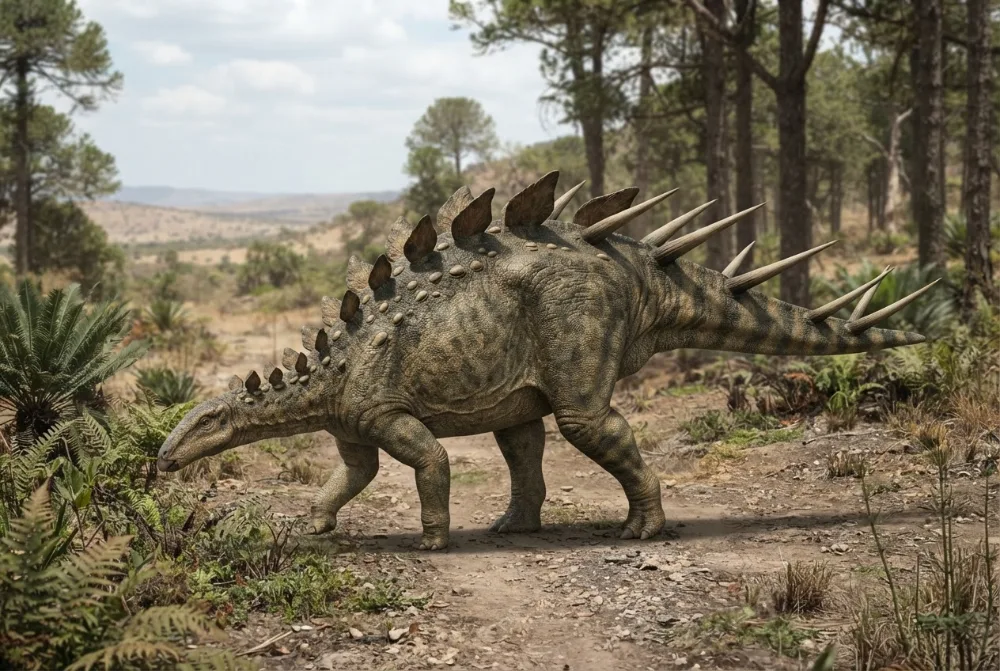
Kentrosaurus was a plated dinosaur that lived in what is now Tanzania, Africa, about 152 million years ago. It had a row of small plates on its neck and back that turned into long, sharp spikes on its tail. It used those tail spikes to fight off hungry meat-eaters!1
Yabeerawo ddi?
Yali munene atya?
Yali muwanvu kwenkana wa?
Yali mugulumivu kwenkana wa?
Yali muzito kwenkana wa?

 obuwanvu ng'embwa 5, ennyindo ku mukira🍌obuwanvu ng'amenvu 28 nga gaddiriŋŋanaobuzito ng'obw'embwa 80🍉obuzito ng'obwa wotamerooni 320🧸obuzito ng'obw'abaana 84 ab'omu nnasale🎒obuzito ng'obw'abaana b'essomero 50🐻❄️obuzito ng'obwa ddubu enjeru 4🏃yandidduse mita 100 mu sikonda 18 (omuntu asinga embiro yeetaaga 9.6)
Kentrosaurus yali munene atya bw'ogeraageranya ku GGWE?
Kubala kwokka mu browser yo. Tewali kiterekebwa wadde okusindikibwa wonna.
Yali wa mbiro kwenkana wa?


Ebyewuunyisa
Kentrosaurus had a long spike on each shoulder, in addition to the spikes on its tail.1
The name Kentrosaurus was almost changed because it sounded like Centrosaurus, a horned dinosaur. But the spelling is different, so Kentrosaurus stayed.1
Scientists think there were two types of Kentrosaurus, one with stouter thigh bones and one with slimmer ones. This might mean males and females looked different.1
Over 1200 bones of Kentrosaurus were found in Tanzania by German expeditions between 1909 and 1912.1
Kentrosaurus lived alongside giant long-necked sauropods like Giraffatitan and Tornieria.1
The plates on its neck and back were probably covered in horn, like a cow's horn.1
Ebibuuzo ebisinga okubuuzibwa ku Kentrosaurus
?How big was Kentrosaurus?
Kentrosaurus was about 4 to 5 metres (13 to 16 feet) long and weighed roughly 700 to 1,600 kilograms (1,500 to 3,500 pounds). Some specimens suggest even larger individuals existed.13
?What did Kentrosaurus eat?
Kentrosaurus was a herbivore, meaning it ate plants. It used its toothless beak to bite off leaves and other plant material, which it swallowed in large chunks without much chewing.14
?Did Kentrosaurus have spikes?
Yes, Kentrosaurus had a double row of spikes along its back, from its mid-section to the tip of its tail, plus a long spike on each shoulder. These spikes were likely used for defense.14
?Could Kentrosaurus swim?
There is no direct evidence that Kentrosaurus could swim. It was a land-dwelling dinosaur that walked on four legs, and its body was not specially adapted for swimming.1
?Was Kentrosaurus bigger than a T. rex?
No, Kentrosaurus was much smaller than Tyrannosaurus rex. Kentrosaurus was about 4 to 5 metres long, while T. rex could be over 12 metres long; they lived in different times and places.1
?Did Kentrosaurus have feathers?
No, Kentrosaurus did not have feathers. It had bony plates and spikes covered in horn, and its skin was likely scaly, like other stegosaurs.1
?When did Kentrosaurus live?
Kentrosaurus lived during the Late Jurassic period, about 152 million years ago, in what is now Tanzania, Africa.1
?Why did Kentrosaurus have plates?
The plates on Kentrosaurus's neck and back might have been for temperature regulation, since they contained blood vessels, or for protection and display. No one knows for sure.4
Omumenyi w'enfumo
Enfumo: Some people think Kentrosaurus had all its spikes and plates in a single row down its back.
Amazima: Scientists think Kentrosaurus had two rows of plates and spikes, one on each side of its back.1
Eri abakugu mu dayinoso
- Erinnya lya ssaayansi
- Kentrosaurus
- Yatuumibwa
- Hennig 19155
- Ekibinja
- Dayinoso ez'ebipande
- Ekika / ekibinja
- Stegosauridae5
- Engabanya
- Ornithischia > Stegosauria > Thyreophora5
- Emyaka gy'enjazi
- emyaka obukadde 162 okutuuka ku 143 (Oxfordian / Tithonian)5
- Ensengeka z'enjazi
- Tendaguru5
- Ensi
- Tanzaniya5
- Ebisigalira ebyazuulibwa
- 27 mu The Paleobiology Database5
- Era emanyiddwa nga
- Doryphorosaurus, Kentrurosaurus (amannya ag'edda kati gabalibwa ng'ekisolo kye kimu)5
- Okuzuulibwa
- German paleontologist Edwin Hennig named Kentrosaurus in 1915. The first fossils were found by the German Tendaguru Expedition in 1909.15
- Kikyakubaganyizibwako ebirowoozo
- Scientists are not sure exactly where each plate and spike was placed on the body, because most were found scattered.1
Ebituufu gye biva
- Kentrosaurus (en.wikipedia.org)
- Kentrosaurus | Natural History Museum (nhm.ac.uk)
- Kentrosaurus | dinosaur genus | Britannica (britannica.com)
- Kentrosaurus - Dinosaur - Enchanted Learning Software (enchantedlearning.com)
- Kentrosaurus in The Paleobiology Database (CC BY 4.0): emyaka, ebifo, ensengeka z'enjazi, engabanya.
Buli kituufu ku lupapula luno kirina ennamba eraga ensibuko yaakyo. Bwe tuba nga tukoze ensobi, tusonyiwe, ffe tuli bawagizi ba dayinoso, so si magazini ya ssaayansi. Tubuulire ku [email protected] tujja kugitereeza.
 Rex alumwa enjala! Dino Wiki pulojekiti ya taata eri mutabani we ayagala ennyo dayinoso, ya bwereere, tewali bulango era tewali bikulondoola. Abakulu basobola okuwa Rex akantu ak'okulya okuyamba okugikuuma ku mutimbagano.Liisa Rex
 Stegosaurus
 Diracodon
 Hypsirophus
 Dacentrurus
 Miragaia
 Hesperosaurus
 Brachiosaurus
 Diplodocus
 Allosaurus
 Brontosaurus
 Compsognathus
 Camarasaurus