 Kwizi: Oli dayinoso ki?
 Olutalo lwa dayinoso
 Empaka z'emisinde gya dayinoso
 Emizannyo emitono egya dayinoso
 Alubaamu ya sitika
 Enkalala za dayinoso eza TOP
 Mpa ekyewuunyisa!
Yabeerawo ddi?

Yali munene atya?
Yali muwanvu kwenkana wa?
Yali mugulumivu kwenkana wa?
kuteebereza
Yali muzito kwenkana wa?

 obuwanvu ng'embwa 8, ennyindo ku mukira🍌obuwanvu ng'amenvu 44 nga gaddiriŋŋanaobuzito ng'obw'embwa 80🍉obuzito ng'obwa wotamerooni 320🧸obuzito ng'obw'abaana 84 ab'omu nnasale🎒obuzito ng'obw'abaana b'essomero 50🐻❄️obuzito ng'obwa ddubu enjeru 4🏃yandidduse mita 100 mu sikonda 12 (omuntu asinga embiro yeetaaga 9.6)
Mussaurus yali munene atya bw'ogeraageranya ku GGWE?
Kubala kwokka mu browser yo. Tewali kiterekebwa wadde okusindikibwa wonna.
Yali wa mbiro kwenkana wa?


Ebyewuunyisa
As it grew, Mussaurus changed from walking on all fours to walking on two legs.1
Scientists found over 100 eggs and 80 skeletons of Mussaurus together, showing they lived in herds.1
This dinosaur lived about 193 million years ago, during the Early Jurassic period.2
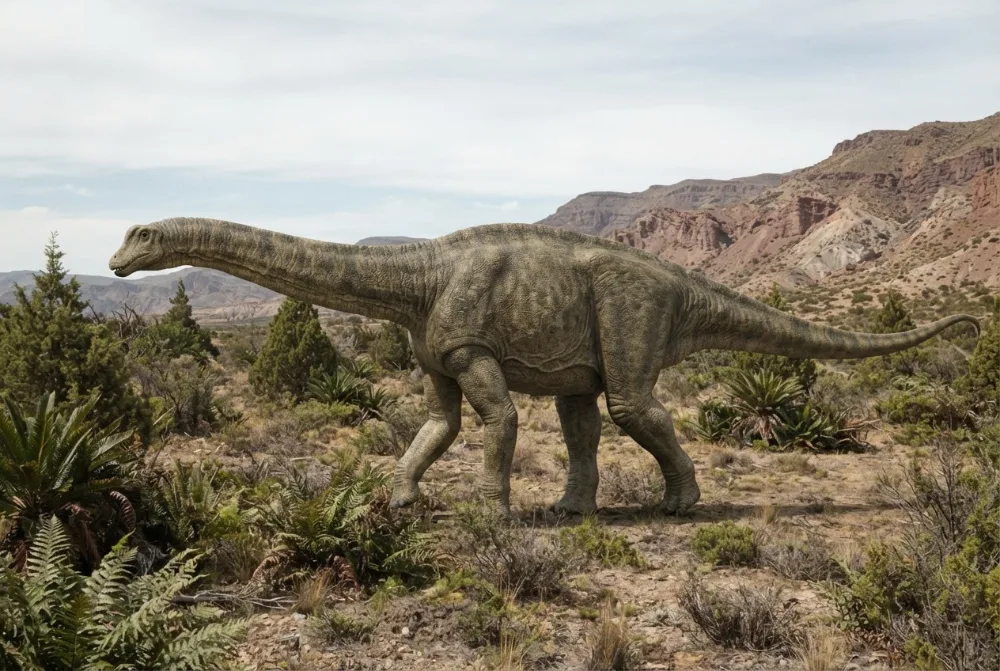
Adult Mussaurus could reach 8 metres (26 ft) long and weigh up to 1.6 metric tons (1.8 short tons).1
Mussaurus is one of the earliest dinosaurs known to have complex social behavior, like living in groups.1
Ebibuuzo ebisinga okubuuzibwa ku Mussaurus
?What did Mussaurus eat?
Mussaurus was an herbivore, meaning it ate plants. It had a long neck to reach leaves and ferns.1
?How big was a baby Mussaurus?
Baby Mussaurus were tiny, about 20 centimetres long and weighing as little as a chicken egg, around 53 to 77 grams.1
?Did Mussaurus live in herds?
Yes, Mussaurus is the earliest dinosaur known to have lived in herds. Scientists found over 100 eggs and 80 skeletons together, showing they lived in age-segregated groups.145
?How fast could Mussaurus run?
Nobody knows for sure, but since adults walked on two legs and were medium-sized, they could probably move at a moderate jogging speed.1
?When did Mussaurus live?
Mussaurus lived about 193 million years ago, during the Early Jurassic period.15
?Why is it called Mussaurus?
Mussaurus means 'mouse lizard' because the first fossils found were tiny babies, about the size of a mouse.1
Omumenyi w'enfumo
Enfumo: Mussaurus was always a tiny dinosaur.
Amazima: Only the babies were tiny. Adults grew to be huge, up to 8 metres long.1
Eri abakugu mu dayinoso
- Erinnya lya ssaayansi
- Mussaurus
- Yatuumibwa
- Bonaparte and Vince 19796
- Ekibinja
- Ez'ensingo empanvu
- Ekika / ekibinja
- Sauropodiformes6
- Engabanya
- Sauropodomorpha6
- Emyaka gy'enjazi
- emyaka obukadde 200 okutuuka ku 193 (Sinemurian)6
- Ensengeka z'enjazi
- Laguna Colorada6
- Ensi
- Arigentina6
- Ebisigalira ebyazuulibwa
- 2 mu The Paleobiology Database6
- Okuzuulibwa
- Mussaurus was named by Jose Bonaparte and Martin Vince in 1979. They found tiny skeletons and eggs in the Laguna Colorada Formation in Argentina.23
- Kikyakubaganyizibwako ebirowoozo
- Scientists are still debating whether Mussaurus is a direct ancestor of the giant sauropods.1
Ebituufu gye biva
- Mussaurus (en.wikipedia.org)
- PBDB Taxon (paleobiodb.org)
- A M E G H I N I A N A (naturalhistory.si.edu)
- Earliest evidence of herd-living and age segregation amongst dinosaurs | Scientific Reports (nature.com)
- Fossil bonanza reveals earliest evidence of dinosaurs living in herds | National Geographic (nationalgeographic.com)
- Mussaurus in The Paleobiology Database (CC BY 4.0): emyaka, ebifo, ensengeka z'enjazi, engabanya.
Buli kituufu ku lupapula luno kirina ennamba eraga ensibuko yaakyo. Bwe tuba nga tukoze ensobi, tusonyiwe, ffe tuli bawagizi ba dayinoso, so si magazini ya ssaayansi. Tubuulire ku [email protected] tujja kugitereeza.
 Rex alumwa enjala! Dino Wiki pulojekiti ya taata eri mutabani we ayagala ennyo dayinoso, ya bwereere, tewali bulango era tewali bikulondoola. Abakulu basobola okuwa Rex akantu ak'okulya okuyamba okugikuuma ku mutimbagano.Liisa Rex
 Brachiosaurus
 Diplodocus
 Brontosaurus
 Argentinosaurus
 Camarasaurus
 Morosaurus
 Dilophosaurus
 Stenopterygius
 Dorygnathus
 Scutellosaurus
 Sinosaurus
 Temnodontosaurus