 Kwizi: Oli dayinoso ki?
 Olutalo lwa dayinoso
 Empaka z'emisinde gya dayinoso
 Emizannyo emitono egya dayinoso
 Alubaamu ya sitika
 Enkalala za dayinoso eza TOP
 Mpa ekyewuunyisa!
Oryctodromeus
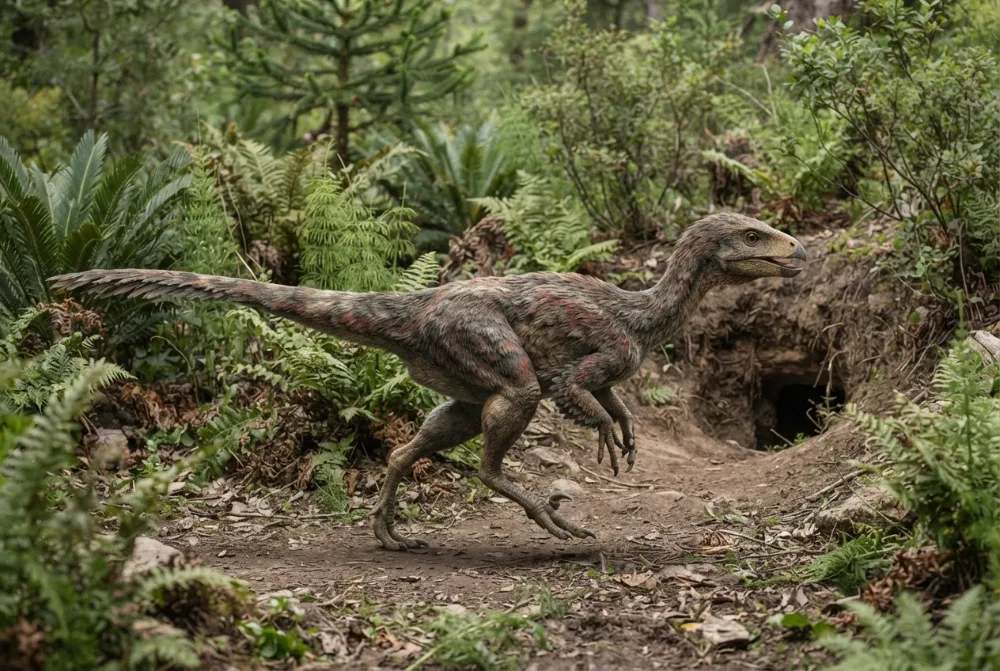
Oryctodromeus was a small, fast dinosaur that dug burrows to live in. It is the first non-bird dinosaur ever found with proof that it lived underground. An adult, two babies, and their burrow were all fossilized together.1
Yabeerawo ddi?
Yali munene atya?
Yali muwanvu kwenkana wa?
Yali mugulumivu kwenkana wa?
kuteebereza
Yali muzito kwenkana wa?
 obuwanvu nga kkapa 4 ab'awaka, ennyindo ku mukira🍌obuwanvu ng'amenvu 12 nga gaddiriŋŋana🍉obuzito ng'obwa wotamerooni 6🏃yandidduse mita 100 mu sikonda 8.8 (omuntu asinga embiro yeetaaga 9.6)
Oryctodromeus yali munene atya bw'ogeraageranya ku GGWE?
Kubala kwokka mu browser yo. Tewali kiterekebwa wadde okusindikibwa wonna.
Yali wa mbiro kwenkana wa?


Ebyewuunyisa
Oryctodromeus means 'digging runner' because it could both dig burrows and run fast on two legs.1
Its burrow was about 2 meters (6.6 feet) long and 70 centimeters (2.3 feet) wide, with two turns.1
The adult Oryctodromeus was about 2.1 meters (6.9 feet) long and weighed between 22 and 32 kilograms (50 to 70 pounds).1
Two baby Oryctodromeus were found with the adult, showing that parents cared for their young in the burrow.1
Its strong shoulders and arms helped it dig, but it was not as specialized for digging as a mole or wombat.1
Oryctodromeus was named the state dinosaur of Idaho in 2023.1
The burrow was filled with sand and turned into sandstone, which preserved the bones inside.1
Ebibuuzo ebisinga okubuuzibwa ku Oryctodromeus
?How did Oryctodromeus dig?
It used its strong shoulders, arms, and broad snout to scratch and move soil. It was not as specialized for digging as a mole or wombat, but more like a rabbit or hyena.13
?What did Oryctodromeus eat?
It was a plant-eater, or herbivore.2
?When did Oryctodromeus live?
It lived during the mid-Cretaceous Period, about 105 to 96 million years ago.1
Eri abakugu mu dayinoso
- Erinnya lya ssaayansi
- Oryctodromeus
- Yatuumibwa
- Varricchio et al. 20074
- Ekibinja
- Ezirya ebimera ez'omumwa ng'ogw'ekinyonyi
- Ekika / ekibinja
- Thescelosauridae4
- Engabanya
- Ornithischia4
- Emyaka gy'enjazi
- emyaka obukadde 106 okutuuka ku 94 (Albian / Cenomanian)4
- Ensengeka z'enjazi
- Wayan, Blackleaf4
- Ensi
- Amerika4
- Ebisigalira ebyazuulibwa
- 9 mu The Paleobiology Database4
- Okuzuulibwa
- Oryctodromeus was named in 2007 by David Varricchio, Anthony Martin, and Yoshihiro Katsura. They found an adult and two juveniles inside a fossilized burrow in Montana.14
- Kikyakubaganyizibwako ebirowoozo
- Scientists are not sure if its close relatives Orodromeus and Zephyrosaurus also dug burrows, though they have similar features.1
Ebituufu gye biva
- Oryctodromeus (en.wikipedia.org)
- Oryctodromeus | Natural History Museum (nhm.ac.uk)
- First trace and body fossil evidence of a burrowing, denning dinosaur (pmc.ncbi.nlm.nih.gov)
- Oryctodromeus in The Paleobiology Database (CC BY 4.0): emyaka, ebifo, ensengeka z'enjazi, engabanya.
Buli kituufu ku lupapula luno kirina ennamba eraga ensibuko yaakyo. Bwe tuba nga tukoze ensobi, tusonyiwe, ffe tuli bawagizi ba dayinoso, so si magazini ya ssaayansi. Tubuulire ku [email protected] tujja kugitereeza.
 Rex alumwa enjala! Dino Wiki pulojekiti ya taata eri mutabani we ayagala ennyo dayinoso, ya bwereere, tewali bulango era tewali bikulondoola. Abakulu basobola okuwa Rex akantu ak'okulya okuyamba okugikuuma ku mutimbagano.Liisa Rex
Endala okuva mu kibinja kye kimu: Ezirya ebimera ez'omumwa ng'ogw'ekinyonyi
 IguanodonEzirya ebimera ez'omumwa ng'ogw'ekinyonyi
 TenontosaurusEzirya ebimera ez'omumwa ng'ogw'ekinyonyi
 ThescelosaurusEzirya ebimera ez'omumwa ng'ogw'ekinyonyi
 ZalmoxesEzirya ebimera ez'omumwa ng'ogw'ekinyonyi
 CamptosaurusEzirya ebimera ez'omumwa ng'ogw'ekinyonyi
 RhabdodonEzirya ebimera ez'omumwa ng'ogw'ekinyonyi
 Tyrannosaurus
 Triceratops
 Velociraptor
 Spinosaurus
 Ankylosaurus
 Parasaurolophus