 Kwizi: Oli dayinoso ki?
 Olutalo lwa dayinoso
 Empaka z'emisinde gya dayinoso
 Emizannyo emitono egya dayinoso
 Alubaamu ya sitika
 Enkalala za dayinoso eza TOP
 Mpa ekyewuunyisa!
Yabeerawo ddi?

Yali munene atya?
Yali muwanvu kwenkana wa?
Yali mugulumivu kwenkana wa?
kuteebereza
Pegomastax yali munene atya bw'ogeraageranya ku GGWE?
Kubala kwokka mu browser yo. Tewali kiterekebwa wadde okusindikibwa wonna.
Yali wa mbiro kwenkana wa?


Ebyewuunyisa
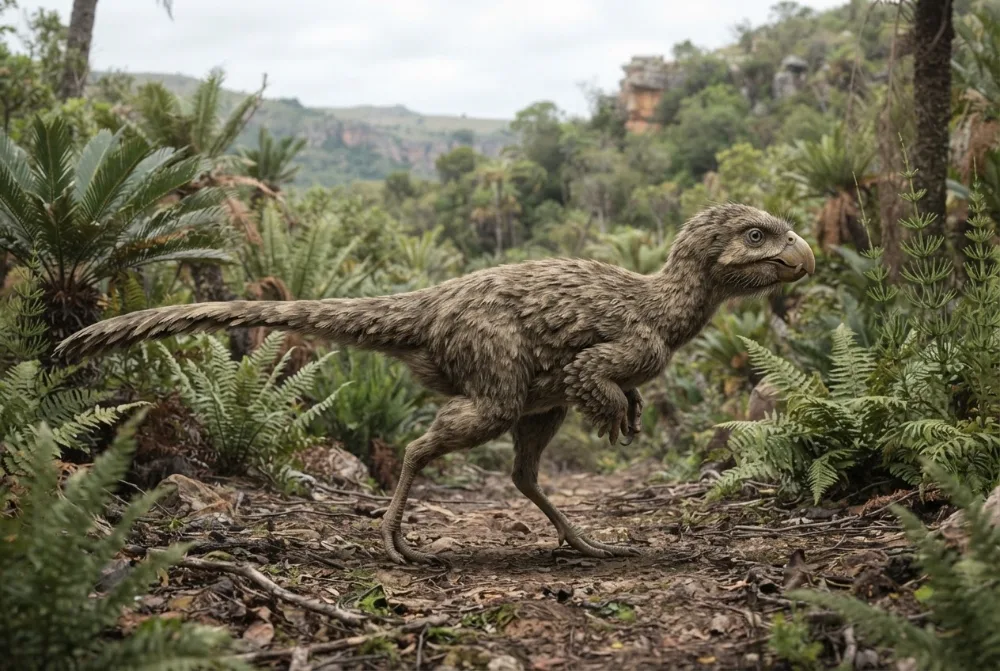
Pegomastax had a very deep, parrot-like beak at the front of its jaw, which helped it bite into tough plants.1
Its skull was only about 73 mm (2.9 inches) long, smaller than a chicken's skull.1
Pegomastax lived alongside many other dinosaurs, including the long-necked Massospondylus and the small ornithischian Lesothosaurus.1
The only fossil of Pegomastax is a partial skull with a well-preserved lower jaw and teeth, found in the upper Elliot Formation.1
Scientists think Pegomastax may have been most closely related to a South American dinosaur called Manidens.1
Pegomastax had a mobile predentary bone in its lower jaw, which helped it move its beak up and down while chewing.1
Ebibuuzo ebisinga okubuuzibwa ku Pegomastax
?Did Pegomastax have feathers?
Scientists think it was covered in porcupine-like quills, not feathers.4
?What did Pegomastax eat?
It was a plant-eater. It used its beak and cheek teeth like scissors to shear tough plants.14
?Why did Pegomastax have fangs?
It used its fangs for self-defense and competing for mates, like some modern plant-eating deer and peccaries.4
?When did Pegomastax live?
It lived during the Early Jurassic, about 200 to 190 million years ago.1
?Where was Pegomastax found?
Its only fossil was found in the upper Elliot Formation in South Africa.1
Eri abakugu mu dayinoso
- Erinnya lya ssaayansi
- Pegomastax
- Yatuumibwa
- Sereno 20126
- Ekibinja
- Ezirya ebimera ez'omumwa ng'ogw'ekinyonyi
- Ekika / ekibinja
- Heterodontosauridae6
- Engabanya
- Ornithischia > Heterodontosauridae6
- Emyaka gy'enjazi
- emyaka obukadde 201 okutuuka ku 193 (Hettangian / Sinemurian)6
- Ensengeka z'enjazi
- Elliot6
- Ensi
- Afirika ey'Obukiikaddyo6
- Ebisigalira ebyazuulibwa
- 1 mu The Paleobiology Database6
- Okuzuulibwa
- Pegomastax was named by American paleontologist Paul Sereno in 2012, based on a partial skull discovered in the 1966 to 1967 expedition to the Transkei District of Cape Province, South Africa.1
- Kikyakubaganyizibwako ebirowoozo
- Scientists are still debating whether the large canine teeth of Pegomastax were used for defense, display, or occasional omnivory.1
Ebituufu gye biva
- Pegomastax (en.wikipedia.org)
- PBDB Taxon (paleobiodb.org)
- Dwarf species of fanged dinosaur emerges from southern Africa | University of Chicago News (news.uchicago.edu)
- New Fanged Dwarf Dinosaur Found—"Would Be Nice Pet" | National Geographic (nationalgeographic.com)
- Dwarf 'vampire' dinosaur was a plant eater - BBC News (bbc.com)
- Pegomastax in The Paleobiology Database (CC BY 4.0): emyaka, ebifo, ensengeka z'enjazi, engabanya.
Buli kituufu ku lupapula luno kirina ennamba eraga ensibuko yaakyo. Bwe tuba nga tukoze ensobi, tusonyiwe, ffe tuli bawagizi ba dayinoso, so si magazini ya ssaayansi. Tubuulire ku [email protected] tujja kugitereeza.
 Rex alumwa enjala! Dino Wiki pulojekiti ya taata eri mutabani we ayagala ennyo dayinoso, ya bwereere, tewali bulango era tewali bikulondoola. Abakulu basobola okuwa Rex akantu ak'okulya okuyamba okugikuuma ku mutimbagano.Liisa Rex
Endala okuva mu kibinja kye kimu: Ezirya ebimera ez'omumwa ng'ogw'ekinyonyi
 IguanodonEzirya ebimera ez'omumwa ng'ogw'ekinyonyi
 TenontosaurusEzirya ebimera ez'omumwa ng'ogw'ekinyonyi
 ThescelosaurusEzirya ebimera ez'omumwa ng'ogw'ekinyonyi
 ZalmoxesEzirya ebimera ez'omumwa ng'ogw'ekinyonyi
 CamptosaurusEzirya ebimera ez'omumwa ng'ogw'ekinyonyi
 RhabdodonEzirya ebimera ez'omumwa ng'ogw'ekinyonyi
 Dilophosaurus
 Stenopterygius
 Dorygnathus
 Lufengosaurus
 Scutellosaurus
 Yunnanosaurus