 Kwizi: Oli dayinoso ki?
 Olutalo lwa dayinoso
 Empaka z'emisinde gya dayinoso
 Emizannyo emitono egya dayinoso
 Alubaamu ya sitika
 Enkalala za dayinoso eza TOP
 Mpa ekyewuunyisa!
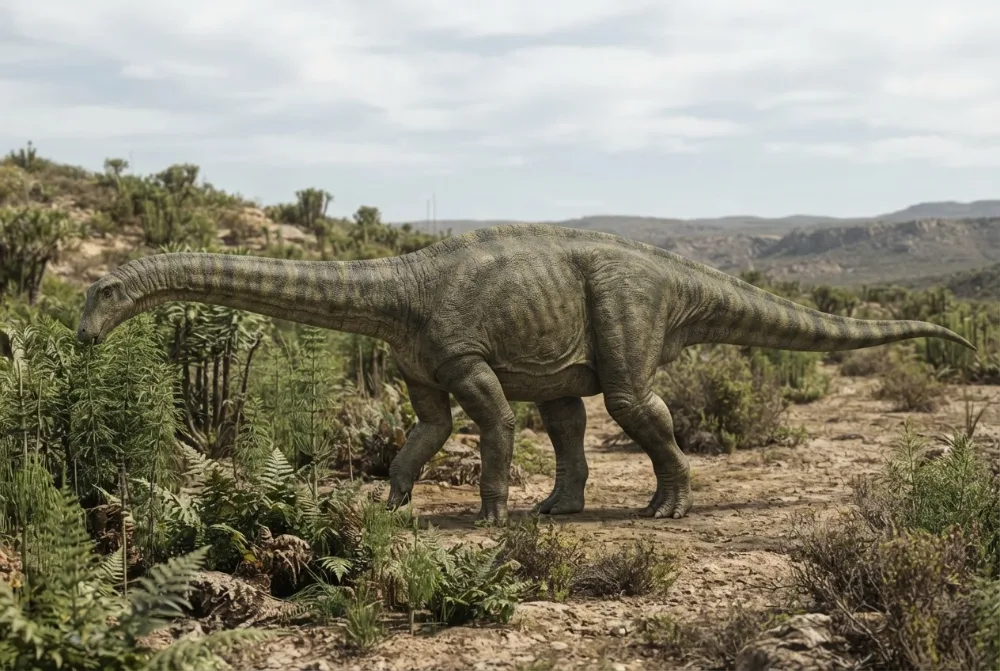
Plateosauravus
Plateosauravus was an early long-necked plant eater that lived in South Africa during the Late Triassic. It walked on two legs but could probably drop to all fours to feed. It is one of the oldest known members of the group that later gave rise to the giant sauropods.16
Yabeerawo ddi?
Yali munene atya?
Yali muwanvu kwenkana wa?
Yali mugulumivu kwenkana wa?
kuteebereza
Yali muzito kwenkana wa?
 obuwanvu ng'embwa 8, ennyindo ku mukira🍌obuwanvu ng'amenvu 46 nga gaddiriŋŋana🍉obuzito ng'obwa wotamerooni 280🧸obuzito ng'obw'abaana 74 ab'omu nnasale🎒obuzito ng'obw'abaana b'essomero 44🐻❄️obuzito ng'obwa ddubu enjeru 3🏃yandidduse mita 100 mu sikonda 13 (omuntu asinga embiro yeetaaga 9.6)
Plateosauravus yali munene atya bw'ogeraageranya ku GGWE?
Kubala kwokka mu browser yo. Tewali kiterekebwa wadde okusindikibwa wonna.
Yali wa mbiro kwenkana wa?


Ebyewuunyisa
Plateosauravus was named in 1932 by Friedrich von Huene, who realized it was different from Plateosaurus.16
Its name means 'grandfather of Plateosaurus', because it lived earlier and was more primitive.1
More than a dozen partial skeletons have been found in Kruger National Park since 1995, including some from young animals.1
Scientists used to call it Euskelosaurus, but that name is now considered doubtful because the original fossils are too incomplete.1
It lived between about 227 and 201 million years ago, during the Norian and Rhaetian ages.2
The first fossil was found by T.L. Cullingworth, and the species name cullingworthi honors him.1
Ebibuuzo ebisinga okubuuzibwa ku Plateosauravus
?How big was Plateosauravus?
It was moderately large, with a femur (thigh bone) at least 545 mm (about 0.55 metres) long. That suggests it was about the size of a large cow, though no complete skeleton has been found to give an exact length.4
?What did Plateosauravus eat?
It was a plant eater. As an early long-necked sauropodomorph, it ate ferns and other plants that grew in the Late Triassic.5
Omumenyi w'enfumo
Enfumo: Plateosauravus is the same as Euskelosaurus.
Amazima: Many scientists once thought so, but Euskelosaurus is now considered a nomen dubium (a doubtful name) because its fossils are too poor. Plateosauravus is used instead.1
Eri abakugu mu dayinoso
- Erinnya lya ssaayansi
- Plateosauravus
- Yatuumibwa
- Huene 19326
- Ekibinja
- Ez'ensingo empanvu
- Ekika / ekibinja
- Plateosauridae6
- Engabanya
- Sauropodomorpha6
- Emyaka gy'enjazi
- emyaka obukadde 227 okutuuka ku 201 (Norian / Rhaetian)6
- Ensengeka z'enjazi
- Elliot6
- Ensi
- Afirika ey'Obukiikaddyo6
- Ebisigalira ebyazuulibwa
- 2 mu The Paleobiology Database6
- Okuzuulibwa
- Sidney Haughton first named it Plateosaurus cullingworthi in 1924 from a partial skeleton found in South Africa. In 1932, Friedrich von Huene gave it its own genus, Plateosauravus.1
- Kikyakubaganyizibwako ebirowoozo
- Scientists are not sure exactly where Plateosauravus fits among the early sauropodomorphs, and some think it might be a nomen dubium.12
Ebituufu gye biva
- Plateosauravus (en.wikipedia.org)
- PBDB Taxon (paleobiodb.org)
- Plateosauravus cullingworthi | Dinosaur Database by DinoAnimals.com (dinoanimals.com)
- A definite prosauropod dinosaur from the Lower Elliot Formation (Norian: Upper Triassic) of South Africa (exa.ai)
- Plateosauravus (en.wikipedia.org)
- Plateosauravus in The Paleobiology Database (CC BY 4.0): emyaka, ebifo, ensengeka z'enjazi, engabanya.
Buli kituufu ku lupapula luno kirina ennamba eraga ensibuko yaakyo. Bwe tuba nga tukoze ensobi, tusonyiwe, ffe tuli bawagizi ba dayinoso, so si magazini ya ssaayansi. Tubuulire ku [email protected] tujja kugitereeza.
 Rex alumwa enjala! Dino Wiki pulojekiti ya taata eri mutabani we ayagala ennyo dayinoso, ya bwereere, tewali bulango era tewali bikulondoola. Abakulu basobola okuwa Rex akantu ak'okulya okuyamba okugikuuma ku mutimbagano.Liisa Rex
 Brachiosaurus
 Diplodocus
 Brontosaurus
 Argentinosaurus
 Camarasaurus
 Morosaurus
 Nothosaurus
 Coelophysis
 Podokesaurus
 Simosaurus
 Eudimorphodon
 Herrerasaurus