 Kwizi: Oli dayinoso ki?
 Olutalo lwa dayinoso
 Empaka z'emisinde gya dayinoso
 Emizannyo emitono egya dayinoso
 Alubaamu ya sitika
 Enkalala za dayinoso eza TOP
 Mpa ekyewuunyisa!
Silesaurus
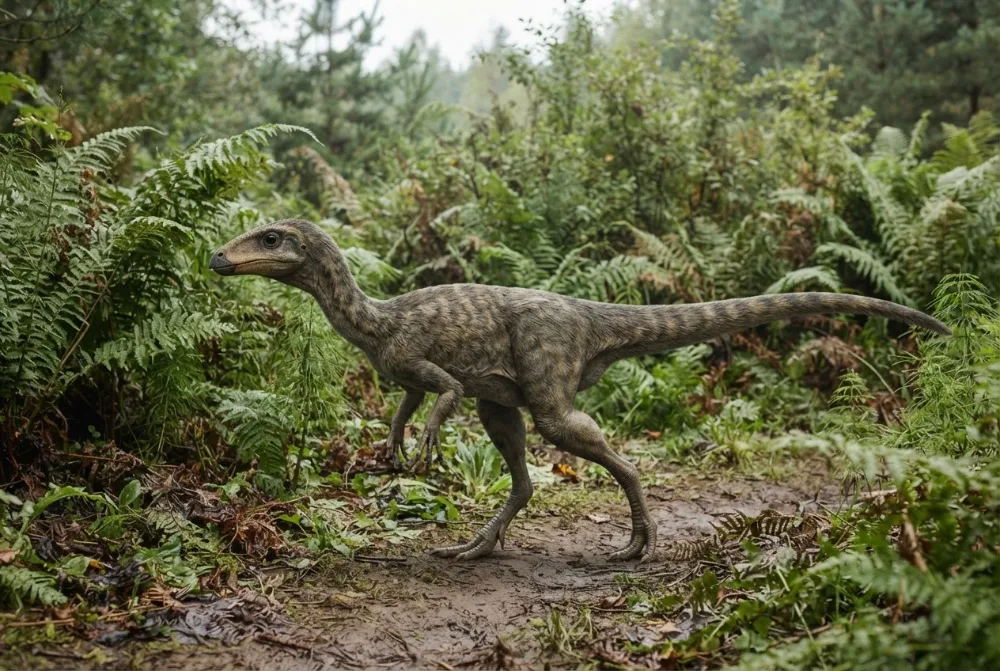
Silesaurus was a small, beaked plant-eater that lived about 230 million years ago in what is now Poland. It looked a bit like a dinosaur but was actually a close cousin, not a true dinosaur. Silesaurus had a horny beak on its lower jaw and weak front legs.12
Yabeerawo ddi?
Yali munene atya?
Yali muwanvu kwenkana wa?
Yali mugulumivu kwenkana wa?
Yali muzito kwenkana wa?

 obuwanvu ng'embwa 2.5, ennyindo ku mukira🍌obuwanvu ng'amenvu 14 nga gaddiriŋŋana🍉obuzito ng'obwa wotamerooni 5🏃yandidduse mita 100 mu sikonda 9.2 (omuntu asinga embiro yeetaaga 9.6)
Silesaurus yali munene atya bw'ogeraageranya ku GGWE?
Kubala kwokka mu browser yo. Tewali kiterekebwa wadde okusindikibwa wonna.
Yali wa mbiro kwenkana wa?


Ebyewuunyisa
Silesaurus had a beak on its lower jaw, similar to later plant-eating dinosaurs like Lesothosaurus, but without the extra predentary bone.2
It had only 11 to 12 teeth in each dentary and maxilla, a low number compared to other early archosaurs.2
Its front limbs were long and slender, but weak, which scientists think is a special feature of this animal.1
Silesaurus had 25 presacral vertebrae, with 9 to 11 in the neck, and the last two back bones were fused to the hip bones.2
The first toe on its foot was reduced to a tiny metatarsal bone that probably did not have any toe bones.2
Silesaurus is the earliest known herbivore among the mesotarsal archosaurs, a group that includes dinosaurs and their relatives.2
Its fossils were found in a clay pit in Krasiejów, Poland, alongside remains of metoposaurs, phytosaurs, and aetosaurs.2
Ebibuuzo ebisinga okubuuzibwa ku Silesaurus
?Was Silesaurus a dinosaur?
No, Silesaurus was not a dinosaur. It was a dinosauriform, a close cousin of dinosaurs.3
?How big was Silesaurus?
Silesaurus was about 2.3 metres long. It was lightly built and probably fast and agile.3
?What did Silesaurus eat?
Silesaurus probably ate both plants and insects. Scientists found beetle remains in fossil dung that may belong to Silesaurus, suggesting it pecked insects off the ground like modern birds.3
?Did Silesaurus have feathers?
Nobody knows for sure. The fossils do not preserve feathers, so scientists cannot tell if Silesaurus had them.3
?When did Silesaurus live?
Silesaurus lived about 230 million years ago during the Late Triassic period.3
?Where was Silesaurus found?
Silesaurus fossils were found in a clay pit in Krasiejów, Poland.3
Eri abakugu mu dayinoso
- Erinnya lya ssaayansi
- Silesaurus
- Yatuumibwa
- Dzik 20034
- Ekibinja
- Ezirya ebimera ez'omumwa ng'ogw'ekinyonyi
- Ekika / ekibinja
- Silesauridae4
- Engabanya
- Ornithischia4
- Emyaka gy'enjazi
- emyaka obukadde 234 okutuuka ku 227 (Carnian)4
- Ensengeka z'enjazi
- Drawno Beds, Grabowa4
- Ensi
- Polandi4
- Ebisigalira ebyazuulibwa
- 3 mu The Paleobiology Database4
- Okuzuulibwa
- Silesaurus was named by Polish paleontologist Jerzy Dzik in 2003. The fossils were found in a clay pit near Opole, Poland, in rocks from the Late Triassic period.14
- Kikyakubaganyizibwako ebirowoozo
- Scientists are not sure whether Silesaurus is an early member of the ornithischian dinosaur lineage, a common ancestor of both ornithischians and prosauropods, or a separate line that evolved plant-eating on its own.2
Ebituufu gye biva
- A beaked herbivorous archosaur with dinosaur affinities from the early Late Triassic of Poland: Journal of Vertebrate Paleontology: Vol 23, No 3 (tandfonline.com)
- A BEAKED HERBIVOROUS ARCHOSAUR WITH DINOSAUR AFFINITIES FROM THE EARLY LATE TRIASSIC OF POLAND (keuper.us.edu.pl)
- Silesaurus (en.wikipedia.org)
- Silesaurus in The Paleobiology Database (CC BY 4.0): emyaka, ebifo, ensengeka z'enjazi, engabanya.
Buli kituufu ku lupapula luno kirina ennamba eraga ensibuko yaakyo. Bwe tuba nga tukoze ensobi, tusonyiwe, ffe tuli bawagizi ba dayinoso, so si magazini ya ssaayansi. Tubuulire ku [email protected] tujja kugitereeza.
 Rex alumwa enjala! Dino Wiki pulojekiti ya taata eri mutabani we ayagala ennyo dayinoso, ya bwereere, tewali bulango era tewali bikulondoola. Abakulu basobola okuwa Rex akantu ak'okulya okuyamba okugikuuma ku mutimbagano.Liisa Rex
Endala okuva mu kibinja kye kimu: Ezirya ebimera ez'omumwa ng'ogw'ekinyonyi
 IguanodonEzirya ebimera ez'omumwa ng'ogw'ekinyonyi
 TenontosaurusEzirya ebimera ez'omumwa ng'ogw'ekinyonyi
 ThescelosaurusEzirya ebimera ez'omumwa ng'ogw'ekinyonyi
 ZalmoxesEzirya ebimera ez'omumwa ng'ogw'ekinyonyi
 CamptosaurusEzirya ebimera ez'omumwa ng'ogw'ekinyonyi
 RhabdodonEzirya ebimera ez'omumwa ng'ogw'ekinyonyi
 Nothosaurus
 Massospondylus
 Plateosaurus
 Coelophysis
 Podokesaurus
 Simosaurus