 Kwizi: Oli dayinoso ki?
 Olutalo lwa dayinoso
 Empaka z'emisinde gya dayinoso
 Emizannyo emitono egya dayinoso
 Alubaamu ya sitika
 Enkalala za dayinoso eza TOP
 Mpa ekyewuunyisa!
Uktenadactylus
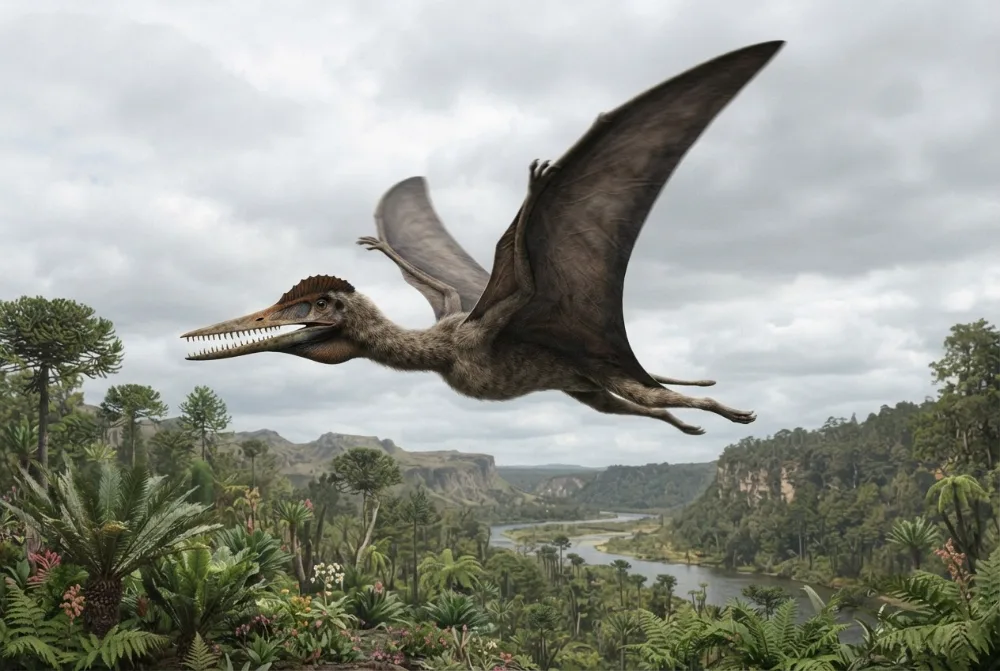
Uktenadactylus was a flying reptile that soared over the seas of Texas and England about 110 million years ago. It had a big crest on its snout and a mouth full of sharp teeth, perfect for catching fish. This pterosaur was not a dinosaur, but a close relative of the famous Pterodactyl.14
Yabeerawo ddi?
Yali munene atya?
Ebiwaawaatiro bye byali bigazi kwenkana wa?
 ebiwaawaatiro bigazi ng'obugaali 4 mu lunyiriri⚽yandibuuse okusomoka ekisaawe ky'omupiira kyonna mu sikonda 4.9
Uktenadactylus yali munene atya bw'ogeraageranya ku GGWE?
Kubala kwokka mu browser yo. Tewali kiterekebwa wadde okusindikibwa wonna.
Yali wa mbiro kwenkana wa?


Ebyewuunyisa
Uktenadactylus is known from only a few snout fragments, so scientists are still guessing its full size.1
The name Uktenadactylus comes from the Uktena, a giant horned snake in Cherokee legends, and the Greek word for finger.1
Its snout had a crest that curved upward and was about 7.5 centimetres (3 inches) tall at its highest point.1
The third pair of teeth in its upper jaw were the biggest, each about 1.8 centimetres (0.7 inches) wide.1
Uktenadactylus lived during the Early Cretaceous period, about 125 to 100 million years ago.4
It belonged to a group of pterosaurs called anhanguerids, which had long, toothed jaws and often fished near coasts.1
Ebibuuzo ebisinga okubuuzibwa ku Uktenadactylus
?How big was Uktenadactylus?
Scientists estimate it had a wingspan of about 7 to 8 metres, possibly up to 9 metres. This is based on comparisons with similar pterosaurs like Coloborhynchus and Tropeognathus.3
?What did Uktenadactylus eat?
It ate fish. Its long, toothed jaws and sharp teeth were perfect for catching fish near the coast.1
?Is Uktenadactylus a dinosaur?
No, it is a pterosaur, a flying reptile that is not a dinosaur. It is a close relative of Pterodactyl.1
Eri abakugu mu dayinoso
- Erinnya lya ssaayansi
- Uktenadactylus
- Yatuumibwa
- Rodrigues and Kellner 20084
- Ekibinja
- Ebyewalula ebibuuka
- Ekika / ekibinja
- Anhangueridae4
- Engabanya
- Pterosauria > Pterodactyloidea4
- Emyaka gy'enjazi
- emyaka obukadde 126 okutuuka ku 100 (Barremian / Albian)4
- Ensengeka z'enjazi
- Paw Paw, Wessex4
- Ensi
- Amerika, Bungereza4
- Ebisigalira ebyazuulibwa
- 2 mu The Paleobiology Database4
- Okuzuulibwa
- The first fossil, a partial snout, was found in 1992 in Tarrant County, Texas, by Chris Wadleigh. In 1994, Yuong Nam-Lee named it Coloborhynchus wadleighi. In 2009, Brazilian paleontologists Taissa Rodrigues and Alexander Kellner gave it its own genus, Uktenadactylus.1
- Kikyakubaganyizibwako ebirowoozo
- Scientists are not sure how big Uktenadactylus was, because only pieces of its snout have been found.1
Ebituufu gye biva
- Uktenadactylus (en.wikipedia.org)
- Uktenadactylus wadleighi | Pterosaur Database by DinoAnimals.com (dinoanimals.com)
- Uktenadactylus – DINOSAURS AND BARBARIANS (dinosaursandbarbarians.com)
- Uktenadactylus in The Paleobiology Database (CC BY 4.0): emyaka, ebifo, ensengeka z'enjazi, engabanya.
Buli kituufu ku lupapula luno kirina ennamba eraga ensibuko yaakyo. Bwe tuba nga tukoze ensobi, tusonyiwe, ffe tuli bawagizi ba dayinoso, so si magazini ya ssaayansi. Tubuulire ku [email protected] tujja kugitereeza.
 Rex alumwa enjala! Dino Wiki pulojekiti ya taata eri mutabani we ayagala ennyo dayinoso, ya bwereere, tewali bulango era tewali bikulondoola. Abakulu basobola okuwa Rex akantu ak'okulya okuyamba okugikuuma ku mutimbagano.Liisa Rex
 Pteranodon
 Quetzalcoatlus
 Dorygnathus
 Rhamphorhynchus
 Anhanguera
 Pterodactylus
 Stegosaurus
 Iguanodon
 Archaeopteryx
 Giganotosaurus
 Microraptor
 Deinonychus