 Kwizi: Oli dayinoso ki?
 Olutalo lwa dayinoso
 Empaka z'emisinde gya dayinoso
 Emizannyo emitono egya dayinoso
 Alubaamu ya sitika
 Enkalala za dayinoso eza TOP
 Mpa ekyewuunyisa!
Uriash
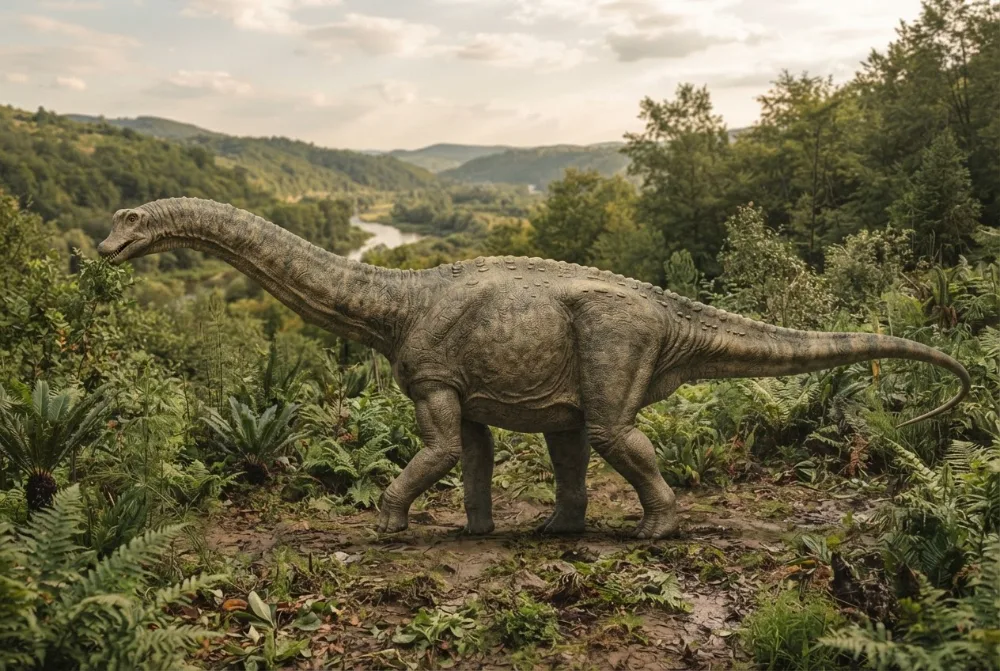
Uriash was a huge, long-necked plant-eater that lived on an ancient island in what is now Romania. It was one of the biggest dinosaurs ever found in Europe from the very end of the Age of Dinosaurs.12
Yabeerawo ddi?
Yali munene atya?
Yali muwanvu kwenkana wa?
Yali mugulumivu kwenkana wa?
kuteebereza
Yali muzito kwenkana wa?
 obuwanvu ng'emmotoka 2.5 ezisimbiddwa mu lunyiriri🍌obuwanvu ng'amenvu 66 nga gaddiriŋŋana
 obuzito ng'obw'enjovu 1.5🍉obuzito ng'obwa wotamerooni 1600🎒obuzito ng'obw'ebibiina 10 ebijjuvu eby'abaana b'essomero🐻❄️obuzito ng'obwa ddubu enjeru 18🏃yandidduse mita 100 mu sikonda 21 (omuntu asinga embiro yeetaaga 9.6)
Uriash yali munene atya bw'ogeraageranya ku GGWE?
Kubala kwokka mu browser yo. Tewali kiterekebwa wadde okusindikibwa wonna.
Yali wa mbiro kwenkana wa?


Ebyewuunyisa
Uriash was named in 2025, making it one of the newest dinosaur discoveries.1
Its fossils were first found in 1914 by geologist Ottokár Kadić, but it took over 100 years for scientists to realize it was a new species.1
Uriash lived on Hațeg Island, a large island in the ancient European archipelago during the Late Cretaceous.2
It was the second largest titanosaur known from the Late Cretaceous of Europe, only smaller than Abditosaurus.1
The name Uriash comes from the Romanian word 'uriaș', meaning giant, and honors Ottokár Kadić.1
Its bones include tail vertebrae, a right humerus, thighbones, and a foot bone, all from one individual.1
Ebibuuzo ebisinga okubuuzibwa ku Uriash
?How big was Uriash?
Uriash was about 8.83 to 11.87 metres (29.0 to 38.9 feet) long and weighed up to 5 to 8 tonnes (5.5 to 8.8 short tons).1
?What did Uriash eat?
Uriash was a plant-eater, like all sauropods. It ate plants on the ancient island where it lived.1
?When did Uriash live?
Uriash lived during the Maastrichtian age of the Late Cretaceous, about 71 to 66 million years ago.1
?Where was Uriash found?
Uriash fossils were found in the Hațeg Basin in western Romania, near the village of Vălioara.12
?Was Uriash a dinosaur?
Yes, Uriash was a dinosaur. It was a titanosaurian sauropod, a long-necked plant-eater.1
?Was Uriash bigger than T. rex?
Uriash was similar in length to T. rex, which reached about 12 metres, but T. rex was heavier. Uriash was one of the biggest European dinosaurs.1
Eri abakugu mu dayinoso
- Erinnya lya ssaayansi
- Uriash
- Yatuumibwa
- Díez Díaz et al. 20253
- Ekibinja
- Ez'ensingo empanvu
- Ekika / ekibinja
- Lithostrotia3
- Engabanya
- Sauropodomorpha > Sauropoda > Titanosauria > Macronaria3
- Emyaka gy'enjazi
- emyaka obukadde 72 okutuuka ku 66 (Maastrichtian)3
- Ensengeka z'enjazi
- Densuș-Ciula3
- Ensi
- Lomaniya3
- Ebisigalira ebyazuulibwa
- 1 mu The Paleobiology Database3
- Okuzuulibwa
- The first bones were found in 1914 by Hungarian geologist Ottokár Kadić near Vălioara, Romania. They were later studied and named Uriash kadici in 2025 by a team of scientists.1
- Kikyakubaganyizibwako ebirowoozo
- Scientists are still debating exactly how Uriash is related to other titanosaurs, especially those from South America.2
Ebituufu gye biva
- Uriash (en.wikipedia.org)
- Full article: Revision of Romanian sauropod dinosaurs reveals high titanosaur diversity and body-size disparity on the latest Cretaceous Haţeg Island, with implications for titanosaurian biogeography (tandfonline.com)
- Uriash in The Paleobiology Database (CC BY 4.0): emyaka, ebifo, ensengeka z'enjazi, engabanya.
Buli kituufu ku lupapula luno kirina ennamba eraga ensibuko yaakyo. Bwe tuba nga tukoze ensobi, tusonyiwe, ffe tuli bawagizi ba dayinoso, so si magazini ya ssaayansi. Tubuulire ku [email protected] tujja kugitereeza.
 Rex alumwa enjala! Dino Wiki pulojekiti ya taata eri mutabani we ayagala ennyo dayinoso, ya bwereere, tewali bulango era tewali bikulondoola. Abakulu basobola okuwa Rex akantu ak'okulya okuyamba okugikuuma ku mutimbagano.Liisa Rex
 Brachiosaurus
 Diplodocus
 Brontosaurus
 Argentinosaurus
 Camarasaurus
 Morosaurus
 Tyrannosaurus
 Triceratops
 Velociraptor
 Spinosaurus
 Ankylosaurus
 Parasaurolophus