 Kwizi: Oli dayinoso ki?
 Olutalo lwa dayinoso
 Empaka z'emisinde gya dayinoso
 Emizannyo emitono egya dayinoso
 Alubaamu ya sitika
 Enkalala za dayinoso eza TOP
 Mpa ekyewuunyisa!
Wintonotitan
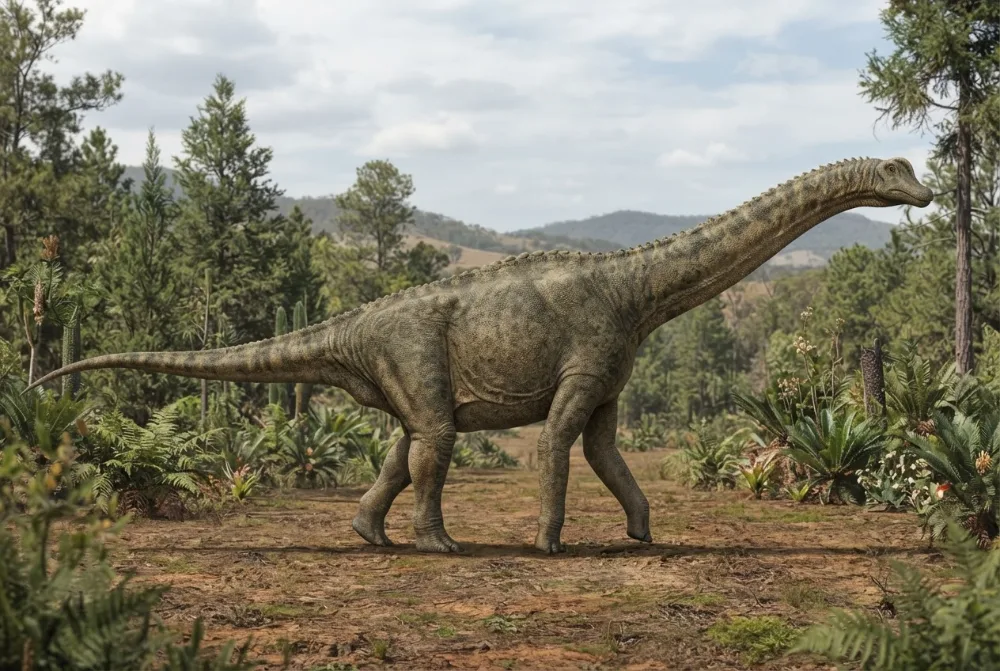
Wintonotitan was a long-necked sauropod that lived in Australia about 100 million years ago. It was a plant-eater with a relatively slender body and front legs longer than its back legs. Scientists call it 'Clancy' after a poem by Banjo Patterson.2
Yabeerawo ddi?
Yali munene atya?
Yali muwanvu kwenkana wa?
Yali mugulumivu kwenkana wa?
Yali muzito kwenkana wa?

 obuwanvu ng'emmotoka 4 ezisimbiddwa mu lunyiriri🍌obuwanvu ng'amenvu 89 nga gaddiriŋŋanaobuzito ng'obw'emmotoka 10🍉obuzito ng'obwa wotamerooni 3000🎒obuzito ng'obw'ebibiina 19 ebijjuvu eby'abaana b'essomero🐻❄️obuzito ng'obwa ddubu enjeru 33🏃yandidduse mita 100 mu sikonda 26 (omuntu asinga embiro yeetaaga 9.6)
Wintonotitan yali munene atya bw'ogeraageranya ku GGWE?
Kubala kwokka mu browser yo. Tewali kiterekebwa wadde okusindikibwa wonna.
Yali wa mbiro kwenkana wa?


Ebyewuunyisa
Wintonotitan was one of three new dinosaurs named from the Winton Formation in 2009, along with Diamantinasaurus and Australovenator.1
Its fossils were first discovered in the 1970s by Keith Watts, who donated them to the Queensland Museum. The species name wattsi honors him.2
Wintonotitan had unique tail bones that were biconvex (rounded on both ends) near the tip, which is different from most other sauropods.2
It lived in a river plain environment with large rivers, swamps, and lakes, after the Eromanga Sea had retreated. The climate was subtropical with abundant rainfall.2
Wintonotitan was a relatively small titanosaur, reaching about 15 to 16 metres long, while some other titanosaurs could grow to 35 metres.2
The fossils found include most of the front limb and shoulder girdle, tail vertebrae, ribs, and hip bones, but no skull or teeth have been discovered yet.2
Ebibuuzo ebisinga okubuuzibwa ku Wintonotitan
?How much did Wintonotitan weigh?
About 10 to 15 tonnes (22,000 to 33,000 pounds). That is roughly as heavy as a large truck.2
?What plants did Wintonotitan eat?
It ate ferns, ginkgoes, conifers, cycads, and early flowering plants that grew in its river-plain home.2
?How did Wintonotitan get its name?
Its name means 'Winton titan', after the town of Winton in Queensland, Australia, where its fossils were found.3
?When did Wintonotitan live?
It lived during the Cretaceous Period, about 100 million years ago.2
Eri abakugu mu dayinoso
- Erinnya lya ssaayansi
- Wintonotitan
- Yatuumibwa
- Hocknull et al. 20094
- Ekibinja
- Ez'ensingo empanvu
- Ekika / ekibinja
- Diamantinasauria4
- Engabanya
- Sauropodomorpha > Sauropoda > Macronaria4
- Emyaka gy'enjazi
- emyaka obukadde 100 okutuuka ku 90 (Cenomanian / Turonian)4
- Ensengeka z'enjazi
- Winton4
- Ensi
- Awusitureeliya4
- Ebisigalira ebyazuulibwa
- 7 mu The Paleobiology Database4
- Okuzuulibwa
- Wintonotitan was named by Scott Hocknull and colleagues in 2009 based on fossils found near Winton, Queensland. The bones were first collected in the 1970s by Keith Watts and later excavated by the Queensland Museum in the 1980s.12
- Kikyakubaganyizibwako ebirowoozo
- Scientists are not sure what Wintonotitan's skull looked like because no skull bones have been found. They also debate whether it was a basal titanosauriform or a more derived titanosaur.21
Ebituufu gye biva
- New Mid-Cretaceous (Latest Albian) Dinosaurs from Winton, Queensland, Australia | PLOS One (journals.plos.org)
- Dinosaurs - Wintonotitan wattsi - The Australian Museum (australian.museum)
- Wintonotitan (Wikipedia) (Wikipedia)
- Wintonotitan in The Paleobiology Database (CC BY 4.0): emyaka, ebifo, ensengeka z'enjazi, engabanya.
Buli kituufu ku lupapula luno kirina ennamba eraga ensibuko yaakyo. Bwe tuba nga tukoze ensobi, tusonyiwe, ffe tuli bawagizi ba dayinoso, so si magazini ya ssaayansi. Tubuulire ku [email protected] tujja kugitereeza.
 Rex alumwa enjala! Dino Wiki pulojekiti ya taata eri mutabani we ayagala ennyo dayinoso, ya bwereere, tewali bulango era tewali bikulondoola. Abakulu basobola okuwa Rex akantu ak'okulya okuyamba okugikuuma ku mutimbagano.Liisa Rex
 Brachiosaurus
 Diplodocus
 Brontosaurus
 Argentinosaurus
 Camarasaurus
 Morosaurus
 Tyrannosaurus
 Triceratops
 Velociraptor
 Spinosaurus
 Ankylosaurus
 Parasaurolophus