 Kwizi: Oli dayinoso ki?
 Olutalo lwa dayinoso
 Empaka z'emisinde gya dayinoso
 Emizannyo emitono egya dayinoso
 Alubaamu ya sitika
 Enkalala za dayinoso eza TOP
 Mpa ekyewuunyisa!
Wuerhosaurus
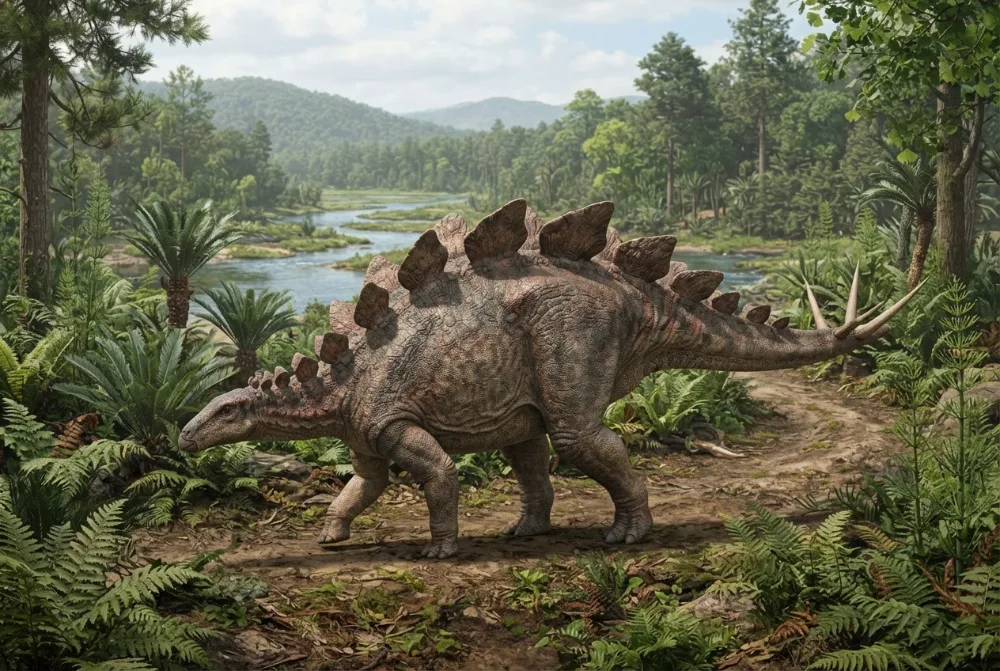
Wuerhosaurus was a plated dinosaur that munched on plants in ancient China. It had bony plates on its back and a spiky tail to protect itself. This stegosaur lived during the early Cretaceous period, about 137 to 100 million years ago.5
Yabeerawo ddi?
Yali munene atya?
Yali muwanvu kwenkana wa?
Yali mugulumivu kwenkana wa?
Yali muzito kwenkana wa?

 obuwanvu ng'embwa 7, ennyindo ku mukira🍌obuwanvu ng'amenvu 39 nga gaddiriŋŋanaobuzito ng'obw'embwa 200🍉obuzito ng'obwa wotamerooni 800🎒obuzito ng'obw'ebibiina 5 ebijjuvu eby'abaana b'essomero🐻❄️obuzito ng'obwa ddubu enjeru 9🏃yandidduse mita 100 mu sikonda 24 (omuntu asinga embiro yeetaaga 9.6)
Wuerhosaurus yali munene atya bw'ogeraageranya ku GGWE?
Kubala kwokka mu browser yo. Tewali kiterekebwa wadde okusindikibwa wonna.
Yali wa mbiro kwenkana wa?


Ebyewuunyisa
Wuerhosaurus was named by Chinese paleontologist Dong Zhiming in 1973.5
Its fossils were found in the Lianmuqin Formation in Xinjiang, China.2
Some scientists think Wuerhosaurus might actually be a species of Stegosaurus, called Stegosaurus homheni.1
The type specimen of Wuerhosaurus is a partial skeleton stored at the Institute of Vertebrate Paleontology and Paleoanthropology in Beijing.1
Wuerhosaurus lived alongside the meat-eating dinosaur Kelmayisaurus and the pterosaur Noripterus.2
Its back vertebrae had deep hollows above the spinal cord, which is different from other stegosaurs.1
Wuerhosaurus was a ground-dwelling herbivore that probably moved on all four legs.5
Ebibuuzo ebisinga okubuuzibwa ku Wuerhosaurus
?How big was Wuerhosaurus?
Wuerhosaurus homheni was about 7 metres (23 feet) long and weighed 4 metric tons (4.4 short tons). A smaller species, W. ordosensis, was about 5 metres (16 feet) long and weighed 1.2 metric tons (1.3 short tons).3
?How many species of Wuerhosaurus are there?
There are two known species: Wuerhosaurus homheni and Wuerhosaurus ordosensis.3
?Is Wuerhosaurus the same as Stegosaurus?
Some scientists think Wuerhosaurus might actually be a species of Stegosaurus called Stegosaurus homheni, but other scientists disagree.3
Omumenyi w'enfumo
Enfumo: Many people think all stegosaurs lived in the Jurassic period.
Amazima: Wuerhosaurus lived in the early Cretaceous, much later than most stegosaurs.1
Eri abakugu mu dayinoso
- Erinnya lya ssaayansi
- Wuerhosaurus
- Yatuumibwa
- Dong 19735
- Ekibinja
- Dayinoso ez'ebipande
- Ekika / ekibinja
- Stegosauridae5
- Engabanya
- Ornithischia > Stegosauria > Thyreophora5
- Emyaka gy'enjazi
- emyaka obukadde 137 okutuuka ku 100 (Valanginian / Albian)5
- Ensengeka z'enjazi
- Lianmuqin, Ejinhoro5
- Ensi
- Cayina5
- Ebisigalira ebyazuulibwa
- 3 mu The Paleobiology Database5
- Okuzuulibwa
- Wuerhosaurus was discovered in 1964 at a site called Wuerho in Xinjiang, China. Dong Zhiming named it in 1973 based on a partial skeleton.2
- Kikyakubaganyizibwako ebirowoozo
- Scientists debate whether Wuerhosaurus is a separate genus or just a species of Stegosaurus.1
Ebituufu gye biva
- PBDB Taxon (paleobiodb.org)
- PBDB Collection (paleobiodb.org)
- Wuerhosaurus (en.wikipedia.org)
- enchantedlearning.com (enchantedlearning.com)
- Wuerhosaurus in The Paleobiology Database (CC BY 4.0): emyaka, ebifo, ensengeka z'enjazi, engabanya.
Buli kituufu ku lupapula luno kirina ennamba eraga ensibuko yaakyo. Bwe tuba nga tukoze ensobi, tusonyiwe, ffe tuli bawagizi ba dayinoso, so si magazini ya ssaayansi. Tubuulire ku [email protected] tujja kugitereeza.
 Rex alumwa enjala! Dino Wiki pulojekiti ya taata eri mutabani we ayagala ennyo dayinoso, ya bwereere, tewali bulango era tewali bikulondoola. Abakulu basobola okuwa Rex akantu ak'okulya okuyamba okugikuuma ku mutimbagano.Liisa Rex
 Stegosaurus
 Diracodon
 Hypsirophus
 Dacentrurus
 Miragaia
 Kentrosaurus
 Iguanodon
 Archaeopteryx
 Giganotosaurus
 Microraptor
 Deinonychus
 Baryonyx