 Kwizi: Oli dayinoso ki?
 Olutalo lwa dayinoso
 Empaka z'emisinde gya dayinoso
 Emizannyo emitono egya dayinoso
 Alubaamu ya sitika
 Enkalala za dayinoso eza TOP
 Mpa ekyewuunyisa!
Xiangyunloong
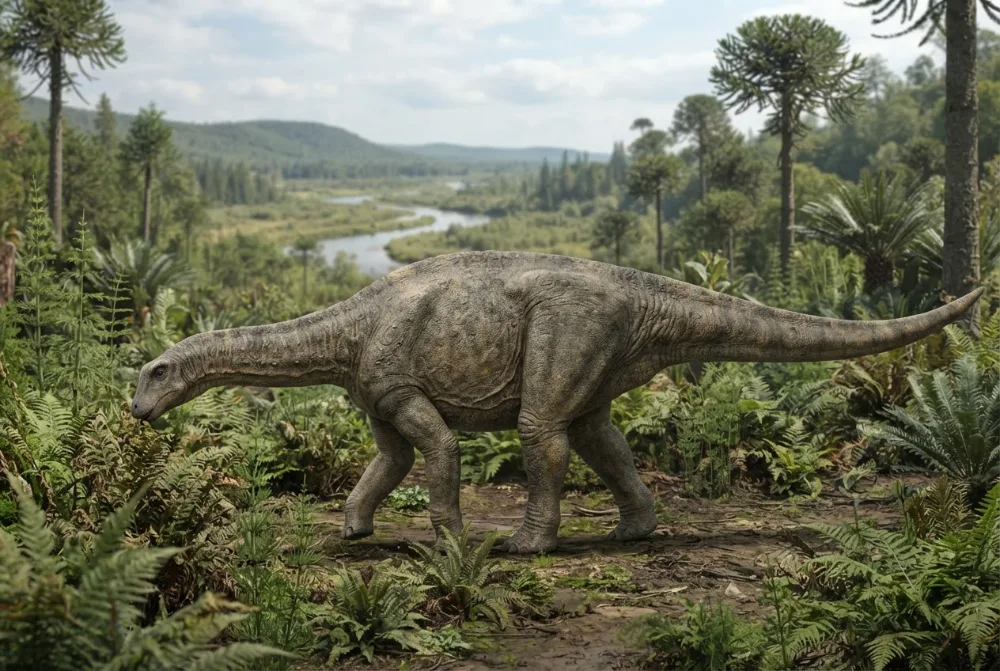
Xiangyunloong was a big, plant-eating dinosaur that lived in what is now China. It had a short neck but a very long and strong tail, which helped it balance its heavy body. This dinosaur shows that not all early long-necked dinosaurs had long necks!2
Yabeerawo ddi?
Yali munene atya?
Yali muwanvu kwenkana wa?
Yali mugulumivu kwenkana wa?
kuteebereza
 obuwanvu ng'emmotoka 2 ezisimbiddwa mu lunyiriri🍌obuwanvu ng'amenvu 56 nga gaddiriŋŋana🏃yandidduse mita 100 mu sikonda 16 (omuntu asinga embiro yeetaaga 9.6)
Xiangyunloong yali munene atya bw'ogeraageranya ku GGWE?
Kubala kwokka mu browser yo. Tewali kiterekebwa wadde okusindikibwa wonna.
Yali wa mbiro kwenkana wa?


Ebyewuunyisa
Xiangyunloong had a short neck but a very long and powerful tail, which is unusual for early sauropodomorphs.2
Its tail was so strong that it could act as a counterbalance, helping the dinosaur stand on two legs to feed.2
Scientists think Xiangyunloong represents an early stage of gigantism, or getting very big, in sauropodomorphs.2
Xiangyunloong lived about 200 million years ago during the Early Jurassic period.4
The fossil of Xiangyunloong was found about 200 kilometers west of the famous Lufeng dinosaur fossil sites in China.2
Xiangyunloong is known from a partial skeleton that includes neck bones, back bones, tail bones, and hip bones.2
Ebibuuzo ebisinga okubuuzibwa ku Xiangyunloong
?How big was Xiangyunloong?
About 9 to 10 metres long, making it one of the largest early sauropodomorph dinosaurs from China.12
?Did Xiangyunloong have a long neck?
No, it had a short neck, which is unusual for early sauropodomorphs. Instead, it had a very long and strong tail.23
?What did Xiangyunloong eat?
It was a plant eating dinosaur, like other sauropodomorphs.1
Omumenyi w'enfumo
Enfumo: Many people think all early sauropodomorphs had long necks like later sauropods.
Amazima: Xiangyunloong had a short neck and a long, strong tail, showing that early sauropodomorphs had different body shapes.2
Eri abakugu mu dayinoso
- Erinnya lya ssaayansi
- Xiangyunloong
- Yatuumibwa
- Hu et al. 20264
- Ekibinja
- Ez'ensingo empanvu
- Ekika / ekibinja
- Massopoda4
- Engabanya
- Sauropodomorpha4
- Emyaka gy'enjazi
- emyaka obukadde 201 okutuuka ku 175 (Hettangian / Toarcian)4
- Ensengeka z'enjazi
- Fengjiahe4
- Ensi
- Cayina4
- Ebisigalira ebyazuulibwa
- 1 mu The Paleobiology Database4
- Okuzuulibwa
- Xiangyunloong was named in 2026 by Hu and colleagues based on a partial skeleton found in the Fengjiahe Formation in Yunnan, China.2
- Kikyakubaganyizibwako ebirowoozo
- Scientists are still debating whether Xiangyunloong represents a new evolutionary path where the tail, not the neck, became long and strong.2
Ebituufu gye biva
- Xiangyunloong (en.wikipedia.org)
- A new sauropodomorph dinosaur from the Lower Jurassic Fengjiahe Formation of Dali of Yunnan Province, China | Royal Society Open Science | The Royal Society (royalsocietypublishing.org)
- Early Sauropodomorph Dinosaur Unearthed in China | Sci.News (sci.news)
- Xiangyunloong in The Paleobiology Database (CC BY 4.0): emyaka, ebifo, ensengeka z'enjazi, engabanya.
Buli kituufu ku lupapula luno kirina ennamba eraga ensibuko yaakyo. Bwe tuba nga tukoze ensobi, tusonyiwe, ffe tuli bawagizi ba dayinoso, so si magazini ya ssaayansi. Tubuulire ku [email protected] tujja kugitereeza.
 Rex alumwa enjala! Dino Wiki pulojekiti ya taata eri mutabani we ayagala ennyo dayinoso, ya bwereere, tewali bulango era tewali bikulondoola. Abakulu basobola okuwa Rex akantu ak'okulya okuyamba okugikuuma ku mutimbagano.Liisa Rex
 Brachiosaurus
 Diplodocus
 Brontosaurus
 Argentinosaurus
 Camarasaurus
 Morosaurus
 Dilophosaurus
 Stenopterygius
 Dorygnathus
 Scutellosaurus
 Sinosaurus
 Temnodontosaurus