 Ozali dino nini? Kwizi
 Etumba ya badino
 Mbangu ya badino
 Masano mike ya badino
 Albumu ya bastika
 Bilisti TOP ya badino
 Kamwisa ngai!
Alamodactylus
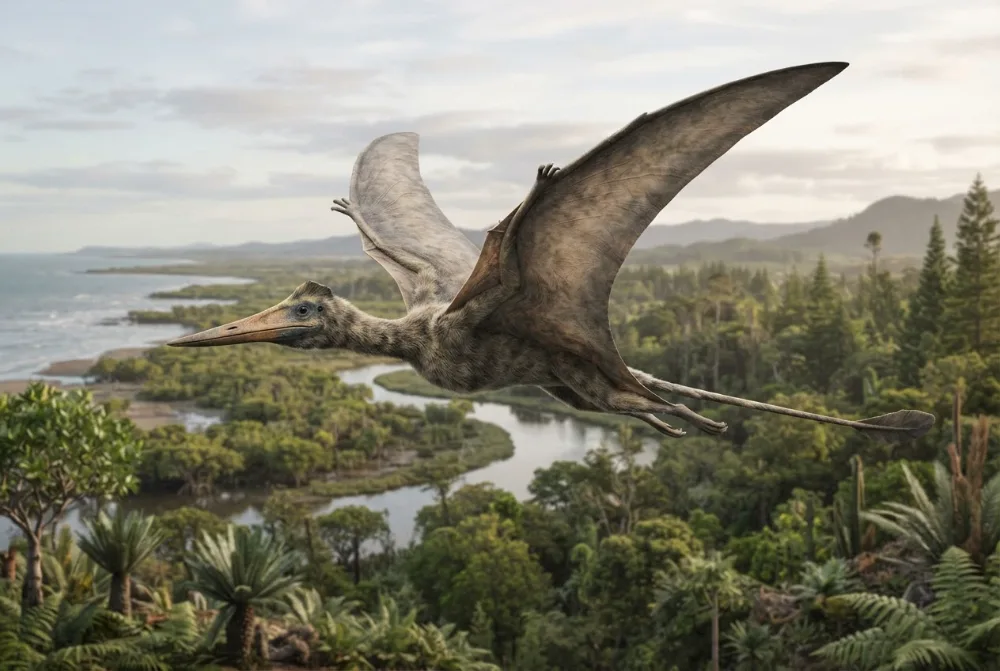
Alamodactylus was a flying reptile that soared over Texas about 88 million years ago. It had long, narrow wings and probably glided over the sea to catch fish. It was not a dinosaur, but a pterosaur, a close cousin of dinosaurs.14
Azalaki na bomoi ntango nini?
Azalaki monene boni?
Mapapu na ye ezalaki monene boni?
 mapapu monene lokola bavelo 3 na molongo⚽akokaki kopumbwa kokatisa esika mobimba ya ndembo na sekonde 5,5
Alamodactylus azalaki monene boni soki tokokanisi na YO?
Kaka matematiki na navigatere na yo. Eloko moko te ebombami to etindami esika moko.
Azalaki na mbangu boni?


Makambo ya kosepelisa
Alamodactylus is known from only one partial wing, including a humerus and other bones, found in Texas.1
Its name means 'Alamo finger' because the fossil was found in Texas, the 'Alamo' state, and pterosaurs often have 'finger' in their names due to their long wing digits.1
Scientists think it was a medium-sized pterosaur, but they don't know its exact size because only a few bones have been found.1
The fossil was first thought to be from a Pteranodon, but later study showed it was a new kind of pterosaur.1
Alamodactylus lived about 89.8 to 88 million years ago, during the Late Cretaceous period.1
Its wing bones show a unique combination of features, like a constricted humerus shaft and a D-shaped cross-section, that set it apart from other pterosaurs.1
Mituna oyo batunaka mingi na ntina na Alamodactylus
?How big was Alamodactylus?
Its wingspan is estimated at about 4 to 5 metres (13 to 16.5 feet), but scientists are not sure because only a few bones have been found.3
?What did Alamodactylus eat?
It was a carnivore and probably caught fish by flying over the sea.3
?When did Alamodactylus live?
It lived about 89.8 to 88 million years ago, during the Late Cretaceous period.1
Mobuki masapo
Lisapo: Alamodactylus was a dinosaur.
Solo: It was a pterosaur, a flying reptile that is a close relative of dinosaurs, but not a dinosaur itself.1
Mpo na bayebi ya badino
- Nkombo ya siansi
- Alamodactylus
- Nkombo epesamaki na
- Andres and Myers 20134
- Lisanga
- Bareptile oyo bapumbwaka
- Libota / klade
- Pteranodontia4
- Klasifikasio
- Pterosauria > Pterodactyloidea4
- Mbula ya mabanga
- mbula milio 90 kino 86 (Coniacian)4
- Milongo ya mabanga
- Atco4
- Bikolo
- Amerika4
- Bafosile oyo ekomami
- 1 na The Paleobiology Database4
- Ntango bamonaki yango
- The fossil was discovered by Gary Byrd, who it is named after, and first described in 2010. It was given its own genus and species name, Alamodactylus byrdi, by Brian Andres and Timothy Myers in 2013.1
- Naino bazali kowelana
- Scientists still debate exactly where Alamodactylus fits in the pterosaur family tree. Some studies place it close to Pteranodon, while others put it in the Nyctosauridae group.1
Esika makambo euti
- Alamodactylus (en.wikipedia.org)
- Alamodactylus byrdi | Pterosaur Database by DinoAnimals.com (dinoanimals.com)
- Alamodactylus — Pteros (pteros.com)
- Alamodactylus in The Paleobiology Database (CC BY 4.0): mbula, bisika, milongo ya mabanga, klasifikasio.
Likambo nyonso na lokasa oyo ezali na nimero oyo elakisi liziba na yango. Soki tosali libunga, limbisa biso, tozali bato balingaka badino, zulunalo ya siansi te. Yebisa biso na [email protected] mpe tokobongisa yango.
 Rex azali na nzala! Dino Wiki ezali mosala ya tata moko mpo na mwana na ye ya mobali oyo alingaka badino, ofele, piblisite te mpe batrakere te. Bato bakolo bakoki kopesa Rex biskwi mpo na kosalisa ete etikala na internet.Leisa Rex
 Pteranodon
 Quetzalcoatlus
 Dorygnathus
 Rhamphorhynchus
 Anhanguera
 Pterodactylus
 Tyrannosaurus
 Triceratops
 Velociraptor
 Spinosaurus
 Ankylosaurus
 Parasaurolophus