 Ozali dino nini? Kwizi
 Etumba ya badino
 Mbangu ya badino
 Masano mike ya badino
 Albumu ya bastika
 Bilisti TOP ya badino
 Kamwisa ngai!
Boreonykus
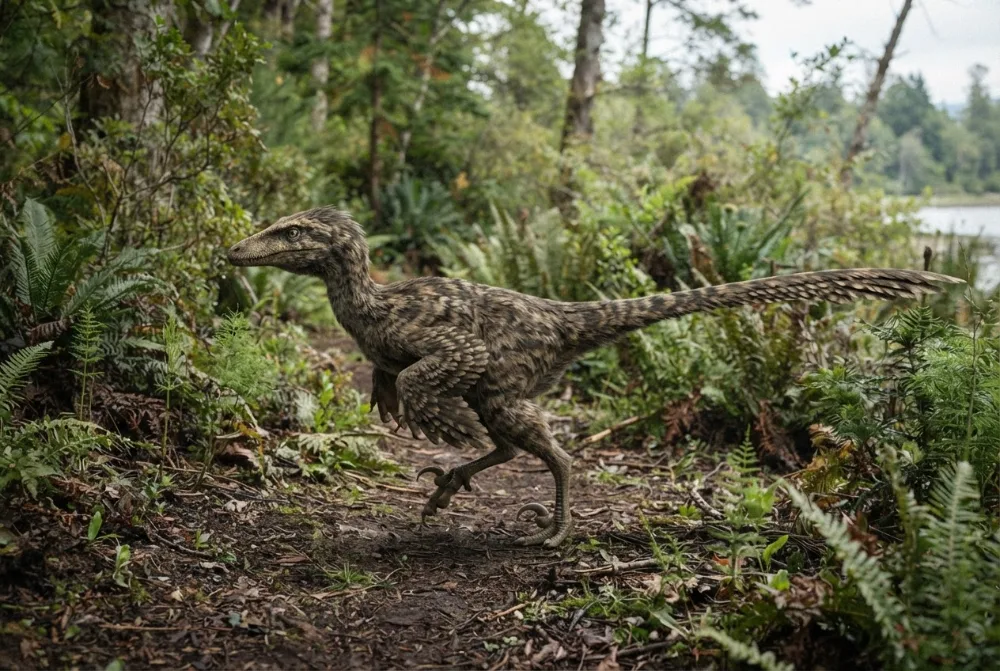
Boreonykus was a small, fast dinosaur that lived in Canada during the Late Cretaceous. It had a big sickle claw on each foot, which it used to hunt and slash its prey. This raptor was a cousin of the famous Velociraptor.1
Azalaki na bomoi ntango nini?
Azalaki monene boni?
Azalaki molai boni?
Azalaki molai boni na likolo?
Azalaki kilo boni?

 molai lokola bambwa 3 zolo kino mokila🍌molai lokola matoko 17 oyo balandani🍌kilo lokola matoko 110🏃akokaki kopota metele 100 na sekonde 9 (moto oyo aleki mbangu asalelaka 9,6)
Boreonykus azalaki monene boni soki tokokanisi na YO?
Kaka matematiki na navigatere na yo. Eloko moko te ebombami to etindami esika moko.
Azalaki na mbangu boni?


Makambo ya kosepelisa
Boreonykus was named in 2015 by scientists Phil Bell and Philip Currie.1
Its fossils were found in a bonebed that contained at least 27 individuals of the horned dinosaur Pachyrhinosaurus.1
The name Boreonykus means 'northern claw', because it lived in what is now Canada and had a large claw on its foot.1
Only a few bones of Boreonykus have been found, including a skull bone, teeth, and a sickle claw.1
Boreonykus lived about 73 million years ago, during the Late Cretaceous period.1
Scientists think Boreonykus was a dromaeosaurid, a group of feathered dinosaurs that includes Velociraptor and Deinonychus.6
Mituna oyo batunaka mingi na ntina na Boreonykus
?How big was Boreonykus?
About 2 metres long and as tall as a dog.3
?What did Boreonykus eat?
It was a meat-eater that probably ate the carcasses of the horned dinosaur Pachyrhinosaurus. Its serrated teeth and big claws helped it hunt and slash prey. [dinomuseum.ca](https://dinomuseum.ca/2016/03/new-dinosaur-boreonykus)5
?Did Boreonykus have feathers?
Yes, because it was a dromaeosaurid, a group of feathered dinosaurs that includes Velociraptor. [wikipedia.org](https://en.wikipedia.org/wiki/Boreonykus)1
?Where was Boreonykus found?
In the Pipestone Creek bonebed in central Alberta, Canada, about 20 kilometres southwest of Grande Prairie. [cbc.ca](https://www.cbc.ca/news/canada/edmonton/sharp-toothed-boreonykus-a-dog-sized-dinosaur-found-near-grande-prairie-1.3494699)3
Mpo na bayebi ya badino
- Nkombo ya siansi
- Boreonykus
- Nkombo epesamaki na
- Bell and Currie 20166
- Lisanga
- Baraptore
- Libota / klade
- Dromaeosauridae6
- Klasifikasio
- Theropoda > Dromaeosauridae6
- Mbula ya mabanga
- mbula milio 84 kino 72 (Campanian)6
- Milongo ya mabanga
- Wapiti6
- Bikolo
- Kanada6
- Bafosile oyo ekomami
- 2 na The Paleobiology Database6
- Ntango bamonaki yango
- Boreonykus was named and described by Phil Bell and Philip Currie in 2015. The fossils were found in the 1980s at Pipestone Creek in Alberta, Canada, during digs for the horned dinosaur Pachyrhinosaurus.1
- Naino bazali kowelana
- Scientists are not sure whether Boreonykus was a velociraptorine or a dromaeosaurine, because different studies place it in different groups.1
Esika makambo euti
- Boreonykus (en.wikipedia.org)
- PBDB Taxon (paleobiodb.org)
- Sharp-toothed Boreonykus, a dog-sized dinosaur, found near Grande Prairie | CBC News (cbc.ca)
- Boreonykus certekorum | Dinosaur Database by DinoAnimals.com (dinoanimals.com)
- What Big Claws You Have: Northern Alberta Welcomes New Raptor Dinosaur - Philip J. Currie Dinosaur Museum (dinomuseum.ca)
- Boreonykus in The Paleobiology Database (CC BY 4.0): mbula, bisika, milongo ya mabanga, klasifikasio.
Likambo nyonso na lokasa oyo ezali na nimero oyo elakisi liziba na yango. Soki tosali libunga, limbisa biso, tozali bato balingaka badino, zulunalo ya siansi te. Yebisa biso na [email protected] mpe tokobongisa yango.
 Rex azali na nzala! Dino Wiki ezali mosala ya tata moko mpo na mwana na ye ya mobali oyo alingaka badino, ofele, piblisite te mpe batrakere te. Bato bakolo bakoki kopesa Rex biskwi mpo na kosalisa ete etikala na internet.Leisa Rex
 Velociraptor
 Microraptor
 Deinonychus
 Asiamericana
 Richardoestesia
 Saurornitholestes
 Tyrannosaurus
 Triceratops
 Spinosaurus
 Ankylosaurus
 Parasaurolophus
 Pteranodon