 Ozali dino nini? Kwizi
 Etumba ya badino
 Mbangu ya badino
 Masano mike ya badino
 Albumu ya bastika
 Bilisti TOP ya badino
 Kamwisa ngai!
Caenagnathasia
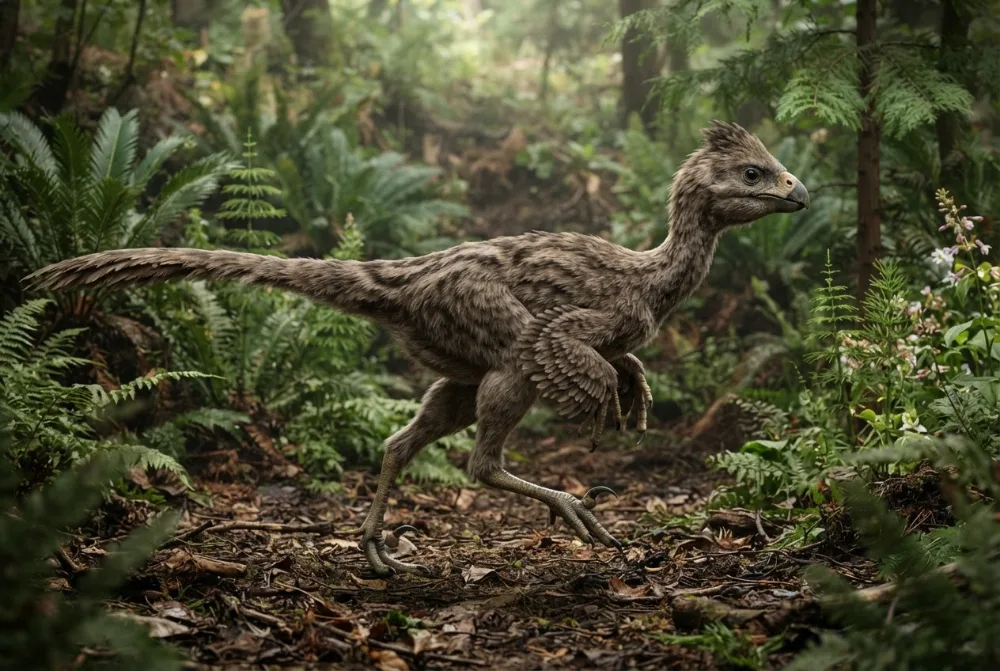
Caenagnathasia was a tiny, feathered dinosaur that looked a bit like a bird. It had a beak and long legs, and it was one of the smallest dinosaurs ever found. It lived in Asia during the Late Cretaceous period.1
Azalaki na bomoi ntango nini?
Azalaki monene boni?
Azalaki molai boni?
Azalaki molai boni na likolo?
kokanisa
Azalaki kilo boni?
Caenagnathasia azalaki monene boni soki tokokanisi na YO?
Kaka matematiki na navigatere na yo. Eloko moko te ebombami to etindami esika moko.
Azalaki na mbangu boni?


Makambo ya kosepelisa
Caenagnathasia is the smallest known oviraptorosaur and one of the smallest non-avian dinosaurs. Its skull was only about 7.6 centimetres (3 inches) long.1
It lived about 90 million years ago, making it the oldest known caenagnathoid.1
The first fossils were just two fused lower jaw bones, found in Uzbekistan.1
Scientists think it was feathered, like other oviraptorosaurs, and looked bird-like with a beak and long neck.1
In 2015, new bones were found, including vertebrae, a dentary, and a femur, which helped confirm it belonged to the Caenagnathidae family.1
The name honors Gerbert Genrikhovich Martinson, a scientist, in the species name martinsoni.1
Mituna oyo batunaka mingi na ntina na Caenagnathasia
?How big was Caenagnathasia?
It was tiny. About 0.6 metres (2 feet) long and weighed around 1.4 kilograms (3 pounds). Its skull was only about 7.6 centimetres (3 inches) long.1
?What did Caenagnathasia eat?
Scientists think it ate plants or small animals, because it had a beak and a special shelf in its mouth for grinding food, like other oviraptorosaurs.12
?Did Caenagnathasia have feathers?
Yes. It was a feathered dinosaur, like other oviraptorosaurs, and looked bird-like with a beak and long neck.1
?When did Caenagnathasia live?
It lived about 90 million years ago, during the Late Cretaceous period. It is the oldest known caenagnathoid.1
Mobuki masapo
Lisapo: Some people think Caenagnathasia was a bird because it had a beak and feathers.
Solo: It was a dinosaur, not a bird. It belonged to a group of feathered theropods called oviraptorosaurs, which are closely related to birds but not birds themselves.1
Mpo na bayebi ya badino
- Nkombo ya siansi
- Caenagnathasia
- Nkombo epesamaki na
- Currie et al. 19943
- Lisanga
- Badino ya nsala ya kokamwa
- Libota / klade
- Caenagnathidae3
- Klasifikasio
- Theropoda > Oviraptorosauria3
- Mbula ya mabanga
- mbula milio 94 kino 72 (Turonian / Campanian)3
- Milongo ya mabanga
- Bissekty, Iren Dabasu3
- Bikolo
- Uzbekistani, Sina3
- Bafosile oyo ekomami
- 7 na The Paleobiology Database3
- Ntango bamonaki yango
- Caenagnathasia was named in 1994 by Philip J. Currie, Stephen Godfrey, and Lev Nessov. The first fossils were found near Dzharakuduk in Uzbekistan, in the Bissekty Formation.1
- Naino bazali kowelana
- Scientists are still debating exactly where Caenagnathasia sits in the dinosaur family tree. Some think it was a primitive member of the Caenagnathidae, while others suggest it might be more basal within Oviraptorosauria.1
Esika makambo euti
- Caenagnathasia (en.wikipedia.org)
- New material of Caenagnathasia martinsoni (Dinosauria: Theropoda: Oviraptorosauria) from the Bissekty Formation (Upper Cretaceous: Turonian) of Uzbekistan › SPbU Researchers Portal (pureportal.spbu.ru)
- Caenagnathasia in The Paleobiology Database (CC BY 4.0): mbula, bisika, milongo ya mabanga, klasifikasio.
Likambo nyonso na lokasa oyo ezali na nimero oyo elakisi liziba na yango. Soki tosali libunga, limbisa biso, tozali bato balingaka badino, zulunalo ya siansi te. Yebisa biso na [email protected] mpe tokobongisa yango.
 Rex azali na nzala! Dino Wiki ezali mosala ya tata moko mpo na mwana na ye ya mobali oyo alingaka badino, ofele, piblisite te mpe batrakere te. Bato bakolo bakoki kopesa Rex biskwi mpo na kosalisa ete etikala na internet.Leisa Rex
 Therizinosaurus
 Oviraptor
 Chirostenotes
 Citipes
 Leptorhynchos
 Avimimus
 Tyrannosaurus
 Triceratops
 Velociraptor
 Spinosaurus
 Ankylosaurus
 Parasaurolophus