 Ozali dino nini? Kwizi
 Etumba ya badino
 Mbangu ya badino
 Masano mike ya badino
 Albumu ya bastika
 Bilisti TOP ya badino
 Kamwisa ngai!
Cimoliopterus
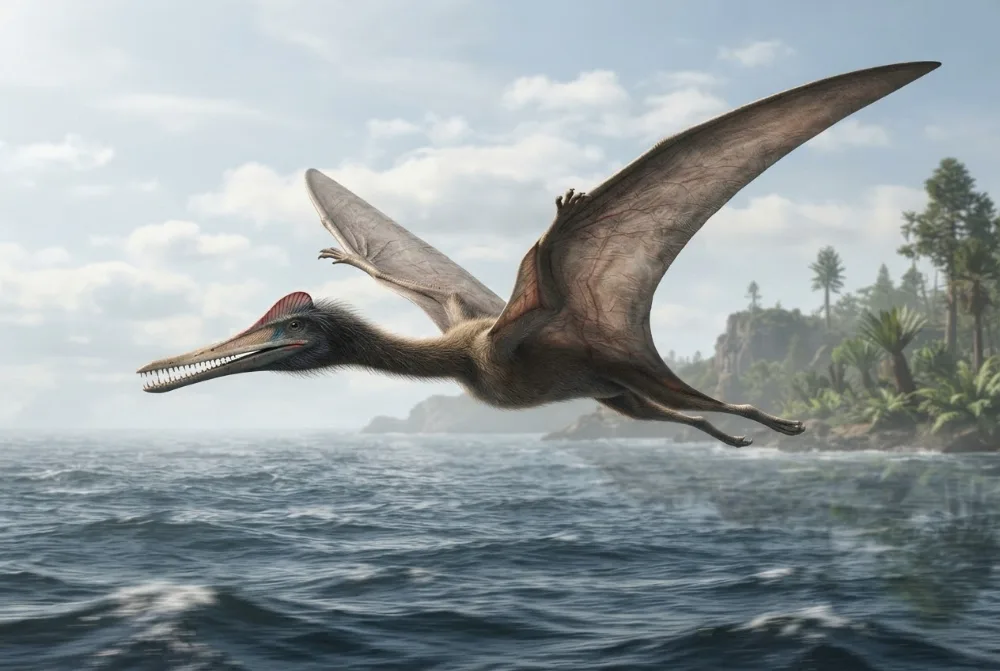
Cimoliopterus was a flying reptile that soared over the seas during the time of the dinosaurs. It had a long, toothy snout and a thin crest on its beak. It probably caught fish by swooping down and snatching them from the water.51
Azalaki na bomoi ntango nini?
Azalaki monene boni?
Mapapu na ye ezalaki monene boni?
 mapapu monene lokola bavelo 3 na molongo⚽akokaki kopumbwa kokatisa esika mobimba ya ndembo na sekonde 5,5
Cimoliopterus azalaki monene boni soki tokokanisi na YO?
Kaka matematiki na navigatere na yo. Eloko moko te ebombami to etindami esika moko.
Azalaki na mbangu boni?


Makambo ya kosepelisa
Cimoliopterus had a thin crest on the top of its snout that started above the fourth pair of teeth.1
The tip of its snout was small and blunt, and the front of the upper jaw sloped downward at about a 45-degree angle.1
One species, Cimoliopterus dunni, was discovered in Texas and is the first North American record of this pterosaur genus.1
It had at least 26 teeth in its upper jaw, and the first pair pointed more downward than forward.1
Mituna oyo batunaka mingi na ntina na Cimoliopterus
?How big was Cimoliopterus?
Cimoliopterus cuvieri had a wingspan of about 3.5 metres (11 feet), and Cimoliopterus dunni was similar in size. One Cimoliopterus specimen had a wingspan of about 5 metres (16 feet).3
?What did Cimoliopterus eat?
It probably ate fish. It may have flown over the water and dipped its long jaws in to catch fish with its interlocking teeth.34
?Could Cimoliopterus fly?
Yes, it was a flying reptile. It was probably good at long-distance soaring over oceans, and its fossils are mostly found in marine rocks.3
?Why did Cimoliopterus have a crest?
Scientists are not sure. Some think the crest helped steady its jaws in the water while fishing, but it may have been for display.3
Mpo na bayebi ya badino
- Nkombo ya siansi
- Cimoliopterus
- Nkombo epesamaki na
- Rodrigues and Kellner 20135
- Lisanga
- Bareptile oyo bapumbwaka
- Libota / klade
- Pteranodontoidea5
- Klasifikasio
- Pterosauria > Pterodactyloidea5
- Mbula ya mabanga
- mbula milio 100 kino 90 (Cenomanian / Turonian)5
- Milongo ya mabanga
- Britton5
- Bikolo
- Angeletere, Amerika5
- Bafosile oyo ekomami
- 2 na The Paleobiology Database5
- Ntango bamonaki yango
- The genus Cimoliopterus was named in 2013 by paleontologists Taissa Rodrigues and Alexander Kellner based on fossils from England. A second species, Cimoliopterus dunni, was described in 2015 by Timothy Myers from a partial snout found in Texas.51
- Naino bazali kowelana
- Scientists are not sure exactly how large Cimoliopterus grew, because only parts of the skull have been found so far.1
Esika makambo euti
- First North American occurrence of the toothed pteranodontoid pterosaur Cimoliopterus: Journal of Vertebrate Paleontology: Vol 35 , No 6 - Get Access (tandfonline.com)
- PBDB Taxon (paleobiodb.org)
- Cimoliopterus (en.wikipedia.org)
- New North American pterosaur is a Texan -- but flying reptile's closest cousin is English | EurekAlert! (eurekalert.org)
- Cimoliopterus in The Paleobiology Database (CC BY 4.0): mbula, bisika, milongo ya mabanga, klasifikasio.
Likambo nyonso na lokasa oyo ezali na nimero oyo elakisi liziba na yango. Soki tosali libunga, limbisa biso, tozali bato balingaka badino, zulunalo ya siansi te. Yebisa biso na [email protected] mpe tokobongisa yango.
 Rex azali na nzala! Dino Wiki ezali mosala ya tata moko mpo na mwana na ye ya mobali oyo alingaka badino, ofele, piblisite te mpe batrakere te. Bato bakolo bakoki kopesa Rex biskwi mpo na kosalisa ete etikala na internet.Leisa Rex
 Pteranodon
 Quetzalcoatlus
 Dorygnathus
 Rhamphorhynchus
 Anhanguera
 Pterodactylus
 Tyrannosaurus
 Triceratops
 Velociraptor
 Spinosaurus
 Ankylosaurus
 Parasaurolophus