 Ozali dino nini? Kwizi
 Etumba ya badino
 Mbangu ya badino
 Masano mike ya badino
 Albumu ya bastika
 Bilisti TOP ya badino
 Kamwisa ngai!
Azalaki na bomoi ntango nini?

Azalaki monene boni?
Azalaki molai boni?
Azalaki molai boni na likolo?
kokanisa
Azalaki kilo boni?
 molai lokola bambwa 3 zolo kino mokila🍌molai lokola matoko 16 oyo balandani🍉kilo lokola bapasteke 22🧸kilo lokola bana 6 ya eteyelo ya bana mike🎒kilo lokola bana 3 ya kelasi🏃akokaki kopota metele 100 na sekonde 7,5 (moto oyo aleki mbangu asalelaka 9,6)
Citipati azalaki monene boni soki tokokanisi na YO?
Kaka matematiki na navigatere na yo. Eloko moko te ebombami to etindami esika moko.
Azalaki na mbangu boni?


Makambo ya kosepelisa
Citipati means 'funeral pyre lord' in Sanskrit, named after a skeleton-like spirit in Tibetan folklore.1
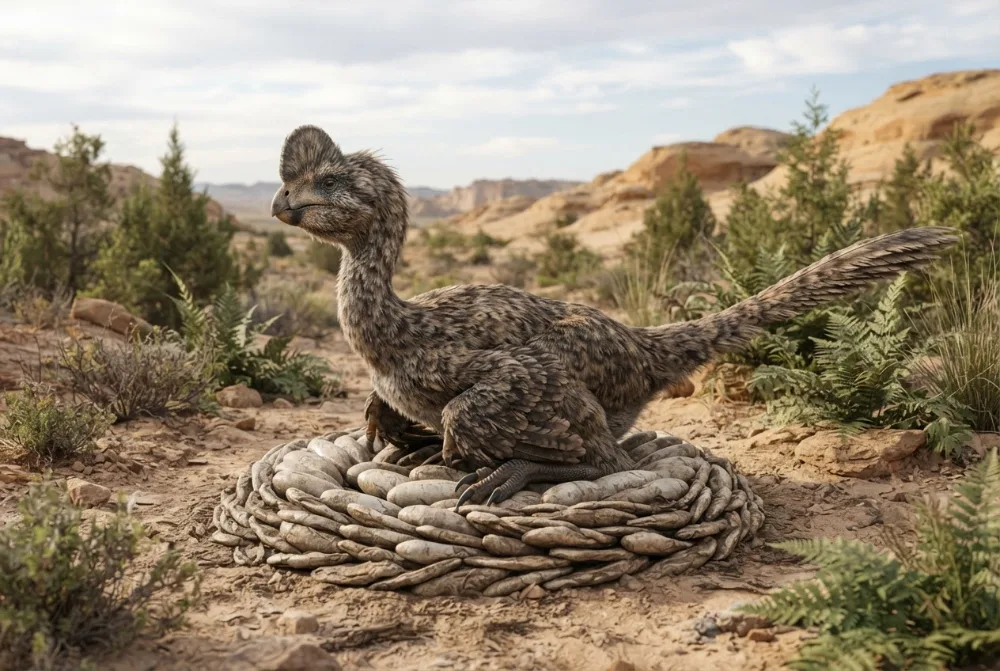
One famous Citipati fossil is nicknamed 'Big Mama' because it was found sitting on a nest of eggs.1
Citipati had a pygostyle, a fused tailbone that supported a fan of feathers, just like modern birds.1
Its arms and tail were covered in long feathers that probably helped shade and protect its eggs and babies.1
Citipati was one of the largest oviraptorids, about the size of an emu, and weighed as much as a large dog.1
Scientists think Citipati may have brought small dinosaurs to its nest to feed its hatchlings.1
Mituna oyo batunaka mingi na ntina na Citipati
?How big was Citipati?
Citipati was about 2.5 to 2.9 metres long and weighed 75 to 110 kilograms. That is much larger than an emu.1
?What did Citipati eat?
Citipati was probably omnivorous, meaning it ate both plants and meat. Scientists think it may have brought small dinosaurs to its nest to feed its babies.12
?Did Citipati have feathers?
Yes, Citipati had long feathers on its arms and tail. These feathers probably helped protect its eggs and babies from sun, wind, and rain.1
?Why did Citipati sit on its eggs?
Citipati sat on its eggs to keep them warm and safe, just like birds do today. Its arms spread over the nest helped shade and protect the eggs.13
Mobuki masapo
Lisapo: Oviraptorids like Citipati were egg thieves.
Solo: The name Oviraptor means 'egg thief', but fossils show Citipati was a caring parent that brooded its own eggs, not a robber.1
Mpo na bayebi ya badino
- Nkombo ya siansi
- Citipati
- Nkombo epesamaki na
- Clark et al. 20014
- Lisanga
- Badino ya nsala ya kokamwa
- Libota / klade
- Oviraptoridae4
- Klasifikasio
- Theropoda > Oviraptorosauria4
- Mbula ya mabanga
- mbula milio 84 kino 72 (Campanian)4
- Milongo ya mabanga
- Djadokhta4
- Bikolo
- Mongoli4
- Bafosile oyo ekomami
- 2 na The Paleobiology Database4
- Ntango bamonaki yango
- Citipati was named in 2001 by paleontologists James Clark, Mark Norell, and Rinchen Barsbold. The first fossils were found in the 1990s at Ukhaa Tolgod in Mongolia.12
- Naino bazali kowelana
- Scientists are not sure if Citipati was mostly a plant-eater or an omnivore that also ate meat.1
Esika makambo euti
- Citipati (en.wikipedia.org)
- Citipati | Natural History Museum (nhm.ac.uk)
- Citipati Osmolskae: Get to Know a Dino | AMNH (amnh.org)
- Citipati in The Paleobiology Database (CC BY 4.0): mbula, bisika, milongo ya mabanga, klasifikasio.
Likambo nyonso na lokasa oyo ezali na nimero oyo elakisi liziba na yango. Soki tosali libunga, limbisa biso, tozali bato balingaka badino, zulunalo ya siansi te. Yebisa biso na [email protected] mpe tokobongisa yango.
 Rex azali na nzala! Dino Wiki ezali mosala ya tata moko mpo na mwana na ye ya mobali oyo alingaka badino, ofele, piblisite te mpe batrakere te. Bato bakolo bakoki kopesa Rex biskwi mpo na kosalisa ete etikala na internet.Leisa Rex
 Therizinosaurus
 Oviraptor
 Chirostenotes
 Citipes
 Leptorhynchos
 Avimimus
 Tyrannosaurus
 Triceratops
 Velociraptor
 Spinosaurus
 Ankylosaurus
 Parasaurolophus