 Ozali dino nini? Kwizi
 Etumba ya badino
 Mbangu ya badino
 Masano mike ya badino
 Albumu ya bastika
 Bilisti TOP ya badino
 Kamwisa ngai!
Ganzhousaurus
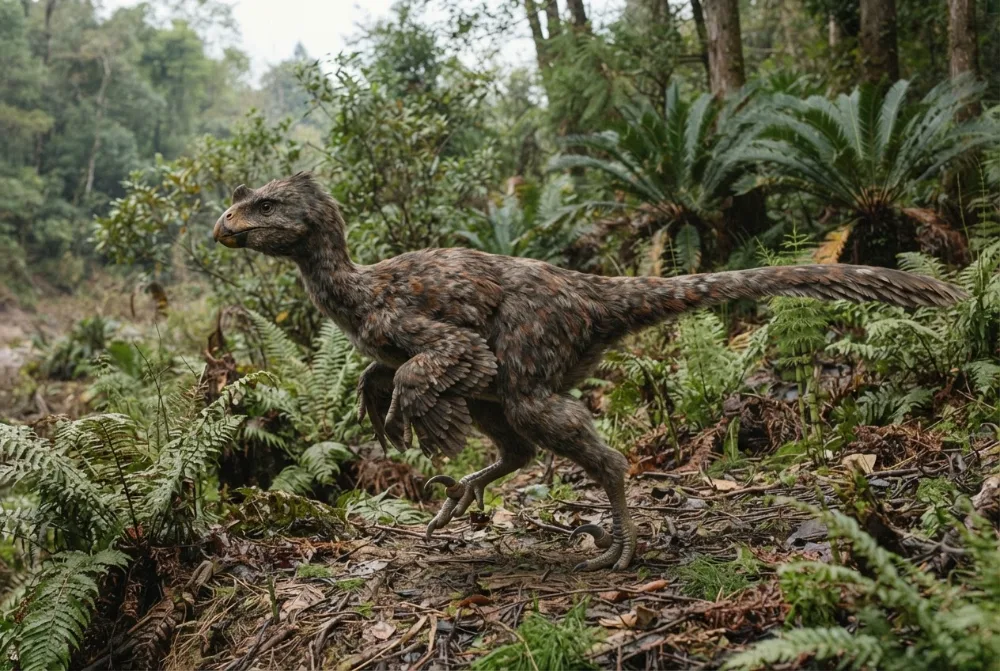
Ganzhousaurus was a small, bird-like dinosaur that lived in southern China near the end of the Age of Dinosaurs. It had a beaky mouth and probably used its strong claws and teeth to eat plants, seeds, and maybe even small animals.14
Azalaki na bomoi ntango nini?
Azalaki monene boni?
Azalaki molai boni?
Azalaki molai boni na likolo?
kokanisa
 molai lokola bapusu 4 ya ndako zolo kino mokila🍌molai lokola matoko 11 oyo balandani🏃akokaki kopota metele 100 na sekonde 8 (moto oyo aleki mbangu asalelaka 9,6)
Ganzhousaurus azalaki monene boni soki tokokanisi na YO?
Kaka matematiki na navigatere na yo. Eloko moko te ebombami to etindami esika moko.
Azalaki na mbangu boni?


Makambo ya kosepelisa
Ganzhousaurus lived alongside at least four other oviraptorid dinosaurs, including Banji long and Nankangia jiangxiensis, all in the same area.1
Its lower jaw had a shallow groove and a special window (the external mandibular fenestra) that was split into two parts by a bone.2
The name Ganzhousaurus means 'Ganzhou lizard' after the city in China where its fossils were found.1
Ganzhousaurus lived during the very end of the Cretaceous Period, about 72 to 66 million years ago.1
Scientists are not sure exactly where Ganzhousaurus fits in the oviraptorid family tree; some think it is related to Oviraptor, others to the 'ingeniine' group.1
This dinosaur probably had feathers, like many of its oviraptorid relatives, helping it stay warm and maybe even show off.1
Mituna oyo batunaka mingi na ntina na Ganzhousaurus
?How big was Ganzhousaurus?
Its exact size is not known from the sources, but it was a small oviraptorid dinosaur, similar in size to other members of its group.12
?What did Ganzhousaurus eat?
Ganzhousaurus was probably mostly herbivorous, eating plants and seeds with its beaky mouth and strong claws.1
?Did Ganzhousaurus have feathers?
Yes, like many of its oviraptorid relatives, Ganzhousaurus probably had feathers to keep warm and maybe for display.1
Mobuki masapo
Lisapo: Some people think all oviraptorids were egg thieves.
Solo: Ganzhousaurus and its relatives probably ate plants and small animals, not just eggs. Their beaks were well-suited for crushing seeds and tough plants.1
Mpo na bayebi ya badino
- Nkombo ya siansi
- Ganzhousaurus
- Nkombo epesamaki na
- Wang et al. 20134
- Lisanga
- Badino ya nsala ya kokamwa
- Libota / klade
- Oviraptoridae4
- Klasifikasio
- Theropoda > Oviraptorosauria4
- Mbula ya mabanga
- mbula milio 72 kino 66 (Maastrichtian)4
- Bikolo
- Sina4
- Bafosile oyo ekomami
- 1 na The Paleobiology Database4
- Ntango bamonaki yango
- Ganzhousaurus was named in 2013 by scientists Shuo Wang, Chengkai Sun, Corwin Sullivan, and Xing Xu, based on a single skeleton found in the Nanxiong Formation of southern China.12
- Naino bazali kowelana
- Scientists still debate whether Ganzhousaurus was more closely related to Oviraptor or to the 'ingeniine' group of oviraptorids.1
Esika makambo euti
- Ganzhousaurus (en.wikipedia.org)
- A new oviraptorid (Dinosauria: Theropoda) from the Upper Cretaceous of southern China (mapress.com)
- Ganzhousaurus - (dinosanddesigns.com)
- Ganzhousaurus in The Paleobiology Database (CC BY 4.0): mbula, bisika, milongo ya mabanga, klasifikasio.
Likambo nyonso na lokasa oyo ezali na nimero oyo elakisi liziba na yango. Soki tosali libunga, limbisa biso, tozali bato balingaka badino, zulunalo ya siansi te. Yebisa biso na [email protected] mpe tokobongisa yango.
 Rex azali na nzala! Dino Wiki ezali mosala ya tata moko mpo na mwana na ye ya mobali oyo alingaka badino, ofele, piblisite te mpe batrakere te. Bato bakolo bakoki kopesa Rex biskwi mpo na kosalisa ete etikala na internet.Leisa Rex
 Therizinosaurus
 Oviraptor
 Chirostenotes
 Citipes
 Leptorhynchos
 Avimimus
 Tyrannosaurus
 Triceratops
 Velociraptor
 Spinosaurus
 Ankylosaurus
 Parasaurolophus