 Ozali dino nini? Kwizi
 Etumba ya badino
 Mbangu ya badino
 Masano mike ya badino
 Albumu ya bastika
 Bilisti TOP ya badino
 Kamwisa ngai!
Azalaki na bomoi ntango nini?

Azalaki monene boni?
Azalaki kilo boni?

Gargantuavis azalaki monene boni soki tokokanisi na YO?
Kaka matematiki na navigatere na yo. Eloko moko te ebombami to etindami esika moko.
Azalaki na mbangu boni?


Makambo ya kosepelisa
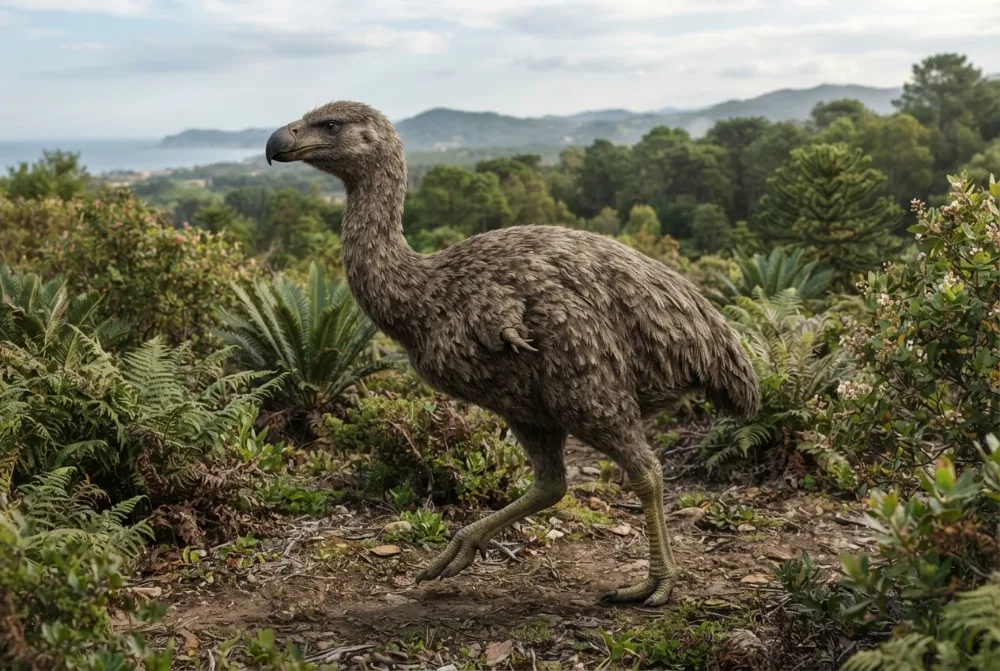
Gargantuavis is the largest known bird from the Mesozoic Era, the time of the dinosaurs.1
Its fossils were first found in 1995 near a vineyard in France, so scientists named it philoinos, which means 'one who likes wine'.1
Gargantuavis lived on islands in Europe when the sea level was higher.1
It had a long, slender neck and probably did not have a big head.1
Gargantuavis grew quickly when young, then took at least 10 years to become fully grown.1
It lived alongside meat-eating dinosaurs like abelisaurids and dromaeosaurids.1
Mituna oyo batunaka mingi na ntina na Gargantuavis
?Was Gargantuavis a dinosaur?
Yes, Gargantuavis was a bird, and birds are a type of dinosaur called avialan dinosaurs. So it was a dinosaur.1
?How big was Gargantuavis?
Gargantuavis was about the size of a cassowary to an ostrich, and weighed up to 141 kg (311 lb), as heavy as a large adult.1
?Could Gargantuavis fly?
No, Gargantuavis could not fly. Its legs were strong for walking, but it was not built for running fast.1
?What did Gargantuavis eat?
Nobody knows for sure because no skull bones have been found. Scientists are still studying its diet.1
?When did Gargantuavis live?
Gargantuavis lived about 73.5 to 71.5 million years ago, during the Late Cretaceous period.1
?Where was Gargantuavis found?
Its fossils were found in France, Spain, and Romania. The first one was discovered in 1995 near a vineyard in France.1
Mpo na bayebi ya badino
- Nkombo ya siansi
- Gargantuavis
- Nkombo epesamaki na
- Buffetaut and Le Loeuff 19982
- Lisanga
- Bandeke ya liboso
- Libota / klade
- Gargantuaviidae2
- Klasifikasio
- Theropoda > Avialae2
- Mbula ya mabanga
- mbula milio 84 kino 66 (Campanian / Maastrichtian)2
- Milongo ya mabanga
- Marnes Rouges Inférieures, Grès à Reptiles, Vitoria2
- Bikolo
- Falansa, Espanye2
- Bafosile oyo ekomami
- 4 na The Paleobiology Database2
- Ntango bamonaki yango
- The first Gargantuavis fossil was found in 1995 in Var, southeastern France. It was named by Eric Buffetaut and Jean Le Loeuff in 1998.1
- Naino bazali kowelana
- Scientists are not sure what Gargantuavis ate because no skull has been found.1
Esika makambo euti
- Gargantuavis (en.wikipedia.org)
- Gargantuavis in The Paleobiology Database (CC BY 4.0): mbula, bisika, milongo ya mabanga, klasifikasio.
Likambo nyonso na lokasa oyo ezali na nimero oyo elakisi liziba na yango. Soki tosali libunga, limbisa biso, tozali bato balingaka badino, zulunalo ya siansi te. Yebisa biso na [email protected] mpe tokobongisa yango.
 Rex azali na nzala! Dino Wiki ezali mosala ya tata moko mpo na mwana na ye ya mobali oyo alingaka badino, ofele, piblisite te mpe batrakere te. Bato bakolo bakoki kopesa Rex biskwi mpo na kosalisa ete etikala na internet.Leisa Rex
 Archaeopteryx
 Hesperornis
 Ichthyornis
 Baptornis
 Jurapteryx
 Gobipteryx
 Tyrannosaurus
 Triceratops
 Velociraptor
 Spinosaurus
 Ankylosaurus
 Parasaurolophus