 Ozali dino nini? Kwizi
 Etumba ya badino
 Mbangu ya badino
 Masano mike ya badino
 Albumu ya bastika
 Bilisti TOP ya badino
 Kamwisa ngai!
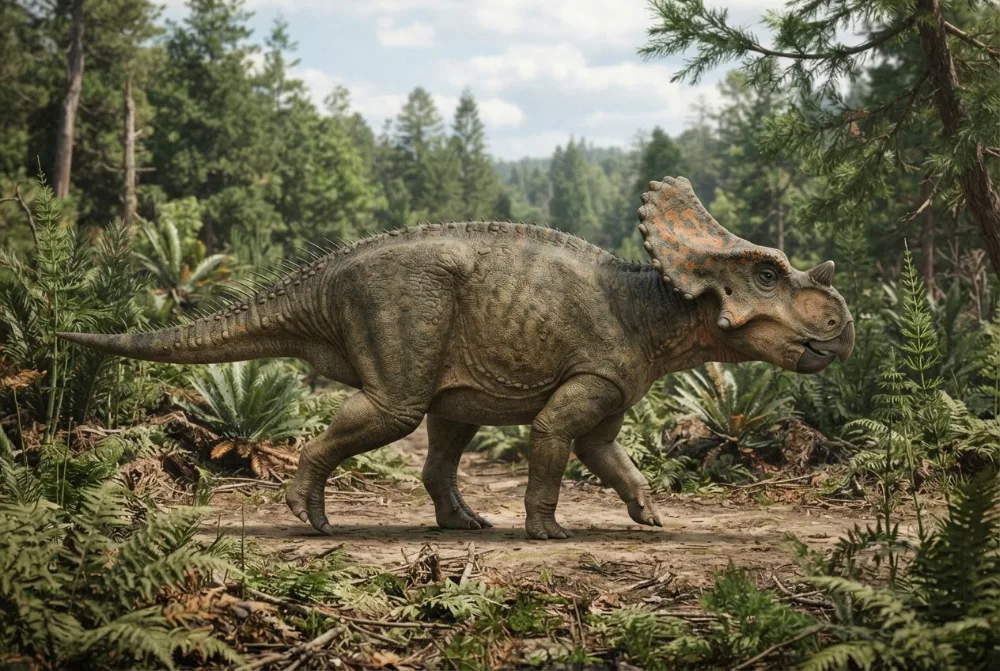
Montanoceratops
Montanoceratops was a small, plant-eating dinosaur with a beak and a bony frill on its head. It lived in North America during the Late Cretaceous, about 72 million years ago. This dinosaur is part of a group called leptoceratopsids, which were like smaller cousins of the famous Triceratops.1
Azalaki na bomoi ntango nini?
Azalaki monene boni?
Azalaki molai boni?
Azalaki molai boni na likolo?
kokanisa
Azalaki kilo boni?
 molai lokola bambwa 3 zolo kino mokila🍌molai lokola matoko 17 oyo balandani🍉kilo lokola bapasteke 34🧸kilo lokola bana 9 ya eteyelo ya bana mike🎒kilo lokola bana 5 ya kelasi🏃akokaki kopota metele 100 na sekonde 9,7 (moto oyo aleki mbangu asalelaka 9,6)
Montanoceratops azalaki monene boni soki tokokanisi na YO?
Kaka matematiki na navigatere na yo. Eloko moko te ebombami to etindami esika moko.
Azalaki na mbangu boni?


Makambo ya kosepelisa
Montanoceratops was first thought to be a species of Leptoceratops, but in 1951 it got its own genus name.1
The nose horn of Montanoceratops was actually a misidentified cheekbone, which fooled paleontologists for years.1
Montanoceratops lived alongside bigger horned dinosaurs, but it was smaller and had a deeper tail.1
Fossils of Montanoceratops have been found in rocks that are between 83.6 and 66 million years old.3
Montanoceratops is part of a group called leptoceratopsids, which were diverse and lived in the same habitats as the bigger ceratopsids.1
Mituna oyo batunaka mingi na ntina na Montanoceratops
?How big was Montanoceratops?
Montanoceratops was a small dinosaur, about 2.5 metres (8.2 feet) long and weighed around 170 kilograms (370 pounds).2
?What did Montanoceratops eat?
Montanoceratops was a herbivore, meaning it ate plants. It used its sharp beak to bite off leaves or needles.2
?Did Montanoceratops have a horn?
It was once thought to have a horn on its nose, but that bone was later identified as a misplaced cheek horn. So it did not have a nose horn.21
?Where did Montanoceratops live?
Montanoceratops lived in what is now Montana, USA, and Alberta, Canada, about 70 million years ago.2
Mobuki masapo
Lisapo: Montanoceratops had a prominent nose horn like some other horned dinosaurs.
Solo: The supposed nose horn was actually a misidentified cheekbone, so Montanoceratops likely did not have a nose horn.1
Mpo na bayebi ya badino
- Nkombo ya siansi
- Montanoceratops
- Nkombo epesamaki na
- Sternberg 19513
- Lisanga
- Badino na maseke
- Libota / klade
- Leptoceratopsidae3
- Klasifikasio
- Ornithischia > Ceratopsia3
- Mbula ya mabanga
- mbula milio 84 kino 66 (Campanian / Maastrichtian)3
- Milongo ya mabanga
- St. Mary River, Horseshoe Canyon3
- Bikolo
- Amerika, Kanada3
- Bafosile oyo ekomami
- 3 na The Paleobiology Database3
- Ntango bamonaki yango
- Barnum Brown and Erich Schlaikjer described the first fossil in 1942, but they called it Leptoceratops cerorhynchos. In 1951, Charles M. Sternberg realized it was different and named it Montanoceratops.1
- Naino bazali kowelana
- Scientists still debate exactly how Montanoceratops is related to other horned dinosaurs, especially because some fossils were misidentified.1
Esika makambo euti
- M is for Montanoceratops | National Geographic (nationalgeographic.com)
- Montanoceratops (en.wikipedia.org)
- Montanoceratops in The Paleobiology Database (CC BY 4.0): mbula, bisika, milongo ya mabanga, klasifikasio.
Likambo nyonso na lokasa oyo ezali na nimero oyo elakisi liziba na yango. Soki tosali libunga, limbisa biso, tozali bato balingaka badino, zulunalo ya siansi te. Yebisa biso na [email protected] mpe tokobongisa yango.
 Rex azali na nzala! Dino Wiki ezali mosala ya tata moko mpo na mwana na ye ya mobali oyo alingaka badino, ofele, piblisite te mpe batrakere te. Bato bakolo bakoki kopesa Rex biskwi mpo na kosalisa ete etikala na internet.Leisa Rex
 Triceratops
 Protoceratops
 Ojoceratops
 Tatankaceratops
 Psittacosaurus
 Centrosaurus
 Tyrannosaurus
 Velociraptor
 Spinosaurus
 Ankylosaurus
 Parasaurolophus
 Pteranodon