 Ozali dino nini? Kwizi
 Etumba ya badino
 Mbangu ya badino
 Masano mike ya badino
 Albumu ya bastika
 Bilisti TOP ya badino
 Kamwisa ngai!
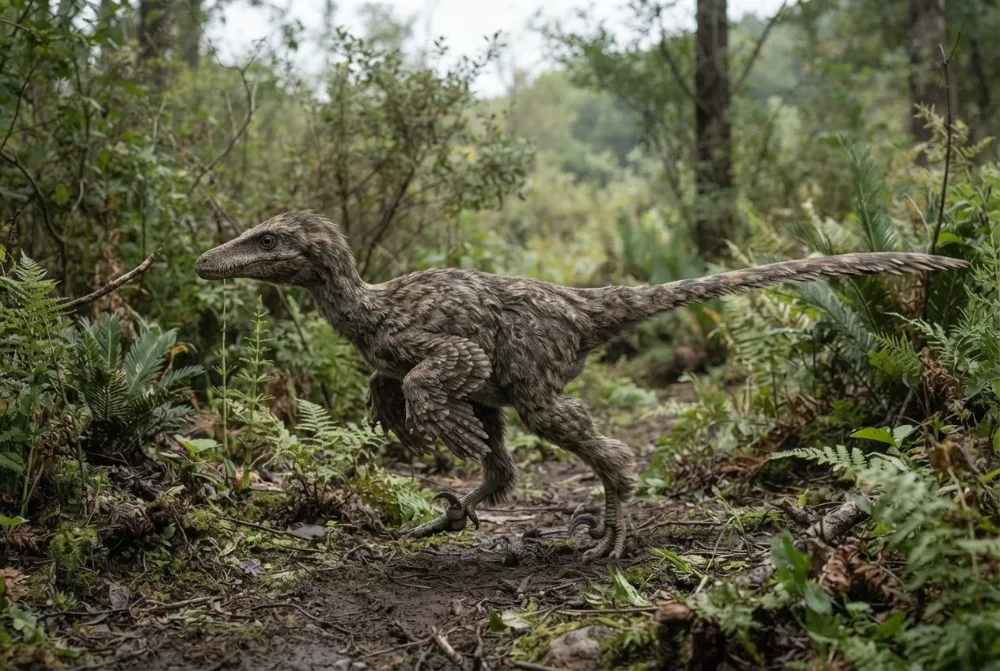
Sinornithoides
Sinornithoides was a tiny, bird-like dinosaur that lived about 113 million years ago. It was probably a fast hunter of small prey like insects. One fossil was found curled up like a sleeping bird, with its snout tucked under its arm.12
Azalaki na bomoi ntango nini?
Azalaki monene boni?
Azalaki molai boni?
Azalaki molai boni na likolo?
Azalaki kilo boni?
 molai lokola bapusu 2 ya ndako zolo kino mokila🍌molai lokola matoko 6 oyo balandanipene kilo lokola pusu ya ndako🍌kilo lokola matoko 21🪑moke ete akoka koleka na nse ya kiti🏃akokaki kopota metele 100 na sekonde 14 (moto oyo aleki mbangu asalelaka 9,6)
Sinornithoides azalaki monene boni soki tokokanisi na YO?
Kaka matematiki na navigatere na yo. Eloko moko te ebombami to etindami esika moko.
Azalaki na mbangu boni?


Makambo ya kosepelisa
Sinornithoides had a sickle claw on its second toe, like other troodontids, which it may have used to grip prey.1
The fossil was preserved in a sleeping pose, with its snuck under one hand, just like a modern bird resting.1
Its skull was long and pointed, but the head was short compared to its body length.1
The teeth on the front of its upper jaw had no serrations, but the back teeth had small serrations only on one edge.1
Sinornithoides had a furcula (wishbone) and a basket of fifteen pairs of belly ribs called gastralia.1
Troodontids like Sinornithoides had some of the highest brain-to-body sizes among non-bird dinosaurs, meaning they were probably smart.1
Mituna oyo batunaka mingi na ntina na Sinornithoides
?How big was Sinornithoides?
About 1 metre long, and weighed around 2.5 kilograms. That is about the size of a large chicken.13
?What did Sinornithoides eat?
It probably ate invertebrates and other small prey, like insects and lizards.1
?Was Sinornithoides a dinosaur?
Yes, it was a small, bird-like theropod dinosaur from the Early Cretaceous period.1
?Did Sinornithoides have feathers?
The sources do not mention feathers directly, but as a troodontid closely related to birds, it likely had feathers. Many troodontid fossils show evidence of feathers.1
Mpo na bayebi ya badino
- Nkombo ya siansi
- Sinornithoides
- Nkombo epesamaki na
- Russell and Dong 19944
- Lisanga
- Baraptore
- Libota / klade
- Troodontidae4
- Klasifikasio
- Theropoda > Troodontidae4
- Mbula ya mabanga
- mbula milio 113 kino 110 (Albian)4
- Milongo ya mabanga
- Zhonggou, Ejinhoro4
- Bikolo
- Sina4
- Bafosile oyo ekomami
- 2 na The Paleobiology Database4
- Ntango bamonaki yango
- A Chinese-Canadian expedition found the nearly complete skeleton in 1988 near Huamuxiao, in the Ordos Basin of Inner Mongolia. Dale Russell and Dong Zhiming named it Sinornithoides youngi in 1993/1994, honoring paleontologist Yang Zhongjian.12
Esika makambo euti
- Sinornithoides (en.wikipedia.org)
- cdnsciencepub.com (cdnsciencepub.com)
- SINORNITHOIDES : DinoChecker dinosaur archive (dinochecker.com)
- Sinornithoides in The Paleobiology Database (CC BY 4.0): mbula, bisika, milongo ya mabanga, klasifikasio.
Likambo nyonso na lokasa oyo ezali na nimero oyo elakisi liziba na yango. Soki tosali libunga, limbisa biso, tozali bato balingaka badino, zulunalo ya siansi te. Yebisa biso na [email protected] mpe tokobongisa yango.
 Rex azali na nzala! Dino Wiki ezali mosala ya tata moko mpo na mwana na ye ya mobali oyo alingaka badino, ofele, piblisite te mpe batrakere te. Bato bakolo bakoki kopesa Rex biskwi mpo na kosalisa ete etikala na internet.Leisa Rex
 Velociraptor
 Microraptor
 Deinonychus
 Asiamericana
 Richardoestesia
 Saurornitholestes
 Stegosaurus
 Iguanodon
 Archaeopteryx
 Giganotosaurus
 Baryonyx
 Paronychodon