 Ozali dino nini? Kwizi
 Etumba ya badino
 Mbangu ya badino
 Masano mike ya badino
 Albumu ya bastika
 Bilisti TOP ya badino
 Kamwisa ngai!
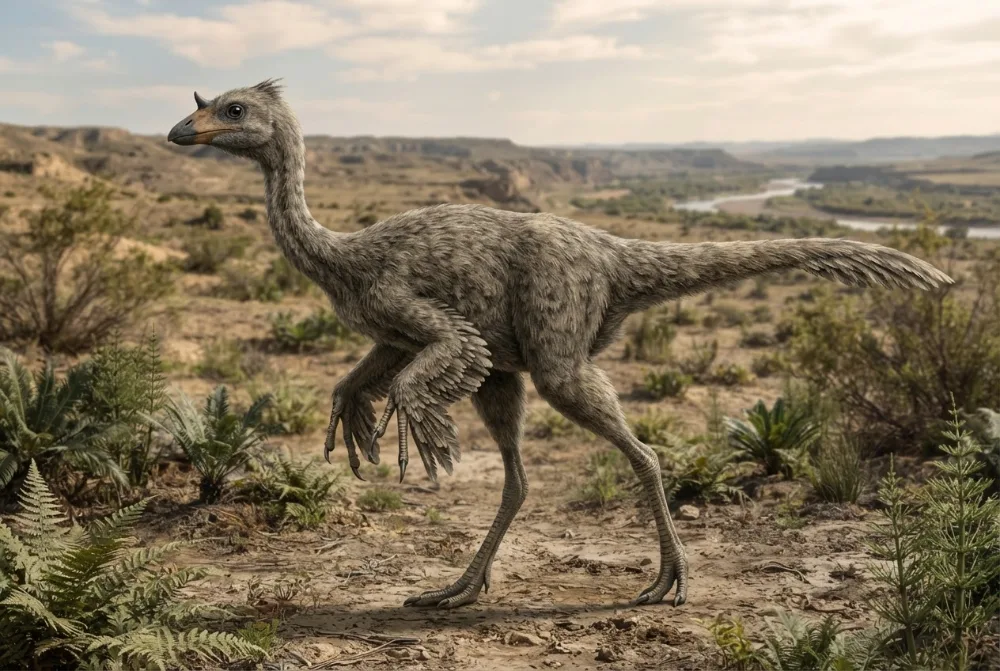
Sinornithomimus
Sinornithomimus was a small, fast dinosaur that looked a bit like an ostrich. It lived in what is now China during the Late Cretaceous Period, about 92 to 90 million years ago. Scientists found many skeletons together, showing that these dinosaurs probably lived in herds.12
Azalaki na bomoi ntango nini?
Azalaki monene boni?
Azalaki molai boni?
Azalaki molai boni na likolo?
kokanisa
Azalaki kilo boni?
 molai lokola bambwa 2,5 zolo kino mokila🍌molai lokola matoko 14 oyo balandani🍉kilo lokola bapasteke 18🧸kilo lokola bana 5 ya eteyelo ya bana mike🎒kilo lokola bana 3 ya kelasi🏃akokaki kopota metele 100 na sekonde 5,5 (moto oyo aleki mbangu asalelaka 9,6)
Sinornithomimus azalaki monene boni soki tokokanisi na YO?
Kaka matematiki na navigatere na yo. Eloko moko te ebombami to etindami esika moko.
Azalaki na mbangu boni?


Makambo ya kosepelisa
At least fourteen skeletons of Sinornithomimus were found together in one spot, and most of them were young dinosaurs. This suggests they lived in groups, maybe to protect each other from predators.21
Sinornithomimus had gastroliths, or stomach stones, that helped it grind up tough plants. This is rare among bird-like dinosaurs and shows it was a plant-eater.1
The first fossils of Sinornithomimus were discovered in 1997 by Chinese paleontologist Dong Zhiming during the Mongol Highland International Dinosaur Project.1
Sinornithomimus was about 2.5 meters (8.2 feet) long and weighed around 91 kilograms (201 pounds). That is about as heavy as a large adult human.1
Adult Sinornithomimus had longer lower legs compared to their upper legs than juveniles did. This means they could run faster as they grew up.21
A second herd of thirteen young Sinornithomimus was found in 2001. They probably died together after getting stuck in the mud of a drying waterhole.1
Mituna oyo batunaka mingi na ntina na Sinornithomimus
?What did Sinornithomimus eat?
It ate plants. Scientists found gastroliths (stomach stones) in its fossils that helped grind up tough plant food.1
?How fast could Sinornithomimus run?
Nobody knows exactly, but it was a fast runner. Adults had longer lower legs than juveniles, which made them even faster.1
Mpo na bayebi ya badino
- Nkombo ya siansi
- Sinornithomimus
- Nkombo epesamaki na
- Kobayashi and Lü 20035
- Lisanga
- Badino-otrushe
- Libota / klade
- Ornithomimidae5
- Klasifikasio
- Theropoda > Ornithomimosauria5
- Mbula ya mabanga
- mbula milio 94 kino 90 (Turonian)5
- Milongo ya mabanga
- Ulansuhai5
- Bikolo
- Sina5
- Bafosile oyo ekomami
- 1 na The Paleobiology Database5
- Ntango bamonaki yango
- Sinornithomimus was named and described by Yoshitsugu Kobayashi and Lü Junchang in 2003. The name means 'Chinese bird mimic' and honors Dong Zhiming, who found the first fossils in 1997.12
- Naino bazali kowelana
- Scientists are not sure whether the herds of Sinornithomimus were family groups with adults protecting young, or if the young lived separately from adults while the adults were busy nesting.1
Esika makambo euti
- Sinornithomimus (en.wikipedia.org)
- A new ornithomimid dinosaur with gregarious habits from the Late Cretaceous of China - Acta Palaeontologica Polonica (app.pan.pl)
- PBDB Taxon (paleobiodb.org)
- Young dinosaurs roamed together, died together | University of Chicago News (news.uchicago.edu)
- Sinornithomimus in The Paleobiology Database (CC BY 4.0): mbula, bisika, milongo ya mabanga, klasifikasio.
Likambo nyonso na lokasa oyo ezali na nimero oyo elakisi liziba na yango. Soki tosali libunga, limbisa biso, tozali bato balingaka badino, zulunalo ya siansi te. Yebisa biso na [email protected] mpe tokobongisa yango.
 Rex azali na nzala! Dino Wiki ezali mosala ya tata moko mpo na mwana na ye ya mobali oyo alingaka badino, ofele, piblisite te mpe batrakere te. Bato bakolo bakoki kopesa Rex biskwi mpo na kosalisa ete etikala na internet.Leisa Rex
 Gallimimus
 Ornithomimus
 Struthiomimus
 Deinocheirus
 Dromiceiomimus
 Archaeornithomimus
 Tyrannosaurus
 Triceratops
 Velociraptor
 Spinosaurus
 Ankylosaurus
 Parasaurolophus