 Ozali dino nini? Kwizi
 Etumba ya badino
 Mbangu ya badino
 Masano mike ya badino
 Albumu ya bastika
 Bilisti TOP ya badino
 Kamwisa ngai!
Tamarro
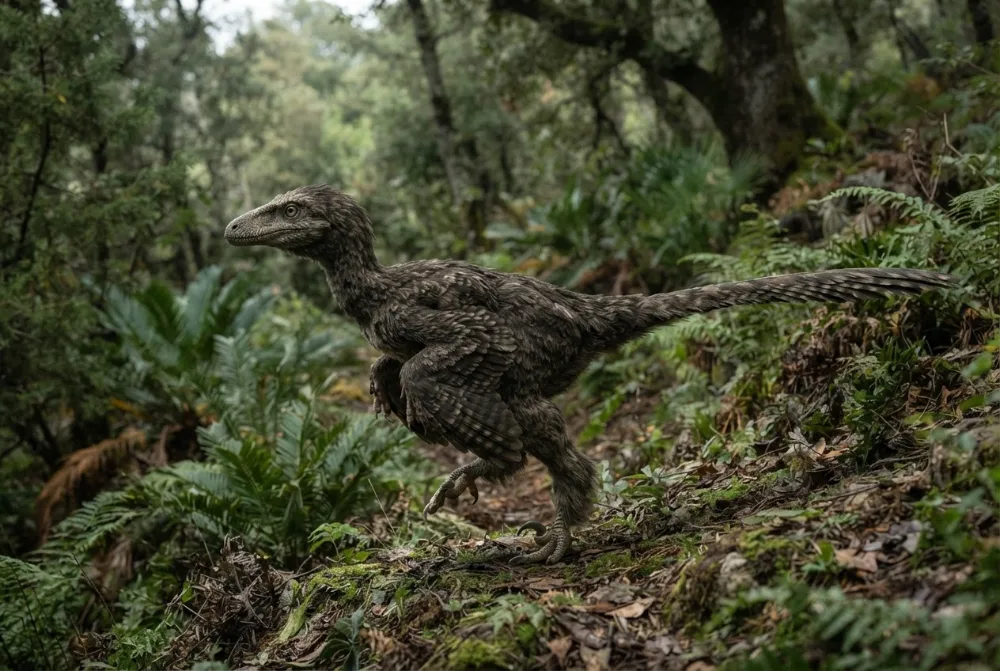
Tamarro was a small, fast-growing dinosaur that lived on an ancient island in what is now Spain. It was a troodontid, a group of bird-like, meat-eating dinosaurs. Scientists only know it from a single foot bone, but that bone has a unique hole not seen in any other troodontid.1
Azalaki na bomoi ntango nini?
Azalaki monene boni?
Azalaki molai boni?
Azalaki molai boni na likolo?
Azalaki kilo boni?
 molai lokola bapusu 4 ya ndako zolo kino mokila🍌molai lokola matoko 11 oyo balandani🍉kilo lokola bapasteke 4🏃akokaki kopota metele 100 na sekonde 8,4 (moto oyo aleki mbangu asalelaka 9,6)
Tamarro azalaki monene boni soki tokokanisi na YO?
Kaka matematiki na navigatere na yo. Eloko moko te ebombami to etindami esika moko.
Azalaki na mbangu boni?


Makambo ya kosepelisa
Tamarro lived at the very end of the Cretaceous period, within 200,000 years of the asteroid that wiped out the dinosaurs.1
Its foot bone shows that Tamarro was a fast grower, reaching nearly adult size quickly, like many island animals.1
Tamarro is the first troodontid dinosaur ever found in Europe.1
The only known fossil of Tamarro is a single right second metatarsal, a bone from the foot.1
This foot bone has a special hole (a foramen) that is not found in any other troodontid, which helped scientists identify it as a new species.1
Tamarro lived on the Ibero-Armorican island, a large island that included parts of modern Spain, Portugal, and France.1
Scientists think Tamarro may have migrated from Asia to Europe, either by land bridges or by island hopping.1
Mituna oyo batunaka mingi na ntina na Tamarro
?What did Tamarro eat?
Tamarro was a meat-eating dinosaur, a troodontid, so it likely ate small animals. Scientists know this from its group, not from its single foot bone.31
?How big was Tamarro?
Tamarro was a small, mid-sized troodontid, but its exact size is unknown because only a foot bone has been found. It was a fast grower, reaching nearly adult size quickly.13
Mpo na bayebi ya badino
- Nkombo ya siansi
- Tamarro
- Nkombo epesamaki na
- Sellés et al. 20214
- Lisanga
- Baraptore
- Libota / klade
- Troodontidae4
- Klasifikasio
- Theropoda > Troodontidae4
- Mbula ya mabanga
- mbula milio 72 kino 66 (Maastrichtian)4
- Milongo ya mabanga
- Talarn4
- Bikolo
- Espanye4
- Bafosile oyo ekomami
- 1 na The Paleobiology Database4
- Ntango bamonaki yango
- Tamarro was discovered in September 2003 by a team from the Museu de la Conca Dellà at the Sant Romà d'Abella site in Spain. It was named in 2021 by Sellés and colleagues.1
- Naino bazali kowelana
- Scientists are not sure whether Tamarro was a dwarf species, like many other dinosaurs that lived on islands, or if it was just a young animal that hadn't finished growing.1
Esika makambo euti
- A fast-growing basal troodontid (Dinosauria: Theropoda) from the latest Cretaceous of Europe | Scientific Reports (nature.com)
- Tamarro insperatus, uno de los últimos dinosaurios que vivió en los Pirineos (nationalgeographic.com.es)
- Tamarro (en.wikipedia.org)
- Tamarro in The Paleobiology Database (CC BY 4.0): mbula, bisika, milongo ya mabanga, klasifikasio.
Likambo nyonso na lokasa oyo ezali na nimero oyo elakisi liziba na yango. Soki tosali libunga, limbisa biso, tozali bato balingaka badino, zulunalo ya siansi te. Yebisa biso na [email protected] mpe tokobongisa yango.
 Rex azali na nzala! Dino Wiki ezali mosala ya tata moko mpo na mwana na ye ya mobali oyo alingaka badino, ofele, piblisite te mpe batrakere te. Bato bakolo bakoki kopesa Rex biskwi mpo na kosalisa ete etikala na internet.Leisa Rex
 Velociraptor
 Microraptor
 Deinonychus
 Asiamericana
 Richardoestesia
 Saurornitholestes
 Tyrannosaurus
 Triceratops
 Spinosaurus
 Ankylosaurus
 Parasaurolophus
 Pteranodon