 Ozali dino nini? Kwizi
 Etumba ya badino
 Mbangu ya badino
 Masano mike ya badino
 Albumu ya bastika
 Bilisti TOP ya badino
 Kamwisa ngai!
Tlatolophus
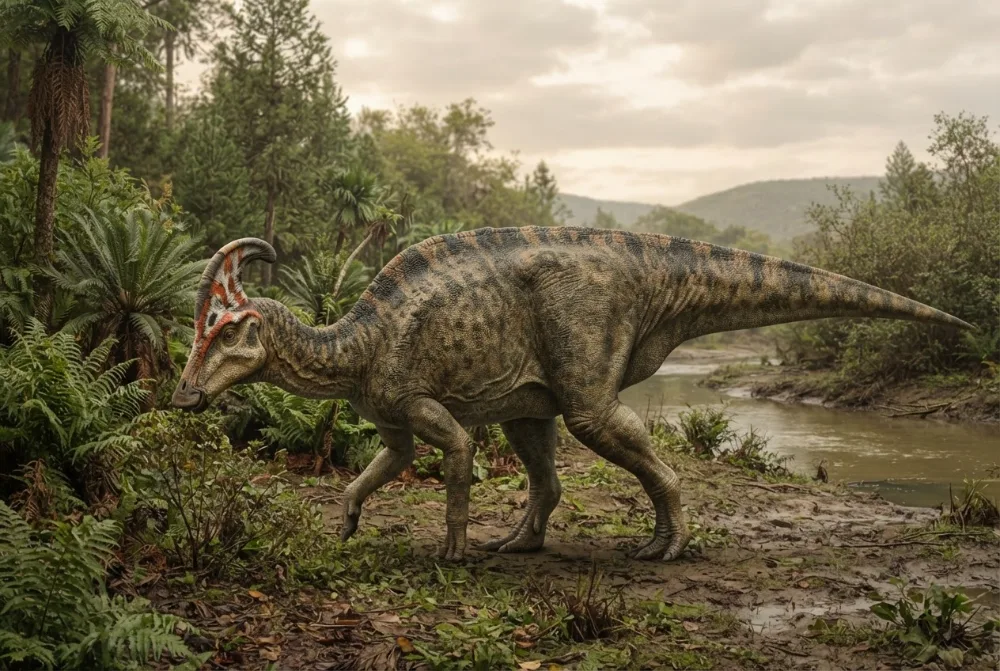
Tlatolophus was a big, plant-eating duck-billed dinosaur with a fancy crest on its head that looked like a comma or a word symbol. It lived in what is now Mexico during the Late Cretaceous, about 73 to 72.5 million years ago. This dinosaur is special because it's one of the most complete duck-billed dinosaurs ever found in Mexico!12
Azalaki na bomoi ntango nini?
Azalaki monene boni?
Azalaki molai boni?
Azalaki molai boni na likolo?
Azalaki kilo boni?

 molai lokola bambwa 8 zolo kino mokila🍌molai lokola matoko 44 oyo balandanikilo lokola bambwa 150🍉kilo lokola bapasteke 600🎒kilo lokola bakelasi 4 mobimba ya bana🐻❄️kilo lokola ba-urs ya pembe 7🏃akokaki kopota metele 100 na sekonde 14 (moto oyo aleki mbangu asalelaka 9,6)
Tlatolophus azalaki monene boni soki tokokanisi na YO?
Kaka matematiki na navigatere na yo. Eloko moko te ebombami to etindami esika moko.
Azalaki na mbangu boni?


Makambo ya kosepelisa
Tlatolophus's crest was hollow and shaped like an upside-down comma, which may have been used for making sounds or showing off.1
The name Tlatolophus comes from the Nahuatl word 'tlatolli' meaning 'word', because its crest looks like the Aztec symbol for 'word'.1
The first fossil was a tail found in 2005, but it took until 2013 for scientists to dig out the whole skeleton, including the skull.1
Tlatolophus is the most complete lambeosaurine (crested duck-billed dinosaur) ever found in Mexico.2
Its skull was tall, and the crest was made of bones from the nose and upper jaw, not just a separate bone.1
Scientists think Tlatolophus was about 8 meters long and weighed nearly 3 metric tons, as heavy as a small elephant.1
Mituna oyo batunaka mingi na ntina na Tlatolophus
?What did Tlatolophus eat?
It was a plant-eater, like all duck-billed dinosaurs. It likely ate leaves, ferns, and other plants with its wide beak.1
?How big was Tlatolophus?
About 8 metres long and weighed nearly 3 metric tons, as heavy as a small elephant.1
?Did Tlatolophus have feathers?
No, duck-billed dinosaurs like Tlatolophus did not have feathers. They were covered in scaly skin.1
?When did Tlatolophus live?
It lived during the Late Cretaceous period, about 73 to 72.5 million years ago.1
Mobuki masapo
Lisapo: Some people think Tlatolophus could swim in the ocean.
Solo: No, Tlatolophus was a land dinosaur that walked on four legs or two, and it ate plants on land.4
Mpo na bayebi ya badino
- Nkombo ya siansi
- Tlatolophus
- Nkombo epesamaki na
- Ramírez-Velasco et al. 20214
- Lisanga
- Minoko ya libata
- Libota / klade
- Hadrosauridae4
- Klasifikasio
- Ornithischia > Ornithopoda > Iguanodontia > Hadrosauridae4
- Mbula ya mabanga
- mbula milio 84 kino 72 (Campanian)4
- Milongo ya mabanga
- Cerro del Pueblo4
- Bikolo
- Meksike4
- Bafosile oyo ekomami
- 1 na The Paleobiology Database4
- Ntango bamonaki yango
- The first Tlatolophus fossil was found in 2005 in Mexico, but it wasn't until 2013 that a team from INAH and UNAM started digging it out. They named it Tlatolophus galorum in 2021.12
- Naino bazali kowelana
- Scientists still debate what the crest was used for, whether for making sounds, attracting mates, or something else.1
Esika makambo euti
- Tlatolophus (en.wikipedia.org)
- Tlatolophus galorum, gen. et sp. nov., a parasaurolophini dinosaur from the upper Campanian of the Cerro del Pueblo Formation, Coahuila, northern Mexico (sciencedirect.com)
- El ‘Tlatolophus galorum’, la nueva especie de dinosaurio hallada en México | EL PAÍS México (elpais.com)
- Tlatolophus in The Paleobiology Database (CC BY 4.0): mbula, bisika, milongo ya mabanga, klasifikasio.
Likambo nyonso na lokasa oyo ezali na nimero oyo elakisi liziba na yango. Soki tosali libunga, limbisa biso, tozali bato balingaka badino, zulunalo ya siansi te. Yebisa biso na [email protected] mpe tokobongisa yango.
 Rex azali na nzala! Dino Wiki ezali mosala ya tata moko mpo na mwana na ye ya mobali oyo alingaka badino, ofele, piblisite te mpe batrakere te. Bato bakolo bakoki kopesa Rex biskwi mpo na kosalisa ete etikala na internet.Leisa Rex
 Parasaurolophus
 Edmontosaurus
 Saurolophus
 Hypacrosaurus
 Corythosaurus
 Kritosaurus
 Tyrannosaurus
 Triceratops
 Velociraptor
 Spinosaurus
 Ankylosaurus
 Pteranodon