 Ozali dino nini? Kwizi
 Etumba ya badino
 Mbangu ya badino
 Masano mike ya badino
 Albumu ya bastika
 Bilisti TOP ya badino
 Kamwisa ngai!
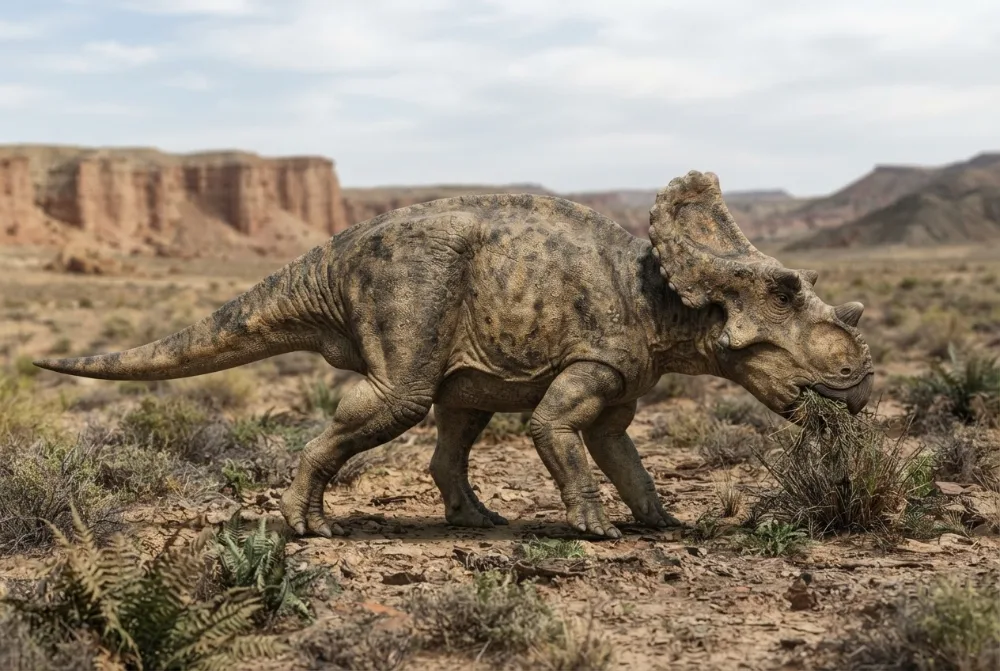
Udanoceratops
Udanoceratops was a big, plant-eating dinosaur that lived in the Gobi Desert of Mongolia. It had a powerful beak and strong jaws that could bite through tough plants, maybe even bone! This dinosaur was one of the largest of its family, the leptoceratopsids.12
Azalaki na bomoi ntango nini?
Azalaki monene boni?
Azalaki molai boni?
Azalaki molai boni na likolo?
kokanisa
Azalaki kilo boni?
 molai lokola bambwa 4 zolo kino mokila🍌molai lokola matoko 22 oyo balandani🍉kilo lokola bapasteke 140🧸kilo lokola bana 37 ya eteyelo ya bana mike🎒kilo lokola bana 22 ya kelasi🏃akokaki kopota metele 100 na sekonde 12 (moto oyo aleki mbangu asalelaka 9,6)
Udanoceratops azalaki monene boni soki tokokanisi na YO?
Kaka matematiki na navigatere na yo. Eloko moko te ebombami to etindami esika moko.
Azalaki na mbangu boni?


Makambo ya kosepelisa
Udanoceratops is the largest known leptoceratopsid, reaching about 4 meters (13 feet) long and weighing around 700 kilograms (1,500 pounds).1
Its skull was deep and robust, with a smooth snout that had no horns or bumps, unlike many other horned dinosaurs.1
The lower jaw of Udanoceratops was very strong, and scientists think it could bite with enough force to possibly break bone.1
Its tail was tall and flattened from side to side, which some scientists once thought meant it lived in water, but now they think it helped the dinosaur walk on soft sand.1
Udanoceratops lived in the Gobi Desert during the Late Cretaceous, about 75 to 71 million years ago, alongside dinosaurs like Protoceratops and Velociraptor.1
The only known fossil of Udanoceratops was discovered by a joint Soviet-Mongolian expedition in the 1980s, and its bones were found inside hard calcium carbonate rocks.1
The species name, Udanoceratops tschizhovi, honors D. O. Tschizhov, a colleague of the scientist who first described it.1
Mituna oyo batunaka mingi na ntina na Udanoceratops
?How big was Udanoceratops?
About 4 metres (13 feet) long and 700 kilograms (1,500 pounds). It was the largest known leptoceratopsid.12
?Did Udanoceratops have horns?
No, its snout was completely smooth with no horns or bumps, unlike many other horned dinosaurs.1
?What did Udanoceratops eat?
It was a herbivore, eating tough plants. Its powerful beak and strong jaws were used for shearing vegetation.12
?Could Udanoceratops swim?
Probably not. Scientists once thought it might be semi-aquatic because of its tall tail, but now they think that shape helped it walk on soft sand.1
?When did Udanoceratops live?
It lived during the Late Cretaceous period, about 81 to 71 million years ago.2
Mobuki masapo
Lisapo: Some people think Udanoceratops was a small dinosaur like other leptoceratopsids.
Solo: Udanoceratops was actually the largest known leptoceratopsid, reaching about 4 meters long.1
Mpo na bayebi ya badino
- Nkombo ya siansi
- Udanoceratops
- Nkombo epesamaki na
- Kurzanov 19923
- Lisanga
- Badino na maseke
- Libota / klade
- Leptoceratopsidae3
- Klasifikasio
- Ornithischia > Ceratopsia3
- Mbula ya mabanga
- mbula milio 84 kino 72 (Campanian)3
- Milongo ya mabanga
- Djadokhta3
- Bikolo
- Mongoli3
- Bafosile oyo ekomami
- 1 na The Paleobiology Database3
- Ntango bamonaki yango
- Udanoceratops was named by Russian paleontologist Sergei Kurzanov in 1992. The fossils were found in the 1980s during a joint Soviet-Mongolian expedition at the Udan-Sayr locality in Mongolia.12
- Naino bazali kowelana
- Scientists are still debating whether Udanoceratops could walk on two legs or only on all fours, and whether it lived partly in water.1
Esika makambo euti
- Udanoceratops (en.wikipedia.org)
- Udanoceratops | Natural History Museum (nhm.ac.uk)
- Udanoceratops in The Paleobiology Database (CC BY 4.0): mbula, bisika, milongo ya mabanga, klasifikasio.
Likambo nyonso na lokasa oyo ezali na nimero oyo elakisi liziba na yango. Soki tosali libunga, limbisa biso, tozali bato balingaka badino, zulunalo ya siansi te. Yebisa biso na [email protected] mpe tokobongisa yango.
 Rex azali na nzala! Dino Wiki ezali mosala ya tata moko mpo na mwana na ye ya mobali oyo alingaka badino, ofele, piblisite te mpe batrakere te. Bato bakolo bakoki kopesa Rex biskwi mpo na kosalisa ete etikala na internet.Leisa Rex
 Triceratops
 Protoceratops
 Ojoceratops
 Tatankaceratops
 Psittacosaurus
 Centrosaurus
 Tyrannosaurus
 Velociraptor
 Spinosaurus
 Ankylosaurus
 Parasaurolophus
 Pteranodon