 Kwizi ya Ndiwe dino uti?
 Nkhondo ya madino
 Mpikisano wa madino
 Masewera ang'onoang'ono a madino
 Chimbale cha zomata
 Mindandanda ya TOP ya madino
 Ndidabwitse!
Ahvaytum
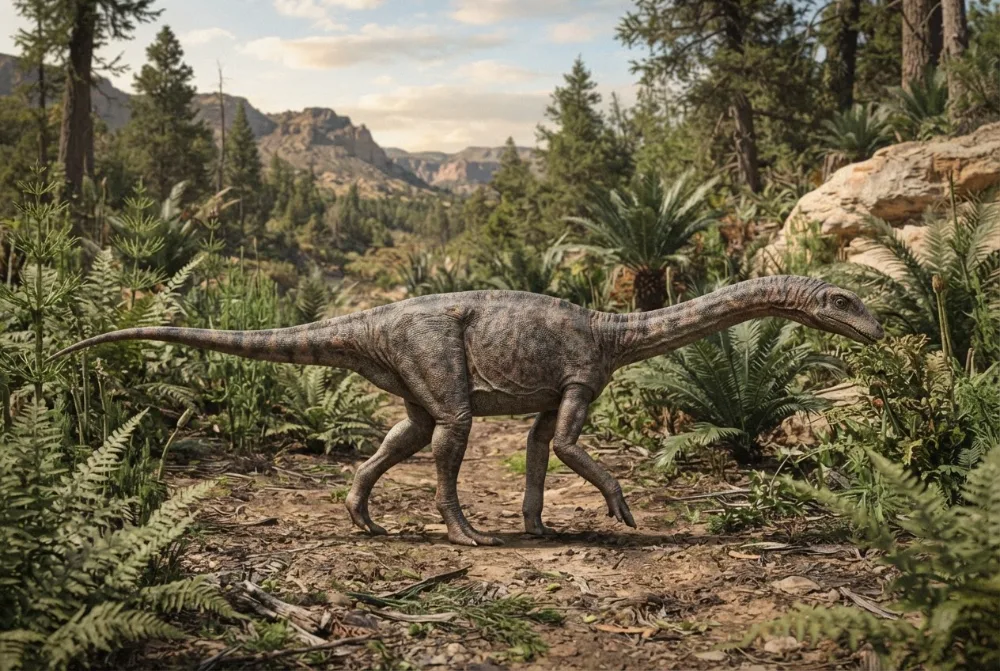
Ahvaytum was a tiny, early long-necked dinosaur that lived about 230 million years ago in what is now Wyoming. It is the oldest known dinosaur from the northern half of the ancient supercontinent Pangaea. Ahvaytum was only about as long as a big dog and as tall as a ruler!123
Ankakhala liti?
Anali wamkulu bwanji?
Anali wautali bwanji?
Msinkhu wake unali wautali bwanji?
Ankalemera bwanji?
 wautali ngati amphaka a pakhomo 2 otsatizana mphuno ndi mchira🍌wautali ngati nthochi 5 zotsatizana🍌wolemera ngati nthochi 83🪑wamng'ono moti angayende pansi pa mpando🏃akanatha kuthamanga mamita 100 m'masekondi 12 (munthu waliwiro kwambiri amafunika 9.6)
Ahvaytum anali wamkulu bwanji poyerekeza ndi IWEYO?
Ndi masamu chabe mu msakatuli wako. Palibe chimene chimasungidwa kapena kutumizidwa kwina kulikonse.
Anali ndi liwiro lotani?


Mfundo zosangalatsa
Ahvaytum's name comes from the Shoshone language, meaning 'long ago'. The species name means 'water's young man' and is also the Shoshone word for dinosaur.1
Scientists found only a few leg bones of Ahvaytum: an ankle bone and a piece of a thigh bone. These small fossils tell us it was a fast-growing, active dinosaur.1
Ahvaytum lived during the Carnian age, about 230 million years ago, which is the same time as the very first dinosaurs in the southern hemisphere.23
The fossils of Ahvaytum were discovered in 2013 in the Popo Agie Formation of Wyoming, a river environment from the Triassic period.1
Ahvaytum was a sauropodomorph, meaning it belonged to the group of long-necked dinosaurs that later included giants like Brachiosaurus. But Ahvaytum was much smaller.1
Mafunso ofunsidwa kwambiri okhudza Ahvaytum
?How big was Ahvaytum?
About 0.91 metres (3 feet) long and 0.30 metres (1 foot) tall. That is about the size of a chicken with a long tail.15
?Is Ahvaytum the oldest dinosaur?
No, but it is the oldest known named dinosaur from the northern half of the ancient supercontinent Pangaea, called Laurasia. It lived about 230 million years ago.15
?Where was Ahvaytum found?
In the Popo Agie Formation of Wyoming, United States. The fossils were discovered in 2013.1
Kwa akatswiri a madino
- Dzina la sayansi
- Ahvaytum
- Anapatsidwa dzina ndi
- Lovelace et al. 20256
- Gulu
- Makosi atali
- Banja / kladi
- Sauropodomorpha6
- Magawidwe a sayansi
- Sauropodomorpha6
- Zaka za miyala
- zaka 237 mpaka 227 miliyoni (Carnian)6
- Mapangidwe a miyala
- Popo Agie6
- Mayiko
- Amereka6
- Zolemba za mafosili
- 1 mu The Paleobiology Database6
- Kupezeka
- Ahvaytum was named in 2025 by David M. Lovelace and colleagues, based on fossils found in Wyoming, USA. The name was created with help from Eastern Shoshone elders and students.1
- Akukambiranabe
- Scientists are not sure whether Ahvaytum is definitely a sauropodomorph, because the bones are so few. Some think it might belong to another dinosaur group.13
Kumene mfundo zimachokera
- Ahvaytum (en.wikipedia.org)
- PBDB Taxon (paleobiodb.org)
- Rethinking dinosaur origins: oldest known equatorial dinosaur-bearing assemblage (mid-late Carnian Popo Agie FM, Wyoming, USA) (dinodata.de)
- Ahvaytum bahndooiveche | Dinosaur Database by DinoAnimals.com (dinoanimals.com)
- Dinosaurs roamed the northern hemisphere millions of years earlier than previously thought, according to new analysis of the oldest North American fossils – UW–Madison News (news.wisc.edu)
- Ahvaytum in The Paleobiology Database (CC BY 4.0): zaka, malo, mapangidwe a miyala, magawidwe a sayansi.
Mfundo iliyonse patsamba lino ili ndi nambala yosonyeza kumene yachokera. Ngati talakwitsa kanthu, pepa, ndife okonda madino, osati magazini ya sayansi. Tiuze pa [email protected] ndipo tikonza.
 Rex ali ndi njala! Dino Wiki ndi ntchito ya bambo kwa mwana wawo wamwamuna wokonda madainoso, yaulere popanda zotsatsa ndi zokazonda. Akuluakulu angadyetse Rex zokhwasula-khwasula kuti tsambali lipitirize kupezeka pa intaneti.Dyetsa Rex
 Brachiosaurus
 Diplodocus
 Brontosaurus
 Argentinosaurus
 Camarasaurus
 Morosaurus
 Nothosaurus
 Coelophysis
 Podokesaurus
 Simosaurus
 Eudimorphodon
 Herrerasaurus