 Kwizi ya Ndiwe dino uti?
 Nkhondo ya madino
 Mpikisano wa madino
 Masewera ang'onoang'ono a madino
 Chimbale cha zomata
 Mindandanda ya TOP ya madino
 Ndidabwitse!
Ankakhala liti?

Anali wamkulu bwanji?
Anali wautali bwanji?
Msinkhu wake unali wautali bwanji?
Ankalemera bwanji?

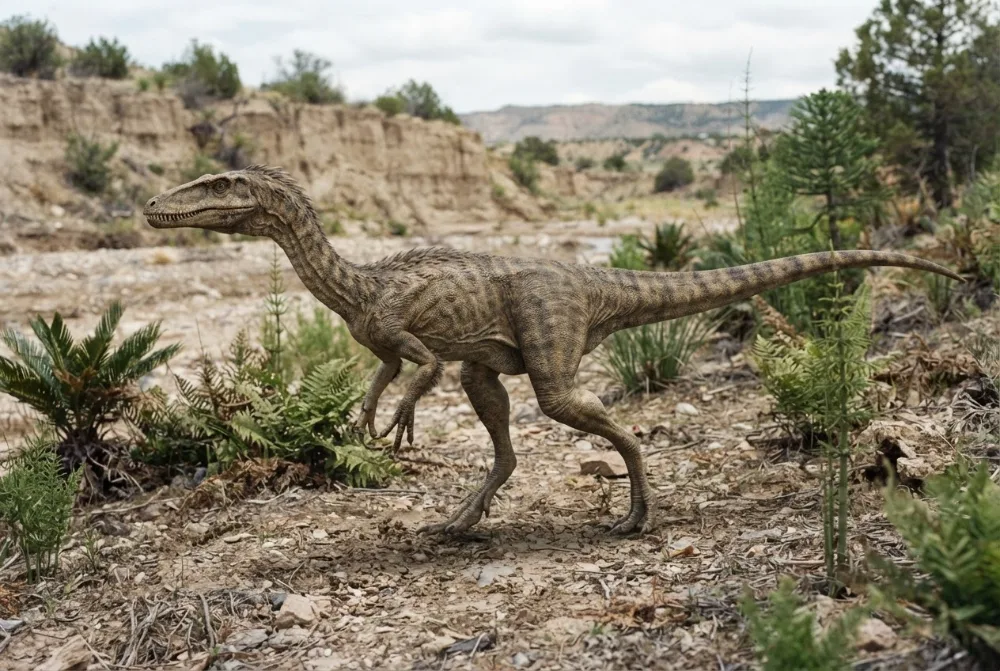
 wautali ngati agalu 3 otsatizana mphuno ndi mchira🍌wautali ngati nthochi 17 zotsatizana🍉wolemera ngati mavwende 5🏃akanatha kuthamanga mamita 100 m'masekondi 8.4 (munthu waliwiro kwambiri amafunika 9.6)
Coelophysis anali wamkulu bwanji poyerekeza ndi IWEYO?
Ndi masamu chabe mu msakatuli wako. Palibe chimene chimasungidwa kapena kutumizidwa kwina kulikonse.
Anali ndi liwiro lotani?


Mfundo zosangalatsa
Coelophysis is one of the earliest known dinosaur genera, living about 215 to 201 million years ago.1
A huge pile of hundreds of Coelophysis skeletons was found at Ghost Ranch in New Mexico in 1947.2
Coelophysis had about 26 teeth in its upper jaw and 27 in its lower jaw.1
Its arms were flexible but weak, so it probably hunted animals much smaller than itself.1
Coelophysis was very light, weighing only about as much as a big dog.2
Some scientists once thought Coelophysis was the same as another dinosaur called Rioarribasaurus, but now most agree they are different.1
Mafunso ofunsidwa kwambiri okhudza Coelophysis
?How big was Coelophysis?
Coelophysis was small, growing up to about 3 metres (9.8 feet) long. It weighed only about 18 to 23 kg (40 to 50 pounds).12
?What did Coelophysis eat?
Coelophysis was a carnivore, meaning it ate meat. It probably hunted small, fast animals like lizards and early mammal relatives.12
?When did Coelophysis live?
Coelophysis lived during the Late Triassic period, about 215 to 201 million years ago.1
?Where was Coelophysis found?
Coelophysis fossils have been found in the southwestern United States, especially in New Mexico. Similar animals have been found in South Africa and Zimbabwe.13
?How fast could Coelophysis run?
Maybe up to about 43 km/h (27 mph), faster than a fast human runner. This is an estimate from its size. It had long legs and a light body, made for running.13
?Why is Coelophysis called Coelophysis?
The name Coelophysis means 'hollow form', because its limb bones were hollow. This made its body light and helped it be a swift hunter.3
?Did Coelophysis have feathers?
Scientists don't know for sure if Coelophysis had feathers. No feathers have been found with its fossils, but some related dinosaurs may have had them.1
?Was Coelophysis bigger than a human?
Coelophysis was about 3 metres (9.8 feet) long, which is longer than a human is tall, but it was very light, weighing only about 18 to 23 kg (40 to 50 pounds).12
?Could Coelophysis swim?
There is no evidence that Coelophysis could swim. It was a land-dwelling dinosaur that ran on two legs.1
Wothetsa nthano zabodza
Nthano: Coelophysis swallowed its young whole.
Zoona: A fossil once thought to show a baby Coelophysis inside an adult is actually a different reptile or a mistake. There is no proof it ate its own young.1
Kwa akatswiri a madino
- Dzina la sayansi
- Coelophysis
- Anapatsidwa dzina ndi
- Cope 18894
- Gulu
- Madino odya nyama
- Banja / kladi
- Coelophysidae4
- Magawidwe a sayansi
- Theropoda > Coelophysoidea4
- Zaka za miyala
- zaka 227 mpaka 193 miliyoni (Norian / Sinemurian)4
- Mapangidwe a miyala
- Chinle, Petrified Forest, Tecovas4
- Mayiko
- Amereka4
- Zolemba za mafosili
- 26 mu The Paleobiology Database4
- Amadziwikanso kuti
- Rioarribasaurus (mayina akale tsopano amawerengedwa ngati nyama yomweyi)4
- Kupezeka
- Edward Drinker Cope named Coelophysis in 1889, based on bones collected by David Baldwin in 1881 from New Mexico, USA.14
- Akukambiranabe
- Scientists still debate whether some fossils from other parts of the world belong to Coelophysis or to similar dinosaurs.1
Kumene mfundo zimachokera
- Coelophysis (en.wikipedia.org)
- Coelophysis | Triassic, Carnivore, Reptile | Britannica (britannica.com)
- Coelophysis | Natural History Museum (nhm.ac.uk)
- Coelophysis in The Paleobiology Database (CC BY 4.0): zaka, malo, mapangidwe a miyala, magawidwe a sayansi.
Mfundo iliyonse patsamba lino ili ndi nambala yosonyeza kumene yachokera. Ngati talakwitsa kanthu, pepa, ndife okonda madino, osati magazini ya sayansi. Tiuze pa [email protected] ndipo tikonza.
 Rex ali ndi njala! Dino Wiki ndi ntchito ya bambo kwa mwana wawo wamwamuna wokonda madainoso, yaulere popanda zotsatsa ndi zokazonda. Akuluakulu angadyetse Rex zokhwasula-khwasula kuti tsambali lipitirize kupezeka pa intaneti.Dyetsa Rex
 Allosaurus
 Carnotaurus
 Dilophosaurus
 Giganotosaurus
 Compsognathus
 Paronychodon
 Nothosaurus
 Massospondylus
 Plateosaurus
 Simosaurus
 Thecodontosaurus
 Eudimorphodon