 Kwizi ya Ndiwe dino uti?
 Nkhondo ya madino
 Mpikisano wa madino
 Masewera ang'onoang'ono a madino
 Chimbale cha zomata
 Mindandanda ya TOP ya madino
 Ndidabwitse!
Ajkaceratops
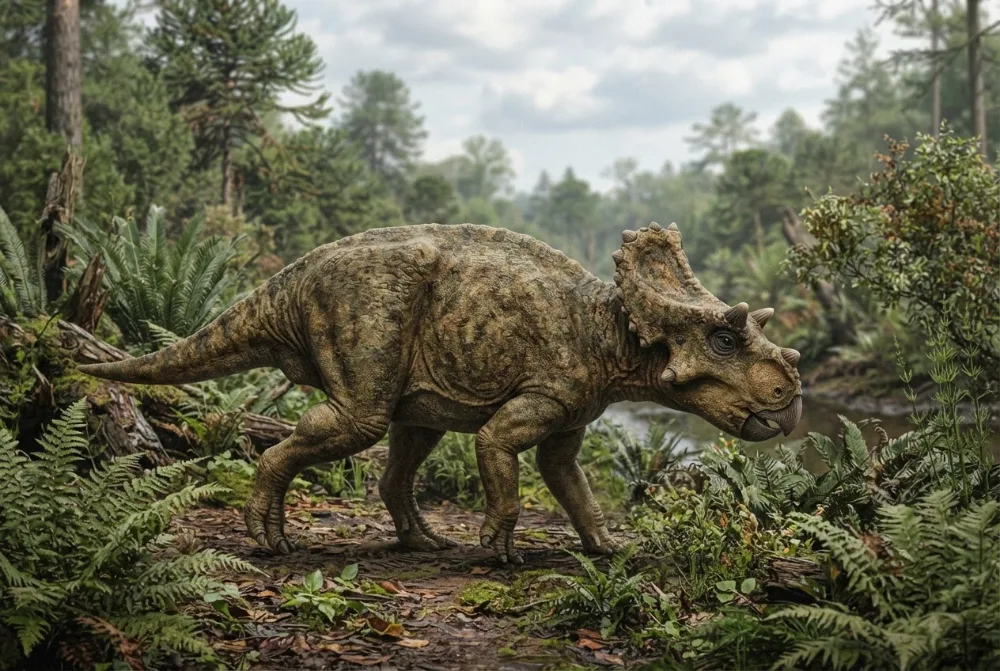
Ajkaceratops was a small horned dinosaur that lived on ancient islands in what is now Europe. It had a beak like a parrot and probably ate tough plants. Scientists think it may have hopped from island to island to reach Europe from Asia.12
Ankakhala liti?
Anali wamkulu bwanji?
Anali wautali bwanji?
Msinkhu wake unali wautali bwanji?
kuyerekeza
 wautali ngati amphaka a pakhomo 2 otsatizana mphuno ndi mchira🍌wautali ngati nthochi 6 zotsatizana🪑wamng'ono moti angayende pansi pa mpando🏃akanatha kuthamanga mamita 100 m'masekondi 14 (munthu waliwiro kwambiri amafunika 9.6)
Ajkaceratops anali wamkulu bwanji poyerekeza ndi IWEYO?
Ndi masamu chabe mu msakatuli wako. Palibe chimene chimasungidwa kapena kutumizidwa kwina kulikonse.
Anali ndi liwiro lotani?


Mfundo zosangalatsa
Ajkaceratops is the first ceratopsian dinosaur ever found in Europe that scientists are sure about.2
Its fossils were discovered in a former floodplain and channel deposit, made of clay, silt, and sandstone.1
The name Ajkaceratops honors the town of Ajka in Hungary, where the fossils were found.1
Ajkaceratops may have lacked the frill and horns that other ceratopsians had.1
Its ancestors probably reached Europe by island-hopping across the Tethys Ocean.2
A 2026 study using a more complete skull confirmed that Ajkaceratops is a true ceratopsian.1
Mafunso ofunsidwa kwambiri okhudza Ajkaceratops
?How big was Ajkaceratops?
About 1 metre (3.3 feet) long, roughly the size of a large dog.1
?Did Ajkaceratops have horns?
Probably not. It may have lacked the frill and horns seen in other ceratopsians.1
?What did Ajkaceratops eat?
It ate tough plants. Its tooth wear shows it chewed tougher vegetation than some other dinosaurs living nearby.1
?When did Ajkaceratops live?
It lived during the Late Cretaceous, about 86 to 84 million years ago.1
?Where was Ajkaceratops found?
Its fossils were found in Hungary, near the town of Ajka, in rocks that were once a floodplain.1
?Is Ajkaceratops a dinosaur?
Yes, it is a small horned dinosaur called a ceratopsian.1
Kwa akatswiri a madino
- Dzina la sayansi
- Ajkaceratops
- Anapatsidwa dzina ndi
- Osi et al. 20103
- Gulu
- Madino a nyanga
- Banja / kladi
- Ceratopsia3
- Magawidwe a sayansi
- Ornithischia > Ceratopsia3
- Zaka za miyala
- zaka 86 mpaka 84 miliyoni (Santonian)3
- Mapangidwe a miyala
- Csehbánya3
- Mayiko
- Hungary3
- Zolemba za mafosili
- 1 mu The Paleobiology Database3
- Kupezeka
- Ajkaceratops was named by Attila Ősi and colleagues in 2010, based on skull fragments found near Ajka, Hungary. The species name kozmai honors Károly Kozma.1
- Akukambiranabe
- Scientists are still debating whether Ajkaceratops had a true rostral bone, which is a key feature of ceratopsians.1
Kumene mfundo zimachokera
- Ajkaceratops (en.wikipedia.org)
- A Late Cretaceous ceratopsian dinosaur from Europe with Asian affinities | Nature (nature.com)
- Ajkaceratops in The Paleobiology Database (CC BY 4.0): zaka, malo, mapangidwe a miyala, magawidwe a sayansi.
Mfundo iliyonse patsamba lino ili ndi nambala yosonyeza kumene yachokera. Ngati talakwitsa kanthu, pepa, ndife okonda madino, osati magazini ya sayansi. Tiuze pa [email protected] ndipo tikonza.
 Rex ali ndi njala! Dino Wiki ndi ntchito ya bambo kwa mwana wawo wamwamuna wokonda madainoso, yaulere popanda zotsatsa ndi zokazonda. Akuluakulu angadyetse Rex zokhwasula-khwasula kuti tsambali lipitirize kupezeka pa intaneti.Dyetsa Rex
 Triceratops
 Protoceratops
 Ojoceratops
 Tatankaceratops
 Psittacosaurus
 Centrosaurus
 Tyrannosaurus
 Velociraptor
 Spinosaurus
 Ankylosaurus
 Parasaurolophus
 Pteranodon