 Kwizi ya Ndiwe dino uti?
 Nkhondo ya madino
 Mpikisano wa madino
 Masewera ang'onoang'ono a madino
 Chimbale cha zomata
 Mindandanda ya TOP ya madino
 Ndidabwitse!
Albertonectes
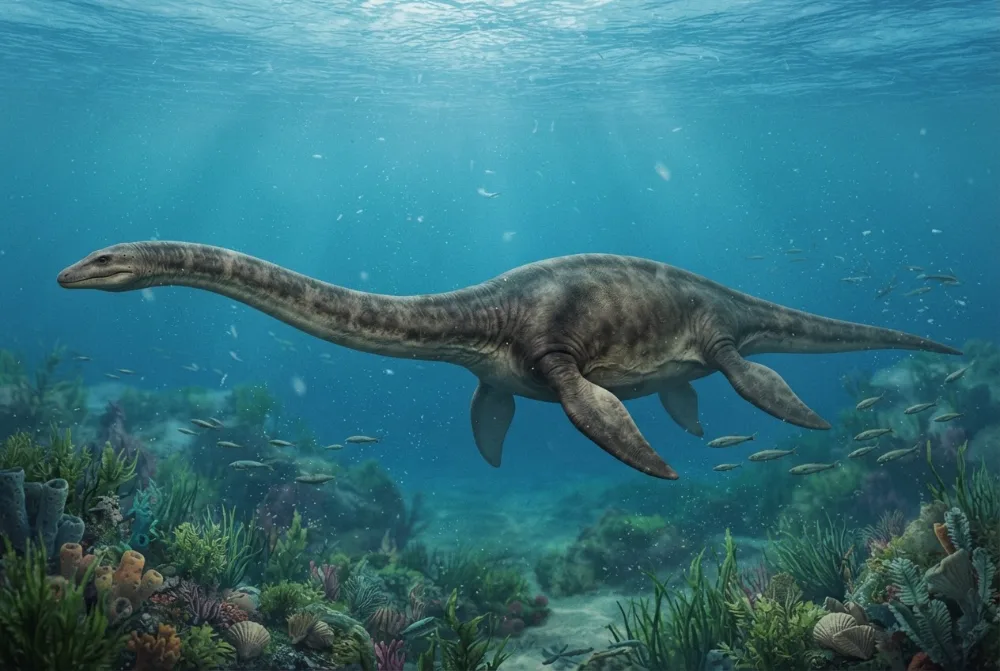
Albertonectes was a huge marine reptile that lived in the sea, not a dinosaur. It had an incredibly long neck, longer than a school bus, and swam with four flippers like paddles.12
Ankakhala liti?
Anali wamkulu bwanji?
Anali wautali bwanji?
Ankalemera bwanji?
 wautali ngati magalimoto 2.5 oimikidwa pamzere🍌wautali ngati nthochi 67 zotsatizana
 wolemera pafupifupi ngati njovu🍉wolemera ngati mavwende 960🎒wolemera ngati makalasi athunthu a ana a sukulu 6🐻❄️wolemera ngati zimbalangondo zoyera 11🏊akanatha kusambira utali wa dziwe lalikulu losambira (50 m) m'masekondi 8.2
Albertonectes anali wamkulu bwanji poyerekeza ndi IWEYO?
Ndi masamu chabe mu msakatuli wako. Palibe chimene chimasungidwa kapena kutumizidwa kwina kulikonse.
Anali ndi liwiro lotani?


Mfundo zosangalatsa
Albertonectes had 76 neck bones, more than any other known animal. Its neck was about 7 metres (23 feet) long.12
Its fossils were discovered by accident in 2007 during ammolite mining. An excavator broke part of the skeleton, and some stomach stones were lost.12
Albertonectes lived in the Western Interior Seaway, a huge inland sea that stretched from the Gulf of Mexico to the Arctic Ocean.2
No skull of Albertonectes has ever been found, so scientists can only guess what its head looked like based on other elasmosaurs.12
Over 97 stomach stones were found with the skeleton, but they are too small to help with buoyancy or digestion. Scientists are still not sure why plesiosaurs swallowed stones.12
Albertonectes was a plesiosaur, not a dinosaur. Dinosaurs lived on land, while plesiosaurs were air-breathing reptiles that lived in the sea.2
Mafunso ofunsidwa kwambiri okhudza Albertonectes
?How big was Albertonectes?
Albertonectes was about 12.1 metres (40 feet) long and weighed around 4.8 metric tons (5.3 short tons). Its neck alone was about 7 metres (23 feet) long.12
?Was Albertonectes a dinosaur?
No, Albertonectes was a plesiosaur, a marine reptile that lived in the sea. Dinosaurs lived on land.2
?What did Albertonectes eat?
Scientists think Albertonectes ate small fish and crustaceans. Its small, slender teeth were not for attacking large prey.2
?How many neck bones did Albertonectes have?
Albertonectes had 76 neck bones, more than any other known animal. That is why its neck was so long.12
?When did Albertonectes live?
Albertonectes lived about 73.5 million years ago, during the Late Cretaceous period.1
Wothetsa nthano zabodza
Nthano: Albertonectes was a dinosaur.
Zoona: Albertonectes was a plesiosaur, a marine reptile that lived in the ocean, not a dinosaur. Dinosaurs were land animals.2
Kwa akatswiri a madino
- Dzina la sayansi
- Albertonectes
- Anapatsidwa dzina ndi
- Kubo et al. 20124
- Gulu
- Maplesiosauri
- Banja / kladi
- Elasmosauridae4
- Magawidwe a sayansi
- Plesiosauria > Elasmosauridae > Sauropterygia4
- Zaka za miyala
- zaka 84 mpaka 72 miliyoni (Campanian)4
- Mapangidwe a miyala
- Bearpaw Shale4
- Mayiko
- Kanada4
- Zolemba za mafosili
- 1 mu The Paleobiology Database4
- Kupezeka
- The only known skeleton was found in 2007 by an ammolite mining company near Lethbridge, Alberta, Canada. It was named Albertonectes vanderveldei in 2012 by paleontologist Tai Kubo and his team.12
- Akukambiranabe
- Scientists are not sure why Albertonectes swallowed so many stomach stones, since they are too small to help with buoyancy or digestion.2
Kumene mfundo zimachokera
- Albertonectes (en.wikipedia.org)
- Albertonectes | The Canadian Encyclopedia (thecanadianencyclopedia.ca)
- PBDB Taxon (paleobiodb.org)
- Albertonectes in The Paleobiology Database (CC BY 4.0): zaka, malo, mapangidwe a miyala, magawidwe a sayansi.
Mfundo iliyonse patsamba lino ili ndi nambala yosonyeza kumene yachokera. Ngati talakwitsa kanthu, pepa, ndife okonda madino, osati magazini ya sayansi. Tiuze pa [email protected] ndipo tikonza.
 Rex ali ndi njala! Dino Wiki ndi ntchito ya bambo kwa mwana wawo wamwamuna wokonda madainoso, yaulere popanda zotsatsa ndi zokazonda. Akuluakulu angadyetse Rex zokhwasula-khwasula kuti tsambali lipitirize kupezeka pa intaneti.Dyetsa Rex
 Elasmosaurus
 Pliosaurus
 Plesiosaurus
 Cimoliasaurus
 Colymbosaurus
 Trinacromerum
 Tyrannosaurus
 Triceratops
 Velociraptor
 Spinosaurus
 Ankylosaurus
 Parasaurolophus