 Kwizi ya Ndiwe dino uti?
 Nkhondo ya madino
 Mpikisano wa madino
 Masewera ang'onoang'ono a madino
 Chimbale cha zomata
 Mindandanda ya TOP ya madino
 Ndidabwitse!
Ankakhala liti?

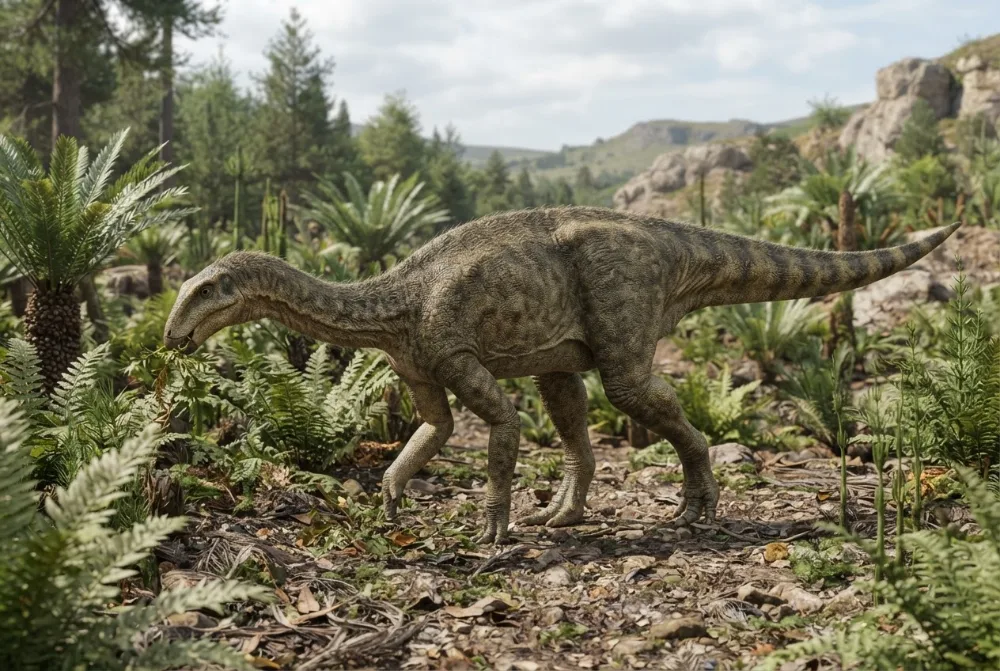
Anali wamkulu bwanji?
Anali wautali bwanji?
Msinkhu wake unali wautali bwanji?
kuyerekeza
Ankalemera bwanji?

 wautali ngati amphaka a pakhomo 4 otsatizana mphuno ndi mchira🍌wautali ngati nthochi 11 zotsatizana🍉wolemera ngati mavwende 50🧸wolemera ngati ana a sukulu ya mkaka 13🎒wolemera ngati ana a sukulu 8🏃akanatha kuthamanga mamita 100 m'masekondi 9.5 (munthu waliwiro kwambiri amafunika 9.6)
Asylosaurus anali wamkulu bwanji poyerekeza ndi IWEYO?
Ndi masamu chabe mu msakatuli wako. Palibe chimene chimasungidwa kapena kutumizidwa kwina kulikonse.
Anali ndi liwiro lotani?


Mfundo zosangalatsa
The bones of Asylosaurus were discovered in 1834, but they were not recognized as a new dinosaur until 2007.1
Its bones were saved from destruction during World War II because they had been taken to Yale University in the USA.1
Asylosaurus had a different upper arm bone (humerus) compared to its relatives Thecodontosaurus and Pantydraco.1
Its hand had a reduced number of finger bones, with a formula of 2 to 3-4 to 2-?1.2
The name Asylosaurus means 'unharmed lizard', because its fossils escaped the bombing of Bristol in 1940.1
Mafunso ofunsidwa kwambiri okhudza Asylosaurus
?How big was Asylosaurus?
About 2 metres long and weighed roughly 250 kilograms.1
?What did Asylosaurus eat?
It was a plant-eater, but it may have also eaten some insects or small animals, since scientists are not sure if it was purely herbivorous or omnivorous.1
?Why is it called Asylosaurus?
The name means 'unharmed lizard' because its fossils were saved from a World War II bombing that destroyed the original Thecodontosaurus bones.1
?When did Asylosaurus live?
It lived during the Late Triassic period, about 200 million years ago.1
Wothetsa nthano zabodza
Nthano: Some people think Asylosaurus is the same as Thecodontosaurus.
Zoona: It was first thought to be Thecodontosaurus, but scientists now see it as its own genus because of differences in the upper arm bone.1
Kwa akatswiri a madino
- Dzina la sayansi
- Asylosaurus
- Anapatsidwa dzina ndi
- Galton 20073
- Gulu
- Makosi atali
- Banja / kladi
- Sauropodomorpha3
- Magawidwe a sayansi
- Sauropodomorpha3
- Zaka za miyala
- zaka 206 mpaka 201 miliyoni (Rhaetian)3
- Mapangidwe a miyala
- Magnesian Conglomerate3
- Mayiko
- United Kingdom3
- Zolemba za mafosili
- 1 mu The Paleobiology Database3
- Kupezeka
- The bones were found in 1834 by quarrymen in Bristol, England. They were described in 1836 as Thecodontosaurus, but Peter Galton named them Asylosaurus in 2007.1
- Akukambiranabe
- Scientists are not sure if some other bones from the same site belong to Asylosaurus or to another dinosaur.2
Kumene mfundo zimachokera
- Asylosaurus (en.wikipedia.org)
- VOL. 26, N° 2, 2007 (dinochecker.com)
- Asylosaurus in The Paleobiology Database (CC BY 4.0): zaka, malo, mapangidwe a miyala, magawidwe a sayansi.
Mfundo iliyonse patsamba lino ili ndi nambala yosonyeza kumene yachokera. Ngati talakwitsa kanthu, pepa, ndife okonda madino, osati magazini ya sayansi. Tiuze pa [email protected] ndipo tikonza.
 Rex ali ndi njala! Dino Wiki ndi ntchito ya bambo kwa mwana wawo wamwamuna wokonda madainoso, yaulere popanda zotsatsa ndi zokazonda. Akuluakulu angadyetse Rex zokhwasula-khwasula kuti tsambali lipitirize kupezeka pa intaneti.Dyetsa Rex
 Brachiosaurus
 Diplodocus
 Brontosaurus
 Argentinosaurus
 Camarasaurus
 Morosaurus
 Nothosaurus
 Coelophysis
 Podokesaurus
 Simosaurus
 Eudimorphodon
 Herrerasaurus