 Kwizi ya Ndiwe dino uti?
 Nkhondo ya madino
 Mpikisano wa madino
 Masewera ang'onoang'ono a madino
 Chimbale cha zomata
 Mindandanda ya TOP ya madino
 Ndidabwitse!
Ankakhala liti?

Anali wamkulu bwanji?
Anali wautali bwanji?
Msinkhu wake unali wautali bwanji?
 wautali ngati agalu 4 otsatizana mphuno ndi mchira🍌wautali ngati nthochi 19 zotsatizana🏃akanatha kuthamanga mamita 100 m'masekondi 7.2 (munthu waliwiro kwambiri amafunika 9.6)
Bagaraatan anali wamkulu bwanji poyerekeza ndi IWEYO?
Ndi masamu chabe mu msakatuli wako. Palibe chimene chimasungidwa kapena kutumizidwa kwina kulikonse.
Anali ndi liwiro lotani?


Mfundo zosangalatsa
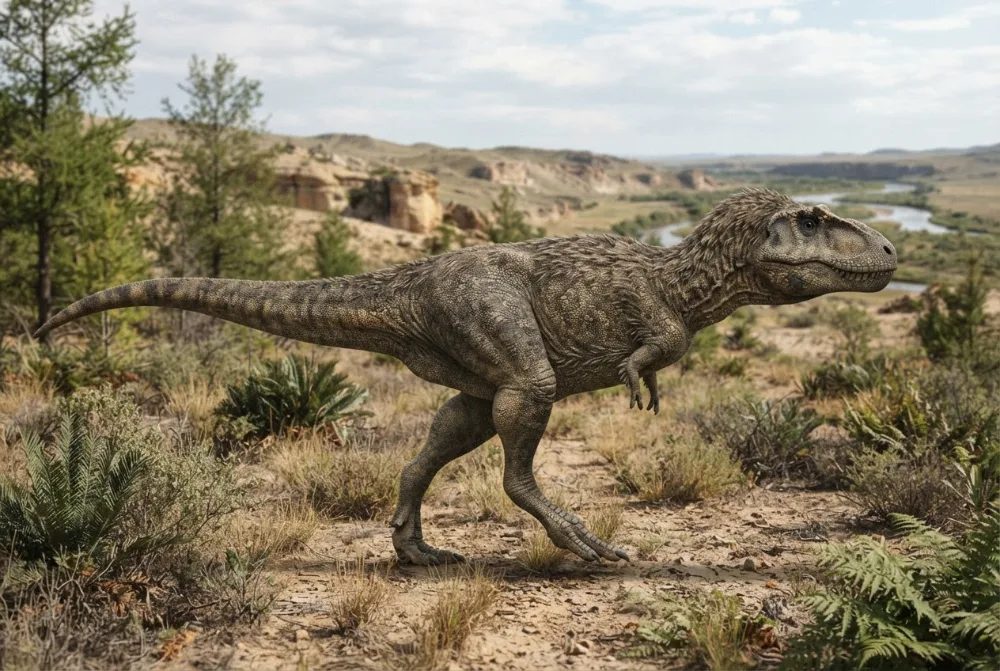
Bagaraatan had a tail that was not very flexible near the body, because many bones in the tail were locked together.2
The first fossil of Bagaraatan was found in 1970 by Zofia Kielan-Jaworowska during a Polish-Mongolian expedition.2
At first, scientists thought Bagaraatan was a mix of different dinosaur parts, but later studies showed it is likely a small relative of Tyrannosaurus.1
Bagaraatan was about 3 to 3.5 meters long, which is similar to a large Deinonychus.2
The shin and ankle bones of Bagaraatan were fused together, giving it a strong lower leg.2
Bagaraatan had two holes in the back part of its lower jaw, which is unusual among theropod dinosaurs.2
Mafunso ofunsidwa kwambiri okhudza Bagaraatan
?How big was Bagaraatan?
About 3 to 3.5 metres (10 to 11.5 feet) long, which is about as long as a small car. It stood less than 1 metre (3.3 feet) tall at the hips.12
?What did Bagaraatan eat?
It was a meat-eater. It had strong jaws with sharp teeth and long legs for chasing prey, so it was probably an active predator or scavenger.2
?Was Bagaraatan a dinosaur?
Yes, it was a theropod dinosaur from the Late Cretaceous period. It lived in what is now Mongolia.1
Wothetsa nthano zabodza
Nthano: Bagaraatan was a bird-like dinosaur with feathers.
Zoona: Scientists have not found any evidence of feathers for Bagaraatan, and it is now thought to be a small tyrannosaurid, which probably had scaly skin like other tyrannosaurs.1
Kwa akatswiri a madino
- Dzina la sayansi
- Bagaraatan
- Anapatsidwa dzina ndi
- Osmólska 19964
- Gulu
- Matiranosauri
- Banja / kladi
- Tyrannosauridae4
- Magawidwe a sayansi
- Theropoda > Tyrannosauroidea > Tyrannosauridae4
- Zaka za miyala
- zaka 72 mpaka 66 miliyoni (Maastrichtian)4
- Mapangidwe a miyala
- Nemegt4
- Mayiko
- Mongoliya4
- Zolemba za mafosili
- 1 mu The Paleobiology Database4
- Kupezeka
- Bagaraatan was named in 1996 by Halszka Osmólska based on a partial skeleton found in Mongolia. The skeleton was discovered by Zofia Kielan-Jaworowska in 1970.42
- Akukambiranabe
- Scientists are still debating whether Bagaraatan is a true tyrannosaurid or a close relative, and whether the fossils include bones from more than one animal.1
Kumene mfundo zimachokera
- Bagaraatan (en.wikipedia.org)
- An unusual theropod dinosaur from the Late Cretaceous Nemegt Formation of Mongolia (app.pan.pl)
- Reassessment of the enigmatic Late Cretaceous theropod dinosaur, Bagaraatan ostromi | Zoological Journal of the Linnean Society | Oxford Academic (academic.oup.com)
- Bagaraatan in The Paleobiology Database (CC BY 4.0): zaka, malo, mapangidwe a miyala, magawidwe a sayansi.
Mfundo iliyonse patsamba lino ili ndi nambala yosonyeza kumene yachokera. Ngati talakwitsa kanthu, pepa, ndife okonda madino, osati magazini ya sayansi. Tiuze pa [email protected] ndipo tikonza.
 Rex ali ndi njala! Dino Wiki ndi ntchito ya bambo kwa mwana wawo wamwamuna wokonda madainoso, yaulere popanda zotsatsa ndi zokazonda. Akuluakulu angadyetse Rex zokhwasula-khwasula kuti tsambali lipitirize kupezeka pa intaneti.Dyetsa Rex
 Tyrannosaurus
 Tarbosaurus
 Albertosaurus
 Daspletosaurus
 Gorgosaurus
 Alectrosaurus
 Triceratops
 Velociraptor
 Spinosaurus
 Ankylosaurus
 Parasaurolophus
 Pteranodon