 Kwizi ya Ndiwe dino uti?
 Nkhondo ya madino
 Mpikisano wa madino
 Masewera ang'onoang'ono a madino
 Chimbale cha zomata
 Mindandanda ya TOP ya madino
 Ndidabwitse!
Ankakhala liti?

Anali wamkulu bwanji?
Anali wautali bwanji?
Msinkhu wake unali wautali bwanji?
Ankalemera bwanji?
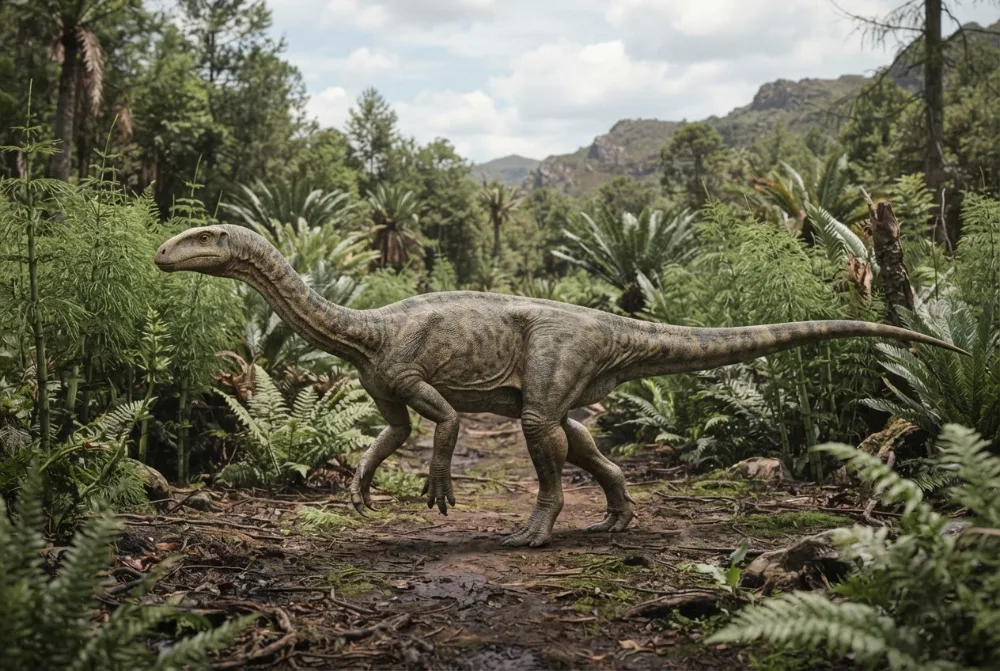
 wautali ngati amphaka a pakhomo 4 otsatizana mphuno ndi mchira🍌wautali ngati nthochi 11 zotsatizana🍌wolemera ngati nthochi 120🏃akanatha kuthamanga mamita 100 m'masekondi 12 (munthu waliwiro kwambiri amafunika 9.6)
Buriolestes anali wamkulu bwanji poyerekeza ndi IWEYO?
Ndi masamu chabe mu msakatuli wako. Palibe chimene chimasungidwa kapena kutumizidwa kwina kulikonse.
Anali ndi liwiro lotani?


Mfundo zosangalatsa
Buriolestes is one of the oldest known dinosaurs, living about 233 million years ago during the Late Triassic.13
Even though Buriolestes was a meat-eater, it belonged to the sauropodomorph group, which later gave rise to giant plant-eaters like Diplodocus.12
Its fossils were found right next to a lagerpetid called Ixalerpeton, showing that early dinosaurs lived alongside their dinosaur-like cousins.12
Buriolestes had a downturned jaw tip and a long crest on its upper arm bone, traits that later sauropodomorphs also had.1
The name Buriolestes means 'Buriol robber', after the Buriol family who owned the land where it was found.1
Mafunso ofunsidwa kwambiri okhudza Buriolestes
?What did Buriolestes eat?
Buriolestes was a carnivore, likely preying on small vertebrates and soft invertebrates. Its curved, serrated teeth were well-suited for slicing meat.12
?How big was Buriolestes?
Buriolestes was small, with one robust individual weighing over 7 kg (15.4 lb) and others weighing between 6.4 and 7.2 kg (14 to 16 lb). Its femur was about 135 mm long.2
?When did Buriolestes live?
Buriolestes lived about 233 million years ago during the Late Triassic, in the Carnian epoch. It is one of the oldest known dinosaurs.1
?Was Buriolestes a dinosaur?
Yes, Buriolestes was a dinosaur, specifically an early sauropodomorph. It was a meat-eater but belonged to the group that later gave rise to giant plant-eaters like Diplodocus.1
?Where was Buriolestes found?
Buriolestes was found in the Buriol ravine in São João do Polêsine, Brazil, in the Santa Maria Formation. The holotype was discovered in 2009.1
Kwa akatswiri a madino
- Dzina la sayansi
- Buriolestes
- Anapatsidwa dzina ndi
- Cabreira et al. 20164
- Gulu
- Makosi atali
- Banja / kladi
- Sauropodomorpha4
- Magawidwe a sayansi
- Sauropodomorpha4
- Zaka za miyala
- zaka 237 mpaka 227 miliyoni (Carnian)4
- Mapangidwe a miyala
- Santa Maria4
- Mayiko
- Brazil4
- Zolemba za mafosili
- 1 mu The Paleobiology Database4
- Kupezeka
- Buriolestes was discovered in 2009 in a ravine in Brazil and named in 2016 by paleontologist Cabreira and his team. The species name honors paleontologist Cesar Schultz.1
- Akukambiranabe
- Scientists are still debating whether the smaller bones found with the main Buriolestes skeleton belong to a juvenile or a different dinosaur.1
Kumene mfundo zimachokera
- Buriolestes (en.wikipedia.org)
- A Unique Late Triassic Dinosauromorph Assemblage Reveals Dinosaur Ancestral Anatomy and Diet: Current Biology (cell.com)
- PBDB Taxon (paleobiodb.org)
- Buriolestes in The Paleobiology Database (CC BY 4.0): zaka, malo, mapangidwe a miyala, magawidwe a sayansi.
Mfundo iliyonse patsamba lino ili ndi nambala yosonyeza kumene yachokera. Ngati talakwitsa kanthu, pepa, ndife okonda madino, osati magazini ya sayansi. Tiuze pa [email protected] ndipo tikonza.
 Rex ali ndi njala! Dino Wiki ndi ntchito ya bambo kwa mwana wawo wamwamuna wokonda madainoso, yaulere popanda zotsatsa ndi zokazonda. Akuluakulu angadyetse Rex zokhwasula-khwasula kuti tsambali lipitirize kupezeka pa intaneti.Dyetsa Rex
 Brachiosaurus
 Diplodocus
 Brontosaurus
 Argentinosaurus
 Camarasaurus
 Morosaurus
 Nothosaurus
 Coelophysis
 Podokesaurus
 Simosaurus
 Eudimorphodon
 Herrerasaurus