 Kwizi ya Ndiwe dino uti?
 Nkhondo ya madino
 Mpikisano wa madino
 Masewera ang'onoang'ono a madino
 Chimbale cha zomata
 Mindandanda ya TOP ya madino
 Ndidabwitse!
Ankakhala liti?

Anali wamkulu bwanji?
Anali wautali bwanji?
Msinkhu wake unali wautali bwanji?
kuyerekeza
Ankalemera bwanji?
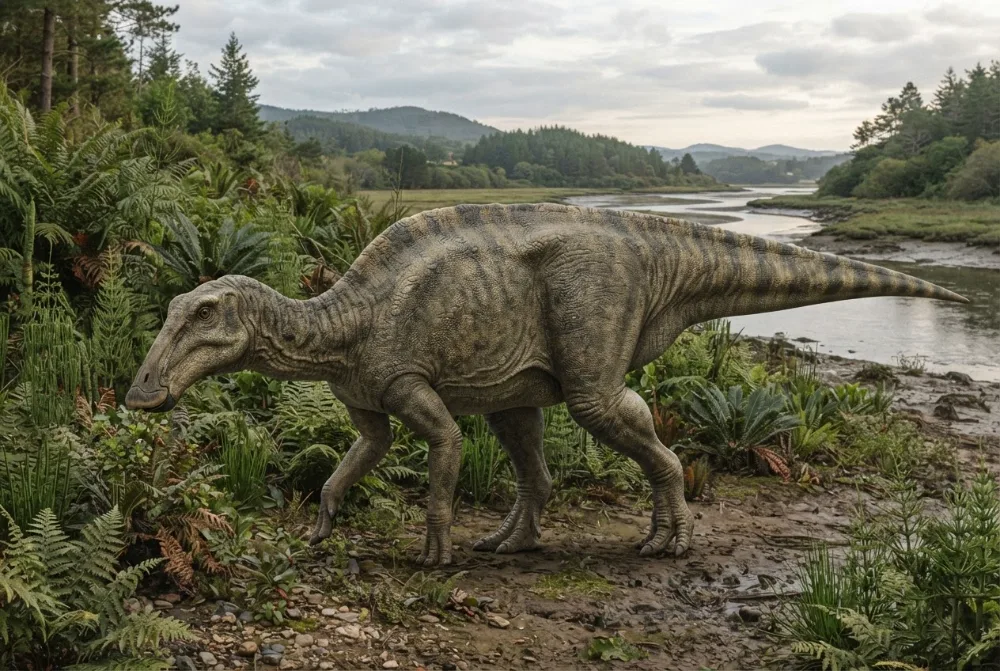
 wautali ngati agalu 4 otsatizana mphuno ndi mchira🍌wautali ngati nthochi 21 zotsatizana🍉wolemera ngati mavwende 54🧸wolemera ngati ana a sukulu ya mkaka 14🎒wolemera ngati ana a sukulu 8🏃akanatha kuthamanga mamita 100 m'masekondi 8.6 (munthu waliwiro kwambiri amafunika 9.6)
Canardia anali wamkulu bwanji poyerekeza ndi IWEYO?
Ndi masamu chabe mu msakatuli wako. Palibe chimene chimasungidwa kapena kutumizidwa kwina kulikonse.
Anali ndi liwiro lotani?


Mfundo zosangalatsa
Canardia is known only from juvenile specimens, so scientists think the fossils found so far are from young animals.1
Its name comes from the French word 'canard', which means 'duck', because it belongs to the duck-billed dinosaur group.1
Canardia lived between 67.5 and 66 million years ago, right up to the end of the Cretaceous Period.1
The first fossils of Canardia were discovered in 1999 near the village of Marignac-Laspeyres in France.1
Some scientists think Canardia is closely related to Aralosaurus from Central Asia, while others place it in a group with other European and North African duck-billed dinosaurs.1
One Canardia fossil was found just one metre below the layer that marks the dinosaur extinction event, showing it was one of the very last non-bird dinosaurs in Europe.1
Mafunso ofunsidwa kwambiri okhudza Canardia
?How big was Canardia?
Scientists are not sure of its full adult size because all known fossils are from juveniles. The biggest bones found are a maxilla 16.9 cm long, a scapula 21.8 cm long, and a humerus 19.4 cm long.1
?Did Canardia have a crest?
Nobody knows for sure. No complete skull has been found, so scientists cannot tell if it had a hollow bony crest like many other lambeosaurines.1
?What did Canardia eat?
Like other duck-billed dinosaurs, Canardia was a plant-eater. It had teeth with ridges for grinding plants, and its duck-like beak helped it bite off leaves.1
?When did Canardia live?
Canardia lived between 67.5 and 66 million years ago, during the very end of the Cretaceous Period. It was one of the last non-bird dinosaurs before the big extinction.1
?Where was Canardia found?
All Canardia fossils have been found in southwestern France, in the Haute-Garonne department. The first ones were discovered in 1999 near the village of Marignac-Laspeyres.1
?Is Canardia a dinosaur?
Yes, Canardia is a dinosaur. It is a type of duck-billed dinosaur called a lambeosaurine hadrosaurid.1
Kwa akatswiri a madino
- Dzina la sayansi
- Canardia
- Anapatsidwa dzina ndi
- Prieto-Marquez et al. 20133
- Gulu
- Milomo ya bakha
- Banja / kladi
- Hadrosauridae3
- Magawidwe a sayansi
- Ornithischia > Ornithopoda > Iguanodontia > Hadrosauridae3
- Zaka za miyala
- zaka 72 mpaka 66 miliyoni (Maastrichtian)3
- Mapangidwe a miyala
- Marno-calcaires jaunes de Gensac, Marnes d'Auzas3
- Mayiko
- Falansa3
- Zolemba za mafosili
- 2 mu The Paleobiology Database3
- Kupezeka
- Canardia was named in 2013 by Albert Prieto-Márquez and colleagues. The first fossils were found in 1999 by a team from the Musée des Dinosaures d'Espéraza in southwestern France.1
- Akukambiranabe
- Scientists are not sure exactly where Canardia fits in the duck-billed dinosaur family tree. Some think it belongs to a group called Aralosaurini, while others place it in Arenysaurini.1
Kumene mfundo zimachokera
- Canardia (en.wikipedia.org)
- Canardia garonnensis | Dinosaur Database by DinoAnimals.com (dinoanimals.com)
- Canardia in The Paleobiology Database (CC BY 4.0): zaka, malo, mapangidwe a miyala, magawidwe a sayansi.
Mfundo iliyonse patsamba lino ili ndi nambala yosonyeza kumene yachokera. Ngati talakwitsa kanthu, pepa, ndife okonda madino, osati magazini ya sayansi. Tiuze pa [email protected] ndipo tikonza.
 Rex ali ndi njala! Dino Wiki ndi ntchito ya bambo kwa mwana wawo wamwamuna wokonda madainoso, yaulere popanda zotsatsa ndi zokazonda. Akuluakulu angadyetse Rex zokhwasula-khwasula kuti tsambali lipitirize kupezeka pa intaneti.Dyetsa Rex
 Parasaurolophus
 Edmontosaurus
 Saurolophus
 Hypacrosaurus
 Corythosaurus
 Kritosaurus
 Tyrannosaurus
 Triceratops
 Velociraptor
 Spinosaurus
 Ankylosaurus
 Pteranodon