 Kwizi ya Ndiwe dino uti?
 Nkhondo ya madino
 Mpikisano wa madino
 Masewera ang'onoang'ono a madino
 Chimbale cha zomata
 Mindandanda ya TOP ya madino
 Ndidabwitse!
Cerasinops
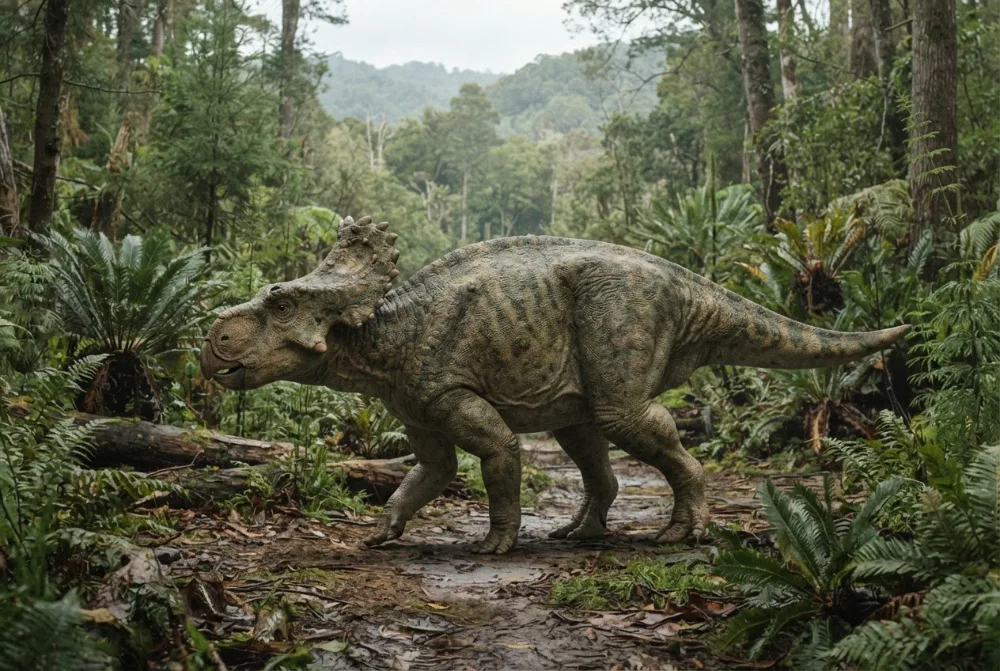
Cerasinops was a small, plant-eating dinosaur that lived about 80 million years ago. It had a parrot-like beak and a frill on its head, but no big horns like its famous cousin Triceratops. This dinosaur was about as long as a small car and weighed as much as a large pig.1
Ankakhala liti?
Anali wamkulu bwanji?
Anali wautali bwanji?
Msinkhu wake unali wautali bwanji?
Ankalemera bwanji?
 wautali ngati agalu 2.5 otsatizana mphuno ndi mchira🍌wautali ngati nthochi 14 zotsatizana🍉wolemera ngati mavwende 35🧸wolemera ngati ana a sukulu ya mkaka 9🎒wolemera ngati ana a sukulu 5🏃akanatha kuthamanga mamita 100 m'masekondi 9.7 (munthu waliwiro kwambiri amafunika 9.6)
Cerasinops anali wamkulu bwanji poyerekeza ndi IWEYO?
Ndi masamu chabe mu msakatuli wako. Palibe chimene chimasungidwa kapena kutumizidwa kwina kulikonse.
Anali ndi liwiro lotani?


Mfundo zosangalatsa
Cerasinops is known from a skeleton that is almost 80% complete, which is very rare for a small dinosaur.1
Its name means 'cherry face' because the fossils were found in red-colored rocks that look like cherries.1
Cerasinops lived between 80.2 and 77 million years ago, during the Campanian stage of the Late Cretaceous.1
It belonged to a group called leptoceratopsids, which were small, horned dinosaurs without big horns.1
The first fossils of Cerasinops were collected in 1935 by George Fryer Sternberg, but they were thought to be another dinosaur until 2007.1
The specimen that became the type of Cerasinops was nicknamed 'Cera' for over 20 years before it got its official name.1
Mafunso ofunsidwa kwambiri okhudza Cerasinops
?How big was Cerasinops?
About 2.5 metres (8.2 feet) long and weighed around 175 kilograms (386 pounds). That is about as long as a small motorcycle and as heavy as a large pig.1
?What did Cerasinops eat?
It was a plant-eater (herbivore). It used its parrot-like beak to bite off plants.1
?Did Cerasinops have horns?
No, it did not have big horns like Triceratops. It had a small frill on its head but no large horns.1
?Could Cerasinops walk on two legs?
Maybe. Scientists found features in its bones that suggest it might have been able to walk on two legs, which would be unusual for a small horned dinosaur.3
Kwa akatswiri a madino
- Dzina la sayansi
- Cerasinops
- Anapatsidwa dzina ndi
- Chinnery and Horner 20074
- Gulu
- Madino a nyanga
- Banja / kladi
- Leptoceratopsidae4
- Magawidwe a sayansi
- Ornithischia > Ceratopsia4
- Zaka za miyala
- zaka 84 mpaka 72 miliyoni (Campanian)4
- Mapangidwe a miyala
- Two Medicine4
- Mayiko
- Amereka4
- Zolemba za mafosili
- 3 mu The Paleobiology Database4
- Kupezeka
- Cerasinops was named and described by Brenda Chinnery and Jack Horner in 2007. The main fossil, MOR 300, was found in the 1980s on land owned by the Hodgskiss family in Montana.1
- Akukambiranabe
- Scientists are not sure whether Cerasinops belongs inside the family Leptoceratopsidae or is a close relative outside it.1
Kumene mfundo zimachokera
- Cerasinops (en.wikipedia.org)
- New Dinosaur Species Found In Montana | ScienceDaily (sciencedaily.com)
- A new neoceratopsian dinosaur linking North American and Asian taxa (tandfonline.com)
- Cerasinops in The Paleobiology Database (CC BY 4.0): zaka, malo, mapangidwe a miyala, magawidwe a sayansi.
Mfundo iliyonse patsamba lino ili ndi nambala yosonyeza kumene yachokera. Ngati talakwitsa kanthu, pepa, ndife okonda madino, osati magazini ya sayansi. Tiuze pa [email protected] ndipo tikonza.
 Rex ali ndi njala! Dino Wiki ndi ntchito ya bambo kwa mwana wawo wamwamuna wokonda madainoso, yaulere popanda zotsatsa ndi zokazonda. Akuluakulu angadyetse Rex zokhwasula-khwasula kuti tsambali lipitirize kupezeka pa intaneti.Dyetsa Rex
 Triceratops
 Protoceratops
 Ojoceratops
 Tatankaceratops
 Psittacosaurus
 Centrosaurus
 Tyrannosaurus
 Velociraptor
 Spinosaurus
 Ankylosaurus
 Parasaurolophus
 Pteranodon