 Kwizi ya Ndiwe dino uti?
 Nkhondo ya madino
 Mpikisano wa madino
 Masewera ang'onoang'ono a madino
 Chimbale cha zomata
 Mindandanda ya TOP ya madino
 Ndidabwitse!
Ankakhala liti?

Anali wamkulu bwanji?
Anali wautali bwanji?
Msinkhu wake unali wautali bwanji?
kuyerekeza
Ankalemera bwanji?

 wautali ngati agalu 5 otsatizana mphuno ndi mchira🍌wautali ngati nthochi 28 zotsatizanawolemera ngati agalu 100🍉wolemera ngati mavwende 400🎒wolemera ngati makalasi athunthu a ana a sukulu 2.5🐻❄️wolemera ngati zimbalangondo zoyera 4🏃akanatha kuthamanga mamita 100 m'masekondi 11 (munthu waliwiro kwambiri amafunika 9.6)
Coronosaurus anali wamkulu bwanji poyerekeza ndi IWEYO?
Ndi masamu chabe mu msakatuli wako. Palibe chimene chimasungidwa kapena kutumizidwa kwina kulikonse.
Anali ndi liwiro lotani?


Mfundo zosangalatsa
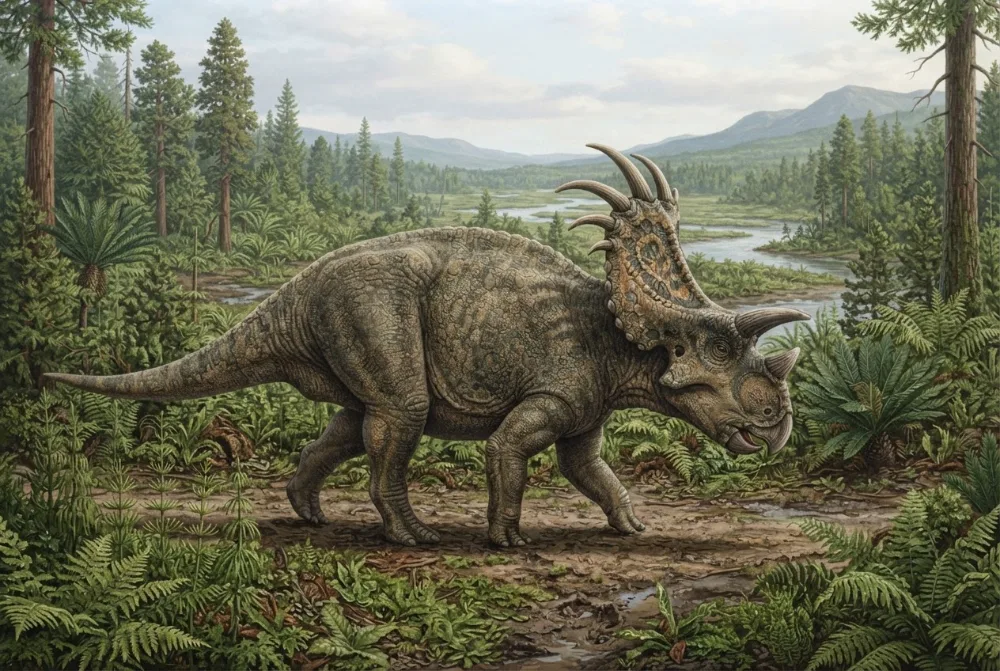
Coronosaurus had a unique crown of spiky bones on its frill, which no other ceratopsian dinosaur had.1
It was originally thought to be a species of Centrosaurus, but scientists later gave it its own name in 2012.1
Its fossils were found in two bone beds in Alberta, Canada, which were discovered by paleontologist Philip Currie.1
Coronosaurus lived about 83 to 72 million years ago, during the Campanian stage of the Late Cretaceous.2
It was a medium-sized ceratopsid, about 5 metres (16 feet) long and weighing around 2 tonnes (2.2 short tons).1
The dinosaur's name comes from the Latin word 'corona', meaning crown, because of the crown-like horns on its frill.1
Coronosaurus shared its home with other dinosaurs like Daspletosaurus, Troodon, and Parasaurolophus.1
Mafunso ofunsidwa kwambiri okhudza Coronosaurus
?How big was Coronosaurus?
About 5 metres (16 feet) long and 2 tonnes (2.2 short tons) in weight. It was a medium sized dinosaur for its kind.1
?What did Coronosaurus eat?
It ate plants. It was a herbivore that walked on four legs and had a beak for cropping vegetation.12
?Why did Coronosaurus have a crown of spikes?
Scientists think the crown of spiky bones on its frill was used for display, maybe to attract mates or scare off rivals. It is unique among ceratopsians.1
?Where was Coronosaurus found?
Its fossils were found in two bone beds in Alberta, Canada, in the Oldman Formation. They were discovered by paleontologist Philip Currie.1
Kwa akatswiri a madino
- Dzina la sayansi
- Coronosaurus
- Anapatsidwa dzina ndi
- Ryan et al. 20122
- Gulu
- Madino a nyanga
- Banja / kladi
- Ceratopsidae2
- Magawidwe a sayansi
- Ornithischia > Ceratopsia > Ceratopsidae2
- Zaka za miyala
- zaka 84 mpaka 72 miliyoni (Campanian)2
- Mapangidwe a miyala
- Oldman2
- Mayiko
- Kanada2
- Zolemba za mafosili
- 2 mu The Paleobiology Database2
- Kupezeka
- Coronosaurus was first described in 2005 as a species of Centrosaurus, but in 2012 scientists Michael Ryan, David Evans, and Kieran Shepherd gave it its own genus name because of its unique frill horns.1
- Akukambiranabe
- Scientists are still debating exactly how Coronosaurus is related to other horned dinosaurs like Styracosaurus and Centrosaurus.1
Kumene mfundo zimachokera
- Coronosaurus (en.wikipedia.org)
- Coronosaurus in The Paleobiology Database (CC BY 4.0): zaka, malo, mapangidwe a miyala, magawidwe a sayansi.
Mfundo iliyonse patsamba lino ili ndi nambala yosonyeza kumene yachokera. Ngati talakwitsa kanthu, pepa, ndife okonda madino, osati magazini ya sayansi. Tiuze pa [email protected] ndipo tikonza.
 Rex ali ndi njala! Dino Wiki ndi ntchito ya bambo kwa mwana wawo wamwamuna wokonda madainoso, yaulere popanda zotsatsa ndi zokazonda. Akuluakulu angadyetse Rex zokhwasula-khwasula kuti tsambali lipitirize kupezeka pa intaneti.Dyetsa Rex
 Triceratops
 Protoceratops
 Ojoceratops
 Tatankaceratops
 Psittacosaurus
 Centrosaurus
 Tyrannosaurus
 Velociraptor
 Spinosaurus
 Ankylosaurus
 Parasaurolophus
 Pteranodon