 Kwizi ya Ndiwe dino uti?
 Nkhondo ya madino
 Mpikisano wa madino
 Masewera ang'onoang'ono a madino
 Chimbale cha zomata
 Mindandanda ya TOP ya madino
 Ndidabwitse!
Dendrorhynchoides
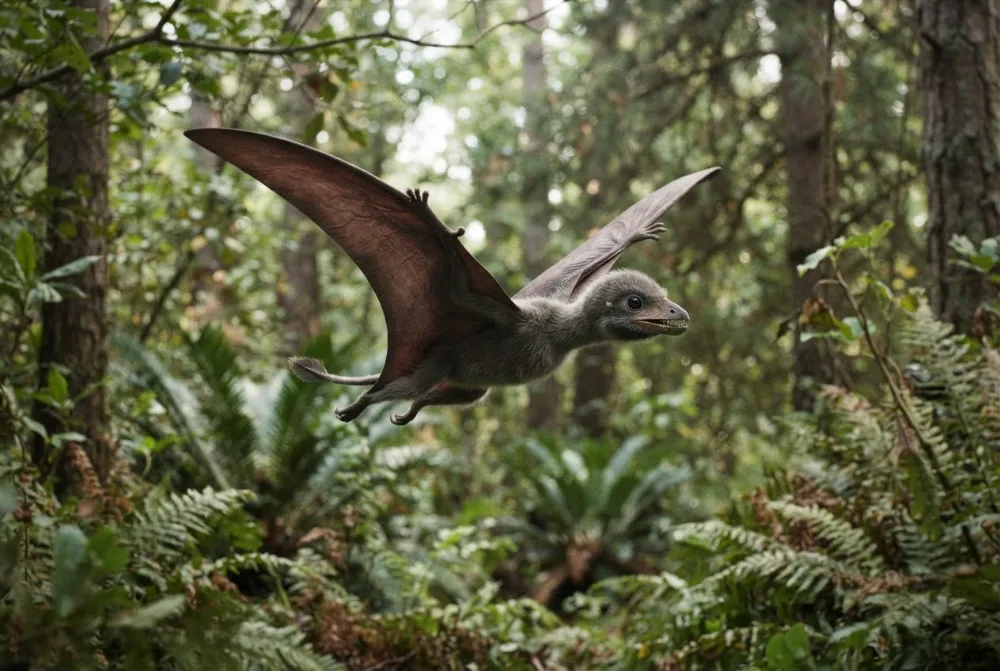
Dendrorhynchoides was a tiny flying reptile that lived about 124 million years ago. It was one of the smallest pterosaurs ever, with a wingspan of only about 40 centimetres (16 inches). It probably fluttered through forests catching insects.1
Ankakhala liti?
Anali wamkulu bwanji?
Mapiko ake anali otambalala bwanji?
Dendrorhynchoides anali wamkulu bwanji poyerekeza ndi IWEYO?
Ndi masamu chabe mu msakatuli wako. Palibe chimene chimasungidwa kapena kutumizidwa kwina kulikonse.
Anali ndi liwiro lotani?


Mfundo zosangalatsa
Its wingspan was only about 40 centimetres (16 inches), making it one of the smallest pterosaurs known.1
It had a short, broad head with very large eye sockets, giving it excellent eyesight for spotting insects.1
Its teeth were curved and about 3 millimetres long, perfect for gripping slippery insects.1
The first fossil was altered by fossil dealers who added a piece of a dromaeosaurid tail to make it look more valuable.1
Scientists think it may have hunted at night like modern bats or nightjars, using its big eyes to see in the dark.1
Its wings were short and its joints were very flexible, which helped it maneuver through trees while chasing prey.1
Mafunso ofunsidwa kwambiri okhudza Dendrorhynchoides
?Was Dendrorhynchoides a dinosaur?
No, it was a pterosaur, a flying reptile that is not a dinosaur.1
?How big was Dendrorhynchoides?
It had a wingspan of about 40 centimetres (16 inches), making it one of the smallest known pterosaurs.1
?What did Dendrorhynchoides eat?
It was an insectivore that ate insects. It had curved teeth about 3 millimetres long for gripping slippery prey.1
?Could Dendrorhynchoides fly?
Yes, it was a flying reptile with short wings and flexible joints that helped it maneuver through trees while chasing insects.1
Wothetsa nthano zabodza
Nthano: Some people think Dendrorhynchoides was a dinosaur because it lived with dinosaurs.
Zoona: It was a pterosaur, a flying reptile, not a dinosaur.1
Kwa akatswiri a madino
- Dzina la sayansi
- Dendrorhynchoides
- Anapatsidwa dzina ndi
- Ji et al. 19993
- Gulu
- Zokwawa zouluka
- Banja / kladi
- Anurognathidae3
- Magawidwe a sayansi
- Pterosauria3
- Zaka za miyala
- zaka 168 mpaka 120 miliyoni (Bathonian / Aptian)3
- Mapangidwe a miyala
- Yixian, Tiaojishan3
- Mayiko
- China3
- Zolemba za mafosili
- 2 mu The Paleobiology Database3
- Kupezeka
- The first fossil was found around 1995 and bought from illegal fossil dealers. It was named Dendrorhynchus in 1998, but that name was already used for a parasite, so it was renamed Dendrorhynchoides in 1999.1
- Akukambiranabe
- Scientists debate whether the first fossil came from the Early Cretaceous or the Middle Jurassic, because the fossil was originally obtained from dealers and its exact location is unclear.1
Kumene mfundo zimachokera
- Dendrorhynchoides (en.wikipedia.org)
- PBDB Taxon (paleobiodb.org)
- Dendrorhynchoides in The Paleobiology Database (CC BY 4.0): zaka, malo, mapangidwe a miyala, magawidwe a sayansi.
Mfundo iliyonse patsamba lino ili ndi nambala yosonyeza kumene yachokera. Ngati talakwitsa kanthu, pepa, ndife okonda madino, osati magazini ya sayansi. Tiuze pa [email protected] ndipo tikonza.
 Rex ali ndi njala! Dino Wiki ndi ntchito ya bambo kwa mwana wawo wamwamuna wokonda madainoso, yaulere popanda zotsatsa ndi zokazonda. Akuluakulu angadyetse Rex zokhwasula-khwasula kuti tsambali lipitirize kupezeka pa intaneti.Dyetsa Rex
 Pteranodon
 Quetzalcoatlus
 Dorygnathus
 Rhamphorhynchus
 Anhanguera
 Pterodactylus
 Stegosaurus
 Iguanodon
 Archaeopteryx
 Giganotosaurus
 Microraptor
 Deinonychus