 Kwizi ya Ndiwe dino uti?
 Nkhondo ya madino
 Mpikisano wa madino
 Masewera ang'onoang'ono a madino
 Chimbale cha zomata
 Mindandanda ya TOP ya madino
 Ndidabwitse!
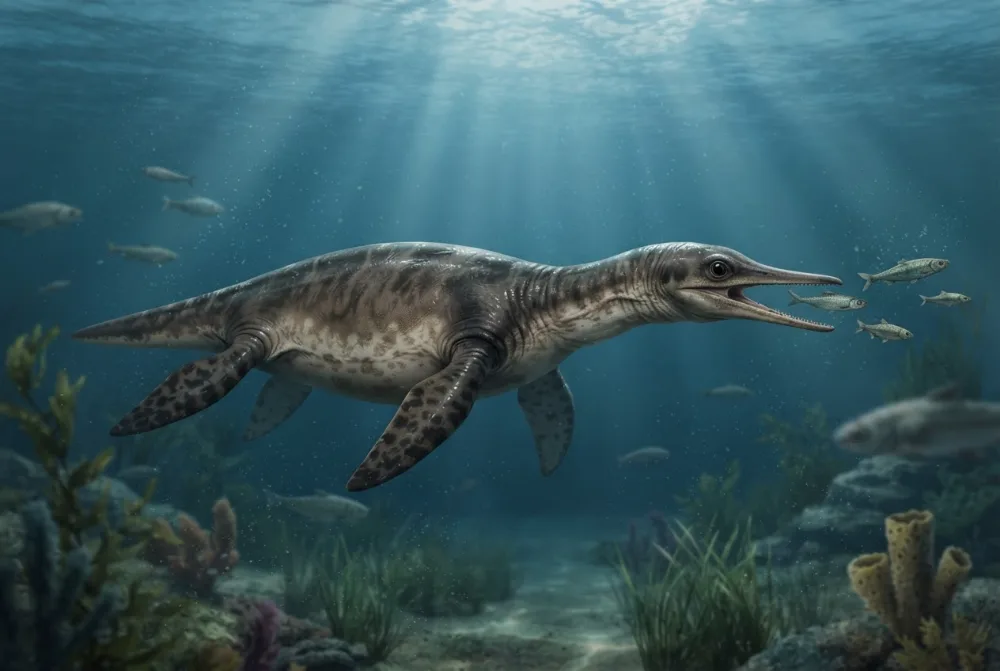
Dolichorhynchops
Dolichorhynchops was a small, fast-swimming marine reptile that lived in the Late Cretaceous seas. It had a long snout and a short neck, and it used its four flippers to chase after fish and squid.1
Ankakhala liti?
Anali wamkulu bwanji?
Anali wautali bwanji?
Ankalemera bwanji?
 wautali ngati agalu 3 otsatizana mphuno ndi mchira🍌wautali ngati nthochi 17 zotsatizana🍉wolemera ngati mavwende 85🧸wolemera ngati ana a sukulu ya mkaka 22🎒wolemera ngati ana a sukulu 13🏊akanatha kusambira utali wa dziwe lalikulu losambira (50 m) m'masekondi 6.2
Dolichorhynchops anali wamkulu bwanji poyerekeza ndi IWEYO?
Ndi masamu chabe mu msakatuli wako. Palibe chimene chimasungidwa kapena kutumizidwa kwina kulikonse.
Anali ndi liwiro lotani?


Mfundo zosangalatsa
Dolichorhynchops was a plesiosaur, but unlike the long-necked plesiosaurs, it had a short neck and a big head.1
The first fossil of Dolichorhynchops was found by a teenager, George Fryer Sternberg, in Kansas around 1900.1
Its name means 'long-nosed face' because of its long, narrow snout.1
Dolichorhynchops lived in the Western Interior Seaway, a shallow sea that split North America in two during the Cretaceous.1
Mafunso ofunsidwa kwambiri okhudza Dolichorhynchops
?How big was Dolichorhynchops?
Dolichorhynchops was a relatively small plesiosaur, measuring around 3 metres (9.8 ft) long. Some estimates range from 2.5 to 3 metres (8.2 to 9.8 ft).13
?What did Dolichorhynchops eat?
It ate fish and squid. Its long, narrow jaws were filled with sharp teeth to grab prey, which it swallowed whole.43
?Was Dolichorhynchops a dinosaur?
No, it was a marine reptile called a plesiosaur, not a dinosaur. It lived in the seas during the Late Cretaceous.14
?When did Dolichorhynchops live?
It lived during the Late Cretaceous, about 87 to 72 million years ago. Fossils are found in North America.1
?Could Dolichorhynchops swim fast?
Yes, it was a quick and agile swimmer. It used its long, paddle-like flippers to 'fly' through the water like a penguin.4
?Did Dolichorhynchops give birth to live young?
Yes, fossils have been found with unborn babies inside, strong evidence that it gave birth to live young.4
Kwa akatswiri a madino
- Dzina la sayansi
- Dolichorhynchops
- Anapatsidwa dzina ndi
- Williston 19025
- Gulu
- Maplesiosauri
- Banja / kladi
- Polycotylidae5
- Magawidwe a sayansi
- Plesiosauria > Sauropterygia5
- Zaka za miyala
- zaka 94 mpaka 66 miliyoni (Turonian / Maastrichtian)5
- Mapangidwe a miyala
- Niobrara, Pierre Shale, Mesaverde5
- Mayiko
- Amereka, Kanada, Polandi, Rasha5
- Zolemba za mafosili
- 14 mu The Paleobiology Database5
- Kupezeka
- The first specimen was found by teenage fossil hunter George Fryer Sternberg in Kansas around 1900. It was named Dolichorhynchops osborni by Samuel Wendell Williston in 1902.1
- Akukambiranabe
- Scientists still debate whether some large polycotylid specimens from Wyoming belong to Dolichorhynchops or to a different genus.1
Kumene mfundo zimachokera
- Dolichorhynchops (en.wikipedia.org)
- A new genus of small polycotylid plesiosaur from the Upper Cretaceous of the Western Interior Seaway and a clarification of the genus Dolichorhynchops (sciencedirect.com)
- Herschel Short-necked Plesiosaur (royalsaskmuseum.ca)
- Sea Monster Pictures, Dolichorhynchops Photos, Facts, Desktop Wallpaper, Animals Reports, News, Info - National Geographic | National Geographic (nationalgeographic.com)
- Dolichorhynchops in The Paleobiology Database (CC BY 4.0): zaka, malo, mapangidwe a miyala, magawidwe a sayansi.
Mfundo iliyonse patsamba lino ili ndi nambala yosonyeza kumene yachokera. Ngati talakwitsa kanthu, pepa, ndife okonda madino, osati magazini ya sayansi. Tiuze pa [email protected] ndipo tikonza.
 Rex ali ndi njala! Dino Wiki ndi ntchito ya bambo kwa mwana wawo wamwamuna wokonda madainoso, yaulere popanda zotsatsa ndi zokazonda. Akuluakulu angadyetse Rex zokhwasula-khwasula kuti tsambali lipitirize kupezeka pa intaneti.Dyetsa Rex
 Elasmosaurus
 Pliosaurus
 Plesiosaurus
 Cimoliasaurus
 Colymbosaurus
 Trinacromerum
 Tyrannosaurus
 Triceratops
 Velociraptor
 Spinosaurus
 Ankylosaurus
 Parasaurolophus