 Kwizi ya Ndiwe dino uti?
 Nkhondo ya madino
 Mpikisano wa madino
 Masewera ang'onoang'ono a madino
 Chimbale cha zomata
 Mindandanda ya TOP ya madino
 Ndidabwitse!
Ankakhala liti?

Anali wamkulu bwanji?
Anali wautali bwanji?
Msinkhu wake unali wautali bwanji?
Ankalemera bwanji?
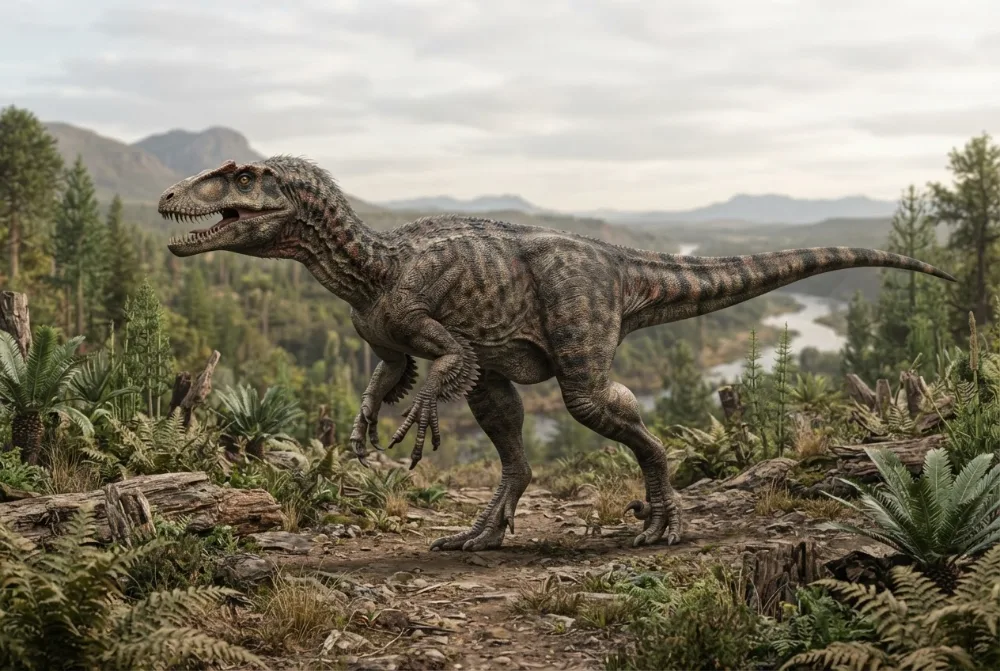
 wautali ngati agalu 6 otsatizana mphuno ndi mchira🍌wautali ngati nthochi 36 zotsatizana🍉wolemera ngati mavwende 50🧸wolemera ngati ana a sukulu ya mkaka 13🎒wolemera ngati ana a sukulu 8🏃akanatha kuthamanga mamita 100 m'masekondi 7.7 (munthu waliwiro kwambiri amafunika 9.6)
Dracovenator anali wamkulu bwanji poyerekeza ndi IWEYO?
Ndi masamu chabe mu msakatuli wako. Palibe chimene chimasungidwa kapena kutumizidwa kwina kulikonse.
Anali ndi liwiro lotani?


Mfundo zosangalatsa
Dracovenator had a kink in its upper jaw, between the maxilla and the premaxilla, similar to Dilophosaurus.1
The back of its lower jaw had lumps and bumps, a feature also seen in Dilophosaurus but smaller.1
The only fossils found so far are a partial skull and some jaw bones. The original skull was lost after being stored at a university.1
Dracovenator lived during the Early Jurassic, about 201 to 199 million years ago.1
Its name comes from the Drakensberg mountains, which means 'Dragon's Mountain' in Dutch.1
The species name regenti honors Regent 'Lucas' Huma, the field assistant who helped discover the fossils.1
Mafunso ofunsidwa kwambiri okhudza Dracovenator
?How big was Dracovenator?
About 5.5 to 6.5 metres (18 to 21 feet) long and weighed around 250 kilograms (550 pounds). Some footprints suggest it might have been up to 9 metres (30 feet) long, but that is not certain.1
?What did Dracovenator eat?
It was a meat-eater that hunted big plant-eating dinosaurs like Massospondylus.1
?When did Dracovenator live?
It lived during the Early Jurassic period, about 201 to 199 million years ago.1
?Where was Dracovenator found?
Its fossils were discovered in the Upper Drumbo Farm area of the Eastern Cape Province in South Africa.1
?Is Dracovenator related to Dilophosaurus?
Yes, scientists think Dracovenator was closely related to Dilophosaurus and another dinosaur called Zupaysaurus.1
?Why is it called Dracovenator?
Its name means 'dragon hunter' in Latin, because it was found near the Drakensberg mountains, which are called 'Dragon's Mountain' in Dutch.1
Kwa akatswiri a madino
- Dzina la sayansi
- Dracovenator
- Anapatsidwa dzina ndi
- Yates 20054
- Gulu
- Madino odya nyama
- Banja / kladi
- Neotheropoda4
- Magawidwe a sayansi
- Theropoda4
- Zaka za miyala
- zaka 201 mpaka 193 miliyoni (Hettangian / Sinemurian)4
- Mapangidwe a miyala
- Elliot4
- Mayiko
- South Africa4
- Zolemba za mafosili
- 2 mu The Paleobiology Database4
- Kupezeka
- Dracovenator was named by Adam M. Yates in 2005. The first fossils were found by James Kitching and Regent Huma at Upper Drumbo Farm in South Africa.1
- Akukambiranabe
- Scientists are not sure exactly how Dracovenator is related to other early theropods. Some studies place it close to Dilophosaurus, but the evidence is not strong.2
Kumene mfundo zimachokera
- Dracovenator (en.wikipedia.org)
- A new theropod dinosaur from the Early Jurassic of South Africa and its implications for the early evolution of theropods (web.archive.org)
- Dracovenator: The Dragon Hunter of Early Jurassic (thedinosaurs.org)
- Dracovenator in The Paleobiology Database (CC BY 4.0): zaka, malo, mapangidwe a miyala, magawidwe a sayansi.
Mfundo iliyonse patsamba lino ili ndi nambala yosonyeza kumene yachokera. Ngati talakwitsa kanthu, pepa, ndife okonda madino, osati magazini ya sayansi. Tiuze pa [email protected] ndipo tikonza.
 Rex ali ndi njala! Dino Wiki ndi ntchito ya bambo kwa mwana wawo wamwamuna wokonda madainoso, yaulere popanda zotsatsa ndi zokazonda. Akuluakulu angadyetse Rex zokhwasula-khwasula kuti tsambali lipitirize kupezeka pa intaneti.Dyetsa Rex
 Allosaurus
 Carnotaurus
 Dilophosaurus
 Giganotosaurus
 Compsognathus
 Paronychodon
 Stenopterygius
 Dorygnathus
 Lufengosaurus
 Scutellosaurus
 Yunnanosaurus
 Temnodontosaurus