 Kwizi ya Ndiwe dino uti?
 Nkhondo ya madino
 Mpikisano wa madino
 Masewera ang'onoang'ono a madino
 Chimbale cha zomata
 Mindandanda ya TOP ya madino
 Ndidabwitse!
Ankakhala liti?

Anali wamkulu bwanji?
Anali wautali bwanji?
Msinkhu wake unali wautali bwanji?
kuyerekeza
Ankalemera bwanji?
 wautali ngati agalu 5 otsatizana mphuno ndi mchira🍌wautali ngati nthochi 28 zotsatizana🍉wolemera ngati mavwende 60🧸wolemera ngati ana a sukulu ya mkaka 16🎒wolemera ngati ana a sukulu 9🏃akanatha kuthamanga mamita 100 m'masekondi 7.7 (munthu waliwiro kwambiri amafunika 9.6)
Eotyrannus anali wamkulu bwanji poyerekeza ndi IWEYO?
Ndi masamu chabe mu msakatuli wako. Palibe chimene chimasungidwa kapena kutumizidwa kwina kulikonse.
Anali ndi liwiro lotani?


Mfundo zosangalatsa
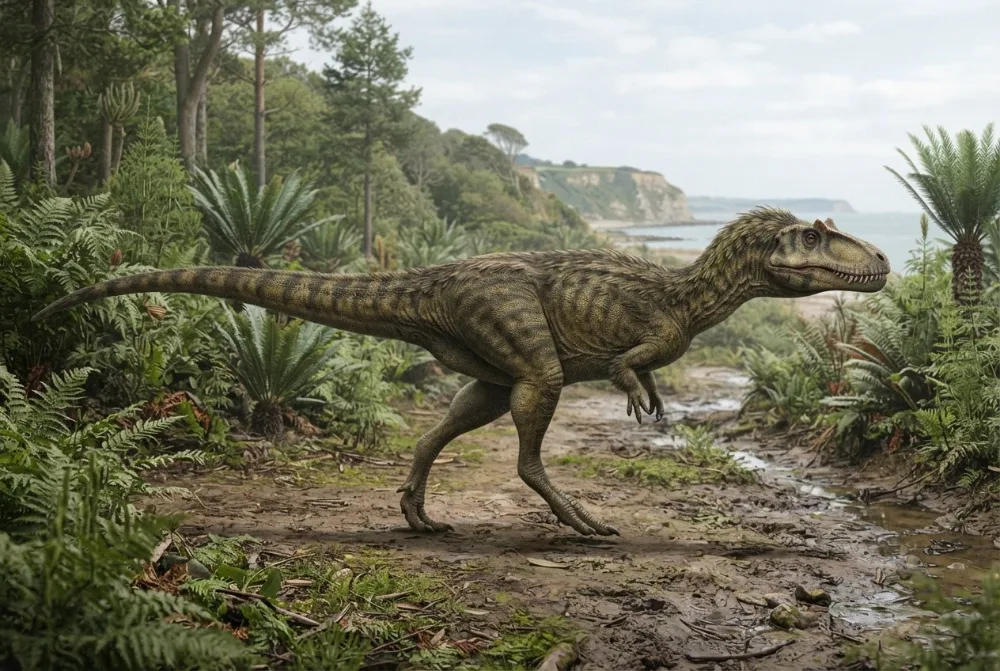
Eotyrannus had D-shaped teeth in its upper jaw, just like T. rex.2
Its hands were long and slender, with fingers that could grab prey.2
The fossil was found in a plant debris bed, which was a swampy floodplain.2
Eotyrannus lived alongside other dinosaurs like Neovenator, Iguanodon, and Polacanthus.1
Scientists think Eotyrannus was a subadult when it died, because some of its bones were not fully fused.2
The name Eotyrannus means 'dawn tyrant' because it was an early relative of the tyrannosaurs.1
Mafunso ofunsidwa kwambiri okhudza Eotyrannus
?How big was Eotyrannus?
The only known specimen was about 4.5 metres long, but it was a subadult, so adults may have been larger.12
?When did Eotyrannus live?
Eotyrannus lived during the Early Cretaceous period, about 131 to 126 million years ago.3
?What did Eotyrannus eat?
Eotyrannus was a predator that probably ate small to medium-sized dinosaurs like Hypsilophodon and Iguanodon, as well as mammals and reptiles.3
?Where was Eotyrannus found?
Eotyrannus was found on the Isle of Wight in England, in a plant debris bed from the Wessex Formation.13
?How fast could Eotyrannus run?
Scientists think Eotyrannus was fast and agile because it had unusually long legs, but no exact speed is known.3
?Is Eotyrannus a dinosaur?
Yes, Eotyrannus is a dinosaur. It is a tyrannosauroid theropod, which is a type of meat-eating dinosaur.1
Kwa akatswiri a madino
- Dzina la sayansi
- Eotyrannus
- Anapatsidwa dzina ndi
- Hutt et al. 20014
- Gulu
- Matiranosauri
- Banja / kladi
- Tyrannosauroidea4
- Magawidwe a sayansi
- Theropoda > Tyrannosauroidea4
- Zaka za miyala
- zaka 133 mpaka 121 miliyoni (Hauterivian / Barremian)4
- Mapangidwe a miyala
- Wessex4
- Mayiko
- United Kingdom4
- Zolemba za mafosili
- 1 mu The Paleobiology Database4
- Kupezeka
- Eotyrannus was discovered by Gavin Leng on the Isle of Wight, England. Scientists Stephen Hutt and colleagues named and described it in 2001.12
- Akukambiranabe
- Scientists are not sure exactly how big a full-grown Eotyrannus was, because the only known fossil is from a subadult.2
Kumene mfundo zimachokera
- Eotyrannus (en.wikipedia.org)
- A preliminary account of a new tyrannosauroid theropod from the Wessex Formation (Early Cretaceous) of southern England (darrennaish.wordpress.com)
- Dinosaur - Eotyrannus lengi - The Australian Museum (australian.museum)
- Eotyrannus in The Paleobiology Database (CC BY 4.0): zaka, malo, mapangidwe a miyala, magawidwe a sayansi.
Mfundo iliyonse patsamba lino ili ndi nambala yosonyeza kumene yachokera. Ngati talakwitsa kanthu, pepa, ndife okonda madino, osati magazini ya sayansi. Tiuze pa [email protected] ndipo tikonza.
 Rex ali ndi njala! Dino Wiki ndi ntchito ya bambo kwa mwana wawo wamwamuna wokonda madainoso, yaulere popanda zotsatsa ndi zokazonda. Akuluakulu angadyetse Rex zokhwasula-khwasula kuti tsambali lipitirize kupezeka pa intaneti.Dyetsa Rex
 Tyrannosaurus
 Tarbosaurus
 Albertosaurus
 Daspletosaurus
 Gorgosaurus
 Alectrosaurus
 Stegosaurus
 Iguanodon
 Archaeopteryx
 Giganotosaurus
 Microraptor
 Deinonychus