 Kwizi ya Ndiwe dino uti?
 Nkhondo ya madino
 Mpikisano wa madino
 Masewera ang'onoang'ono a madino
 Chimbale cha zomata
 Mindandanda ya TOP ya madino
 Ndidabwitse!
Helioceratops
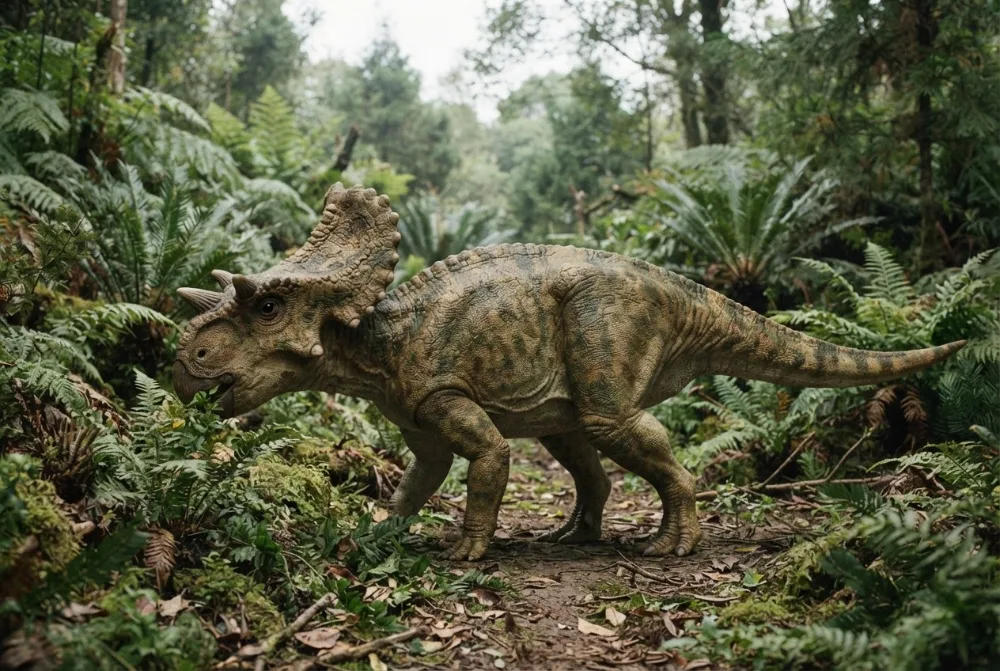
Helioceratops was a small, plant-eating dinosaur that lived about 100 million years ago in what is now China. It had a short lower jaw and walked on four legs. Its name means 'sun horned face' because scientists think horned dinosaurs like it first appeared in the East, where the sun rises.1
Ankakhala liti?
Anali wamkulu bwanji?
Anali wautali bwanji?
Msinkhu wake unali wautali bwanji?
Ankalemera bwanji?
 wautali ngati amphaka a pakhomo 2.5 otsatizana mphuno ndi mchira🍌wautali ngati nthochi 7 zotsatizana🍉wolemera ngati mavwende 4🏃akanatha kuthamanga mamita 100 m'masekondi 11 (munthu waliwiro kwambiri amafunika 9.6)
Helioceratops anali wamkulu bwanji poyerekeza ndi IWEYO?
Ndi masamu chabe mu msakatuli wako. Palibe chimene chimasungidwa kapena kutumizidwa kwina kulikonse.
Anali ndi liwiro lotani?


Mfundo zosangalatsa
Helioceratops is known from only two jaw bones: a right lower jaw (the holotype) and a left upper jaw (the paratype). They were found close together and may belong to the same animal.1
Its lower jaw is very short and deep. The tooth row is only 60% longer than the height of the jawbone.1
The teeth of Helioceratops have an unusual pattern of ridges: up to nine ridges in front of the main ridge but only four behind it.1
Helioceratops lived during the Albian to Cenomanian stages, about 100 million years ago, at the boundary between the Early and Late Cretaceous.1
Scientists think Helioceratops is a close relative of Auroraceratops, which means 'dawn horned face'.1
Mafunso ofunsidwa kwambiri okhudza Helioceratops
?How big was Helioceratops?
Helioceratops was a relatively small dinosaur. In 2010, Gregory S. Paul estimated it was about 1.3 metres (4.3 feet) long and weighed about 20 kilograms (44 pounds).1
?What did Helioceratops eat?
Helioceratops was a herbivore, meaning it ate plants. It lived on land and likely shared its habitat with another plant-eating dinosaur called Changchunsaurus.1
?When did Helioceratops live?
Helioceratops lived about 100 million years ago, during the Albian to Cenomanian stages, which is the boundary between the Early and Late Cretaceous. Its fossils were found in the Quantou Formation in China.14
?Why is it called Helioceratops?
The name means 'sun horned face' because scientists think horned dinosaurs first appeared in the East, where the sun rises. It also refers to its close relationship with Auroraceratops, the 'dawn horned face'.1
Kwa akatswiri a madino
- Dzina la sayansi
- Helioceratops
- Anapatsidwa dzina ndi
- Jin et al. 20094
- Gulu
- Madino a nyanga
- Banja / kladi
- Leptoceratopsidae4
- Magawidwe a sayansi
- Ornithischia > Ceratopsia4
- Zaka za miyala
- zaka 121 mpaka 100 miliyoni (Aptian / Albian)4
- Mapangidwe a miyala
- Quantou4
- Mayiko
- China4
- Zolemba za mafosili
- 1 mu The Paleobiology Database4
- Kupezeka
- Helioceratops was named in 2009 by Jin Liyong, Chen Jun, Zan Shuqin and Pascal Godefroit. The fossils were dug up in 2000 and 2002 at the Liufangzi site in Jilin Province, China.12
- Akukambiranabe
- Scientists are not sure whether Helioceratops had horns. No horn cores have been found, but it is a ceratopsian, so it may have had small horns on its face.1
Kumene mfundo zimachokera
- Helioceratops (en.wikipedia.org)
- Newly Discovered Dinosaur Speicies Named 'Helioceratops' -- Beijing Review (bjreview.com)
- Helioceratops | The Sun-Horned Face of Cretaceous China (thedinosaurs.org)
- Helioceratops in The Paleobiology Database (CC BY 4.0): zaka, malo, mapangidwe a miyala, magawidwe a sayansi.
Mfundo iliyonse patsamba lino ili ndi nambala yosonyeza kumene yachokera. Ngati talakwitsa kanthu, pepa, ndife okonda madino, osati magazini ya sayansi. Tiuze pa [email protected] ndipo tikonza.
 Rex ali ndi njala! Dino Wiki ndi ntchito ya bambo kwa mwana wawo wamwamuna wokonda madainoso, yaulere popanda zotsatsa ndi zokazonda. Akuluakulu angadyetse Rex zokhwasula-khwasula kuti tsambali lipitirize kupezeka pa intaneti.Dyetsa Rex
 Triceratops
 Protoceratops
 Ojoceratops
 Tatankaceratops
 Psittacosaurus
 Centrosaurus
 Stegosaurus
 Iguanodon
 Archaeopteryx
 Giganotosaurus
 Microraptor
 Deinonychus