 Kwizi ya Ndiwe dino uti?
 Nkhondo ya madino
 Mpikisano wa madino
 Masewera ang'onoang'ono a madino
 Chimbale cha zomata
 Mindandanda ya TOP ya madino
 Ndidabwitse!
Ankakhala liti?

Anali wamkulu bwanji?
Anali wautali bwanji?
Msinkhu wake unali wautali bwanji?
kuyerekeza
Ankalemera bwanji?
 wautali ngati agalu 5 otsatizana mphuno ndi mchira🍌wautali ngati nthochi 27 zotsatizana🍉wolemera ngati mavwende 200🧸wolemera ngati ana a sukulu ya mkaka 53🎒wolemera ngati ana a sukulu 31🐻❄️wolemera ngati zimbalangondo zoyera 2🏃akanatha kuthamanga mamita 100 m'masekondi 19 (munthu waliwiro kwambiri amafunika 9.6)
Hungarosaurus anali wamkulu bwanji poyerekeza ndi IWEYO?
Ndi masamu chabe mu msakatuli wako. Palibe chimene chimasungidwa kapena kutumizidwa kwina kulikonse.
Anali ndi liwiro lotani?


Mfundo zosangalatsa
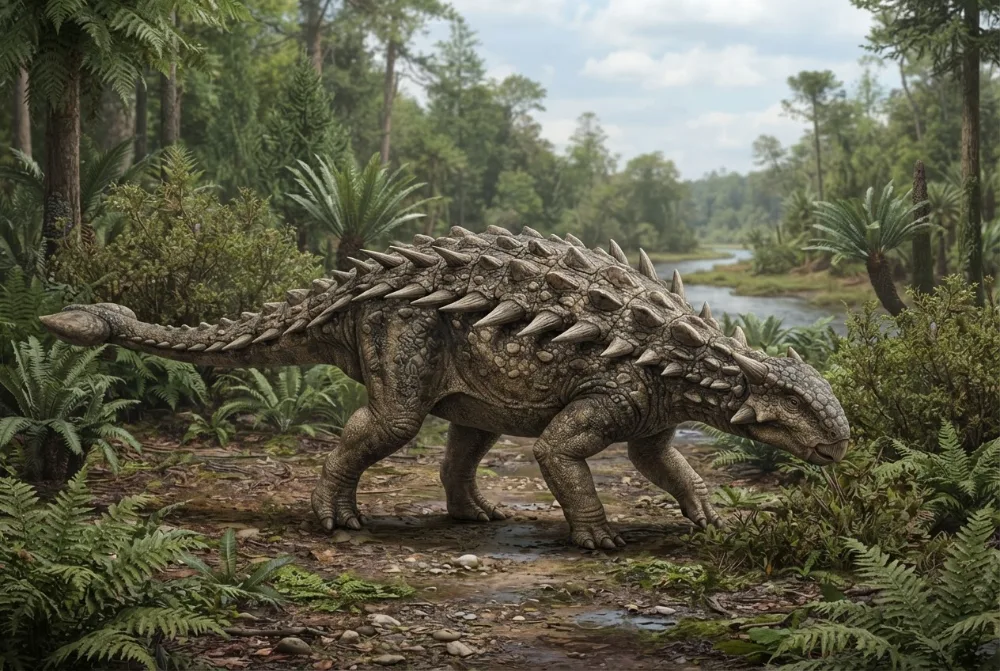
Hungarosaurus is the most completely known armored dinosaur from the Cretaceous of Europe.1
Its body was covered with hundreds of bony plates called osteoderms.1
Hungarosaurus had unusually long front legs for an ankylosaur, almost as long as its back legs.1
The first fossils were found in an open-pit bauxite mine by amateur paleontologist András Torma in 2000.1
Hungarosaurus lived alongside fish, turtles, lizards, crocodiles, pterosaurs, and small meat-eating dinosaurs.1
Its skull was about 32 to 36 centimeters (13 to 14 inches) long and had a bumpy, ornamented surface.1
Mafunso ofunsidwa kwambiri okhudza Hungarosaurus
?How big was Hungarosaurus?
Hungarosaurus was about 4 to 4.8 metres (13 to 16 ft) long and weighed around 650 to 1,000 kilograms (1,430 to 2,200 lb).1
?What did Hungarosaurus eat?
Hungarosaurus was a plant-eater, and its teeth were leaf-shaped for cutting food. It sheared its food with a slicing motion, not just simple chewing.13
?Did Hungarosaurus have armor?
Yes, its body was covered with hundreds of bony plates called osteoderms, which acted like protective armor.1
?Where did Hungarosaurus live?
It lived in what is now Hungary, specifically in the Bakony Mountains, during the Late Cretaceous about 85 million years ago.1
Kwa akatswiri a madino
- Dzina la sayansi
- Hungarosaurus
- Anapatsidwa dzina ndi
- Osi 20054
- Gulu
- Madino a zishango
- Banja / kladi
- Nodosauridae4
- Magawidwe a sayansi
- Ornithischia > Ankylosauria > Nodosauridae > Thyreophora4
- Zaka za miyala
- zaka 86 mpaka 84 miliyoni (Santonian)4
- Mapangidwe a miyala
- Csehbánya4
- Mayiko
- Hungary4
- Zolemba za mafosili
- 2 mu The Paleobiology Database4
- Kupezeka
- Hungarosaurus was named by paleontologist Attila Ősi in 2005. The species name H. tormai honors András Torma, who discovered the fossil site in 2000 in Hungary.1
- Akukambiranabe
- Scientists are still debating exactly how Hungarosaurus is related to other nodosaurids, especially the European Struthiosaurus.12
Kumene mfundo zimachokera
- Hungarosaurus (en.wikipedia.org)
- Hungarosaurus tormai, a new ankylosaur (Dinosauria) from the Upper Cretaceous of Hungary - ADS (ui.adsabs.harvard.edu)
- Hungarosaurus tormai – Magyar Dinoszaurusz-kutató Expedíció (magyardinoszaurusz.hu)
- Hungarosaurus in The Paleobiology Database (CC BY 4.0): zaka, malo, mapangidwe a miyala, magawidwe a sayansi.
Mfundo iliyonse patsamba lino ili ndi nambala yosonyeza kumene yachokera. Ngati talakwitsa kanthu, pepa, ndife okonda madino, osati magazini ya sayansi. Tiuze pa [email protected] ndipo tikonza.
 Rex ali ndi njala! Dino Wiki ndi ntchito ya bambo kwa mwana wawo wamwamuna wokonda madainoso, yaulere popanda zotsatsa ndi zokazonda. Akuluakulu angadyetse Rex zokhwasula-khwasula kuti tsambali lipitirize kupezeka pa intaneti.Dyetsa Rex
 Ankylosaurus
 Sauropelta
 Pinacosaurus
 Scutellosaurus
 Struthiosaurus
 Euoplocephalus
 Tyrannosaurus
 Triceratops
 Velociraptor
 Spinosaurus
 Parasaurolophus
 Pteranodon