 Kwizi ya Ndiwe dino uti?
 Nkhondo ya madino
 Mpikisano wa madino
 Masewera ang'onoang'ono a madino
 Chimbale cha zomata
 Mindandanda ya TOP ya madino
 Ndidabwitse!
Igai
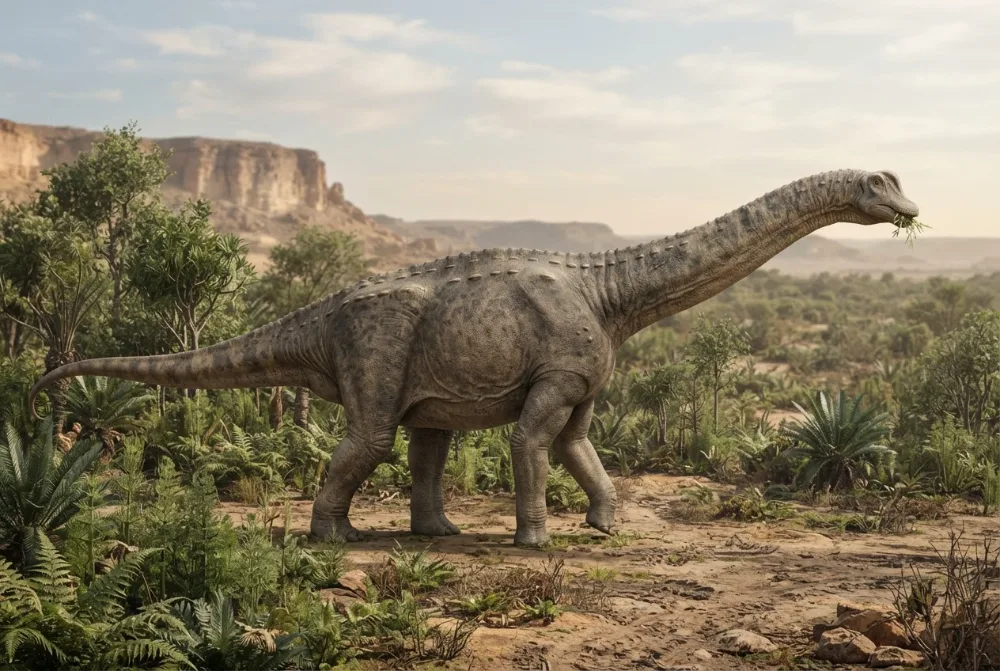
Igai was a giant, long-necked plant-eater that stomped through what is now Egypt about 74 million years ago. It was a titanosaur, a group of sauropods known for their huge bodies and small heads. Even though it was big, it was actually one of the smaller titanosaurs!12
Ankakhala liti?
Anali wamkulu bwanji?
Anali wautali bwanji?
Msinkhu wake unali wautali bwanji?
kuyerekeza
 wautali ngati magalimoto 3 oimikidwa pamzere🍌wautali ngati nthochi 83 zotsatizana🏃akanatha kuthamanga mamita 100 m'masekondi 22 (munthu waliwiro kwambiri amafunika 9.6)
Igai anali wamkulu bwanji poyerekeza ndi IWEYO?
Ndi masamu chabe mu msakatuli wako. Palibe chimene chimasungidwa kapena kutumizidwa kwina kulikonse.
Anali ndi liwiro lotani?


Mfundo zosangalatsa
Igai had air sacs inside its backbone bones, making them light and spongy, which helped it grow so large.2
Its fifth metacarpal (a bone in the hand) had two unique bumps on the inner side that no other titanosaur has.2
Igai was more slender than many other titanosaurs, with leg bones that were relatively thin and graceful.2
The first and second metatarsals (foot bones) had deep grooves on their upper surfaces, a feature not seen in other titanosaurs.2
Igai lived about 74 million years ago, during the Campanian stage of the Late Cretaceous.2
Igai was probably bigger than its close relative Mansourasaurus, which was about 8 to 10 metres long.2
Mafunso ofunsidwa kwambiri okhudza Igai
Wothetsa nthano zabodza
Nthano: Igai was a giant, slow-moving beast like other sauropods.
Zoona: Igai was actually relatively small and slender for a titanosaur, and its limb bones suggest it was quite agile for its size.2
Kwa akatswiri a madino
- Dzina la sayansi
- Igai
- Anapatsidwa dzina ndi
- Gorscak et al. 20234
- Gulu
- Makosi atali
- Banja / kladi
- Saltasauridae4
- Magawidwe a sayansi
- Sauropodomorpha > Sauropoda > Titanosauria > Macronaria4
- Zaka za miyala
- zaka 84 mpaka 72 miliyoni (Campanian)4
- Mapangidwe a miyala
- Quseir4
- Mayiko
- Iguputo4
- Zolemba za mafosili
- 1 mu The Paleobiology Database4
- Kupezeka
- Fossils of Igai were first found in 1977 by German scientists in the Kharga Oasis, Egypt. It was named and described in 2023 by Gorscak and colleagues.23
- Akukambiranabe
- Scientists are still debating whether Igai was fully grown when it died, because some bones suggest it might not have been completely mature.1
Kumene mfundo zimachokera
- tandfonline.com (tandfonline.com)
- Igai (en.wikipedia.org)
- PBDB Taxon (paleobiodb.org)
- Igai in The Paleobiology Database (CC BY 4.0): zaka, malo, mapangidwe a miyala, magawidwe a sayansi.
Mfundo iliyonse patsamba lino ili ndi nambala yosonyeza kumene yachokera. Ngati talakwitsa kanthu, pepa, ndife okonda madino, osati magazini ya sayansi. Tiuze pa [email protected] ndipo tikonza.
 Rex ali ndi njala! Dino Wiki ndi ntchito ya bambo kwa mwana wawo wamwamuna wokonda madainoso, yaulere popanda zotsatsa ndi zokazonda. Akuluakulu angadyetse Rex zokhwasula-khwasula kuti tsambali lipitirize kupezeka pa intaneti.Dyetsa Rex
 Brachiosaurus
 Diplodocus
 Brontosaurus
 Argentinosaurus
 Camarasaurus
 Morosaurus
 Tyrannosaurus
 Triceratops
 Velociraptor
 Spinosaurus
 Ankylosaurus
 Parasaurolophus