 Kwizi ya Ndiwe dino uti?
 Nkhondo ya madino
 Mpikisano wa madino
 Masewera ang'onoang'ono a madino
 Chimbale cha zomata
 Mindandanda ya TOP ya madino
 Ndidabwitse!
Ingentia
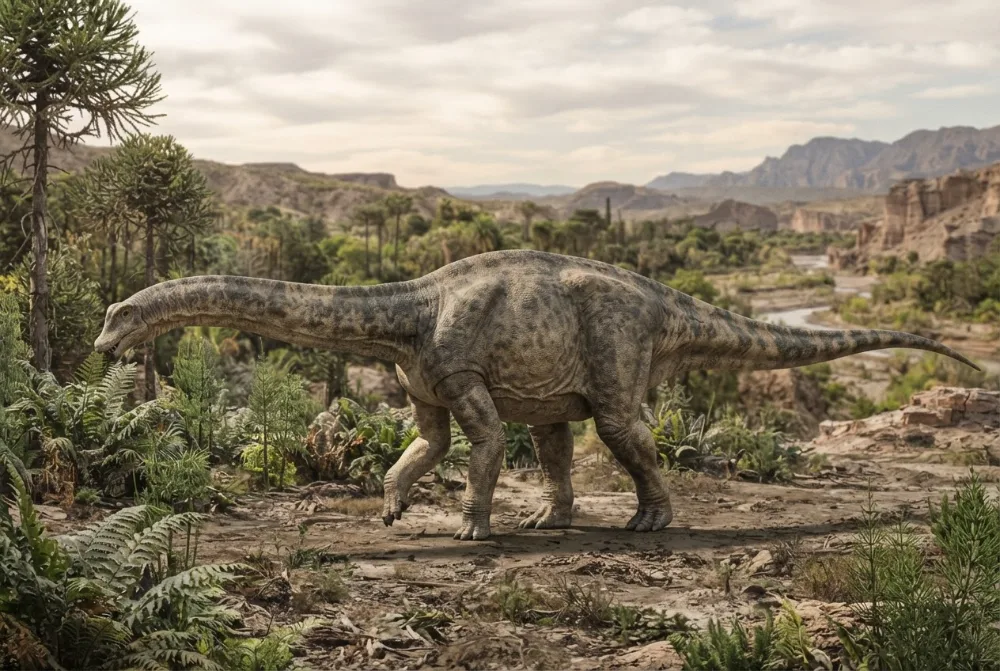
Ingentia was one of the first giant dinosaurs to ever live. It was a huge, plant-eating dinosaur from the Late Triassic period in Argentina. Even though it was very big, it did not have all the special body parts that later giant sauropods had.1
Ankakhala liti?
Anali wamkulu bwanji?
Ankalemera bwanji?

 wolemera pafupifupi ngati njovu🍉wolemera ngati mavwende 1400🎒wolemera ngati makalasi athunthu a ana a sukulu 9🐻❄️wolemera ngati zimbalangondo zoyera 16🏃akanatha kuthamanga mamita 100 m'masekondi 20 (munthu waliwiro kwambiri amafunika 9.6)
Ingentia anali wamkulu bwanji poyerekeza ndi IWEYO?
Ndi masamu chabe mu msakatuli wako. Palibe chimene chimasungidwa kapena kutumizidwa kwina kulikonse.
Anali ndi liwiro lotani?


Mfundo zosangalatsa
Ingentia lived about 227 to 205 million years ago, during the Late Triassic period.4
It belonged to a group called Lessemsauridae, which also includes Lessemsaurus and Antetonitrus.1
Ingentia grew to a large size without having the long neck and other features of later giant sauropods.1
Its bones show that it grew very fast, with a special type of bone tissue called fibrolamellar bone.1
The first pulse of gigantism in dinosaurs happened over 30 million years before the first true sauropods appeared.1
Ingentia had an improved respiratory system similar to modern birds, which helped it grow so large.1
Mafunso ofunsidwa kwambiri okhudza Ingentia
?How big was Ingentia?
Scientists estimate Ingentia was one of the first giant dinosaurs, but they don't give an exact size. It was large enough to be called 'huge', and it was one of the first very large sauropodomorphs to evolve.31
?What did Ingentia eat?
Ingentia was a plant-eating dinosaur. It belonged to a group of herbivorous dinosaurs called sauropodomorphs.3
?When did Ingentia live?
Ingentia lived during the Late Triassic period, about 227 to 205 million years ago, in what is now Argentina.3
?Why is Ingentia important?
Ingentia is important because it shows that dinosaurs got huge over 30 million years before the first true sauropods appeared. It grew fast without having a long neck or other later sauropod features.1
Kwa akatswiri a madino
- Dzina la sayansi
- Ingentia
- Anapatsidwa dzina ndi
- Apaldetti et al. 20184
- Gulu
- Makosi atali
- Banja / kladi
- Lessemsauridae4
- Magawidwe a sayansi
- Sauropodomorpha > Sauropoda4
- Zaka za miyala
- zaka 227 mpaka 206 miliyoni (Norian)4
- Mapangidwe a miyala
- Quebrada del Barro4
- Mayiko
- Argentina4
- Zolemba za mafosili
- 1 mu The Paleobiology Database4
- Kupezeka
- Ingentia was named in 2018 by paleontologists Cecilia Apaldetti and colleagues. The fossils were found in the Quebrada del Barro Formation in Argentina.41
- Akukambiranabe
- Scientists are still debating whether Ingentia and its close relatives are the earliest sauropods or just very close relatives of sauropods.1
Kumene mfundo zimachokera
- An early trend towards gigantism in Triassic sauropodomorph dinosaurs | Nature Ecology & Evolution (nature.com)
- An early trend towards gigantism in Triassic sauropodomorph dinosaurs (ri.conicet.gov.ar)
- Ingentia (en.wikipedia.org)
- Ingentia in The Paleobiology Database (CC BY 4.0): zaka, malo, mapangidwe a miyala, magawidwe a sayansi.
Mfundo iliyonse patsamba lino ili ndi nambala yosonyeza kumene yachokera. Ngati talakwitsa kanthu, pepa, ndife okonda madino, osati magazini ya sayansi. Tiuze pa [email protected] ndipo tikonza.
 Rex ali ndi njala! Dino Wiki ndi ntchito ya bambo kwa mwana wawo wamwamuna wokonda madainoso, yaulere popanda zotsatsa ndi zokazonda. Akuluakulu angadyetse Rex zokhwasula-khwasula kuti tsambali lipitirize kupezeka pa intaneti.Dyetsa Rex
 Brachiosaurus
 Diplodocus
 Brontosaurus
 Argentinosaurus
 Camarasaurus
 Morosaurus
 Nothosaurus
 Coelophysis
 Podokesaurus
 Simosaurus
 Eudimorphodon
 Herrerasaurus