 Kwizi ya Ndiwe dino uti?
 Nkhondo ya madino
 Mpikisano wa madino
 Masewera ang'onoang'ono a madino
 Chimbale cha zomata
 Mindandanda ya TOP ya madino
 Ndidabwitse!
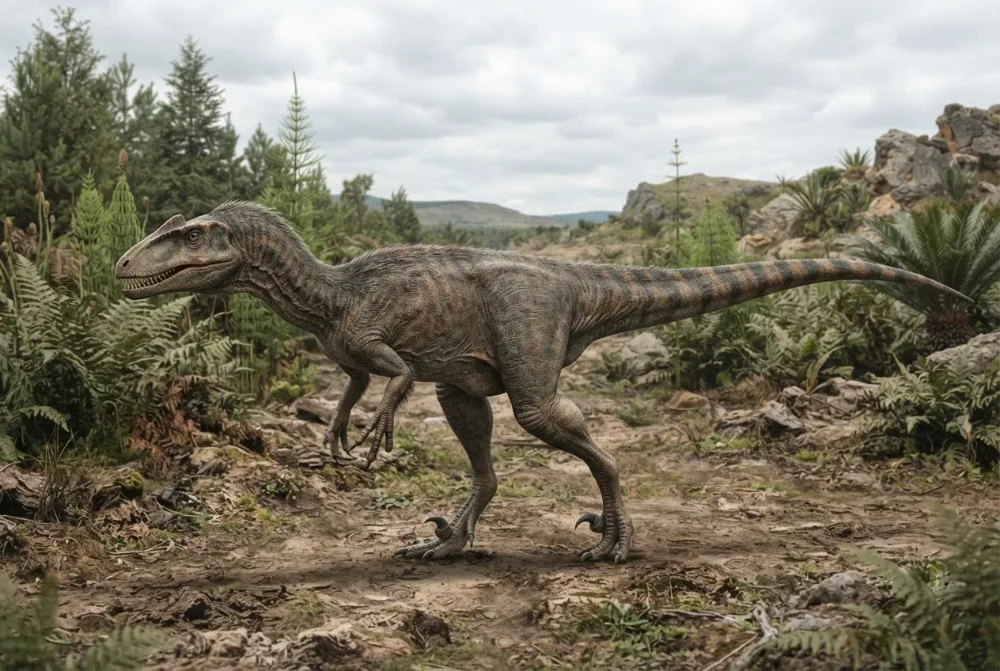
Liliensternus
Liliensternus was a meat-eating dinosaur that lived in what is now Germany during the Late Triassic. It walked on two legs and was one of the largest predators of its time in Europe.1
Ankakhala liti?
Anali wamkulu bwanji?
Anali wautali bwanji?
Msinkhu wake unali wautali bwanji?
Ankalemera bwanji?
 wautali ngati agalu 5 otsatizana mphuno ndi mchira🍌wautali ngati nthochi 29 zotsatizana🍉wolemera ngati mavwende 40🧸wolemera ngati ana a sukulu ya mkaka 11🎒wolemera ngati ana a sukulu 6🏃akanatha kuthamanga mamita 100 m'masekondi 7.2 (munthu waliwiro kwambiri amafunika 9.6)
Liliensternus anali wamkulu bwanji poyerekeza ndi IWEYO?
Ndi masamu chabe mu msakatuli wako. Palibe chimene chimasungidwa kapena kutumizidwa kwina kulikonse.
Anali ndi liwiro lotani?


Mfundo zosangalatsa
Liliensternus is the best-known Triassic theropod from Europe.1
The fossils were found by Count Hugo Rühle von Lilienstern in the winter of 1932/1933 near Großer Gleichberg in Germany.1
Liliensternus had a shorter shin bone (tibia) than thigh bone (femur), which is different from some other early theropods like Coelophysis.1
It lived about 210 million years ago, during the Late Triassic Period.1
The dinosaur's name honors Count Hugo Rühle von Lilienstern, who helped paleontology in Germany by starting a museum in his castle.1
Some scientists think Liliensternus could run fast to catch small ornithischian dinosaurs.1
Mafunso ofunsidwa kwambiri okhudza Liliensternus
?How big was Liliensternus?
About 5.15 metres (16.9 feet) long and maybe 127 kilograms (280 pounds), but some fragmentary remains suggest adults could reach 7 to 9 metres.1
?What did Liliensternus eat?
It was a meat-eater that probably hunted large herbivores like Plateosaurus and also chased fast ornithischian dinosaurs.1
?Did Liliensternus have feathers?
Nobody knows for sure. The fossils don't show feathers, and most Triassic theropods are not known to have them.1
?When did Liliensternus live?
It lived about 210 million years ago, during the Late Triassic Period.12
?Could Liliensternus run fast?
Yes, it was a fast runner. Paul (1988) noted it used its speed to catch swift ornithischian dinosaurs.1
?Was Liliensternus bigger than T. rex?
No, T. rex was much bigger. Liliensternus was about 5 metres long, while T. rex was over 12 metres long.1
Kwa akatswiri a madino
- Dzina la sayansi
- Liliensternus
- Anapatsidwa dzina ndi
- Welles 19844
- Gulu
- Madino odya nyama
- Banja / kladi
- Neotheropoda4
- Magawidwe a sayansi
- Theropoda4
- Zaka za miyala
- zaka 227 mpaka 201 miliyoni (Norian / Rhaetian)4
- Mapangidwe a miyala
- Trossingen, Klettgau, Löwenstein4
- Mayiko
- Jeremani, Switzerland4
- Zolemba za mafosili
- 5 mu The Paleobiology Database4
- Kupezeka
- Liliensternus was first named Halticosaurus liliensternus by Friedrich von Huene in 1934, but in 1984 Samuel Paul Welles gave it its own genus name Liliensternus.1
- Akukambiranabe
- Scientists are not sure if Liliensternus belongs to the group Coelophysoidea or is a more primitive neotheropod.1
Kumene mfundo zimachokera
- Liliensternus (en.wikipedia.org)
- Liliensternus | Natural History Museum (nhm.ac.uk)
- Liliensternus | Earth and Atmospheric Sciences | Research Starters | EBSCOhost (ebsco.com)
- Liliensternus in The Paleobiology Database (CC BY 4.0): zaka, malo, mapangidwe a miyala, magawidwe a sayansi.
Mfundo iliyonse patsamba lino ili ndi nambala yosonyeza kumene yachokera. Ngati talakwitsa kanthu, pepa, ndife okonda madino, osati magazini ya sayansi. Tiuze pa [email protected] ndipo tikonza.
 Rex ali ndi njala! Dino Wiki ndi ntchito ya bambo kwa mwana wawo wamwamuna wokonda madainoso, yaulere popanda zotsatsa ndi zokazonda. Akuluakulu angadyetse Rex zokhwasula-khwasula kuti tsambali lipitirize kupezeka pa intaneti.Dyetsa Rex
 Allosaurus
 Carnotaurus
 Dilophosaurus
 Giganotosaurus
 Compsognathus
 Paronychodon
 Nothosaurus
 Massospondylus
 Plateosaurus
 Simosaurus
 Thecodontosaurus
 Eudimorphodon