 Kwizi ya Ndiwe dino uti?
 Nkhondo ya madino
 Mpikisano wa madino
 Masewera ang'onoang'ono a madino
 Chimbale cha zomata
 Mindandanda ya TOP ya madino
 Ndidabwitse!
Ankakhala liti?

Anali wamkulu bwanji?
Anali wautali bwanji?
Msinkhu wake unali wautali bwanji?
kuyerekeza
Ankalemera bwanji?
 wautali ngati agalu 4 otsatizana mphuno ndi mchira🍌wautali ngati nthochi 19 zotsatizana🍉wolemera ngati mavwende 50🧸wolemera ngati ana a sukulu ya mkaka 13🎒wolemera ngati ana a sukulu 8🏃akanatha kuthamanga mamita 100 m'masekondi 8.4 (munthu waliwiro kwambiri amafunika 9.6)
Minqaria anali wamkulu bwanji poyerekeza ndi IWEYO?
Ndi masamu chabe mu msakatuli wako. Palibe chimene chimasungidwa kapena kutumizidwa kwina kulikonse.
Anali ndi liwiro lotani?


Mfundo zosangalatsa
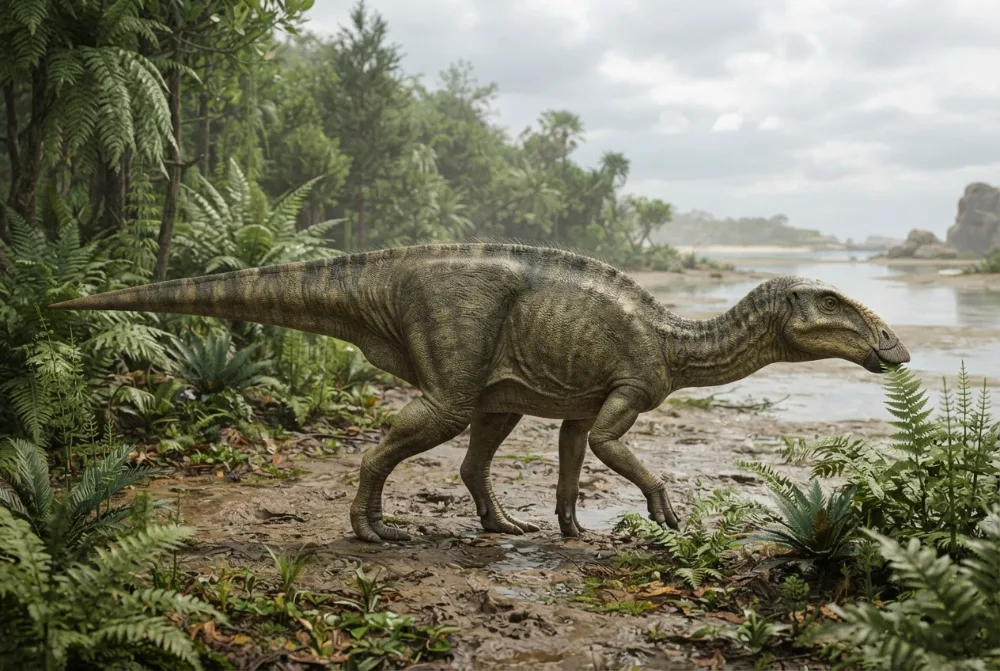
Minqaria was a dwarf dinosaur, only about 3.5 metres (11 feet) long, much smaller than its giant relatives like Edmontosaurus.21
Its skull bones were fused together, which tells scientists it was a fully grown adult, not a baby.21
Minqaria lived alongside other dinosaurs in Morocco, including the duck-billed Ajnabia and the meat-eating Chenanisaurus.2
The name Minqaria comes from the Arabic word for 'beak', and bata means 'duck', so its full name is 'beak duck'.1
Minqaria belonged to a group of duck-billed dinosaurs called lambeosaurines, which often had fancy crests on their heads.21
Fossils of Minqaria were found in marine rocks, meaning its body washed out to sea after death.2
Mafunso ofunsidwa kwambiri okhudza Minqaria
?How big was Minqaria?
Minqaria was about 3.5 metres long and weighed about 250 kilograms, similar in size to a large motorcycle.12
?Was Minqaria a baby or an adult?
It was a fully grown adult. Its skull bones were fused together, which shows it was mature even though it was small.12
?What did Minqaria eat?
Minqaria was a duck-billed dinosaur, so it ate plants. It had teeth in its jaws for chewing plant material.1
?When did Minqaria live?
Minqaria lived in the very latest Cretaceous period, about 1 million years before the asteroid impact that wiped out the dinosaurs.1
Kwa akatswiri a madino
- Dzina la sayansi
- Minqaria
- Anapatsidwa dzina ndi
- Longrich et al. 20244
- Gulu
- Milomo ya bakha
- Banja / kladi
- Hadrosauridae4
- Magawidwe a sayansi
- Ornithischia > Ornithopoda > Iguanodontia > Hadrosauridae4
- Zaka za miyala
- zaka 72 mpaka 66 miliyoni (Maastrichtian)4
- Mapangidwe a miyala
- Couche III4
- Mayiko
- Moroko4
- Zolemba za mafosili
- 1 mu The Paleobiology Database4
- Kupezeka
- Minqaria was named in 2024 by paleontologist Nick Longrich and his team. The fossils were found by local miners in the phosphate mines of Sidi Chennane, Morocco.21
- Akukambiranabe
- Scientists are not sure why Minqaria and other African duck-billed dinosaurs were so small, but they think it might be because giant sauropods outcompeted them for food.2
Kumene mfundo zimachokera
- Minqaria (en.wikipedia.org)
- A new small duckbilled dinosaur (Hadrosauridae: Lambeosaurinae) from Morocco and dinosaur diversity in the late Maastrichtian of North Africa (pmc.ncbi.nlm.nih.gov)
- PBDB Taxon (paleobiodb.org)
- Minqaria in The Paleobiology Database (CC BY 4.0): zaka, malo, mapangidwe a miyala, magawidwe a sayansi.
Mfundo iliyonse patsamba lino ili ndi nambala yosonyeza kumene yachokera. Ngati talakwitsa kanthu, pepa, ndife okonda madino, osati magazini ya sayansi. Tiuze pa [email protected] ndipo tikonza.
 Rex ali ndi njala! Dino Wiki ndi ntchito ya bambo kwa mwana wawo wamwamuna wokonda madainoso, yaulere popanda zotsatsa ndi zokazonda. Akuluakulu angadyetse Rex zokhwasula-khwasula kuti tsambali lipitirize kupezeka pa intaneti.Dyetsa Rex
 Parasaurolophus
 Edmontosaurus
 Saurolophus
 Hypacrosaurus
 Corythosaurus
 Kritosaurus
 Tyrannosaurus
 Triceratops
 Velociraptor
 Spinosaurus
 Ankylosaurus
 Pteranodon