 Kwizi ya Ndiwe dino uti?
 Nkhondo ya madino
 Mpikisano wa madino
 Masewera ang'onoang'ono a madino
 Chimbale cha zomata
 Mindandanda ya TOP ya madino
 Ndidabwitse!
Pararhabdodon
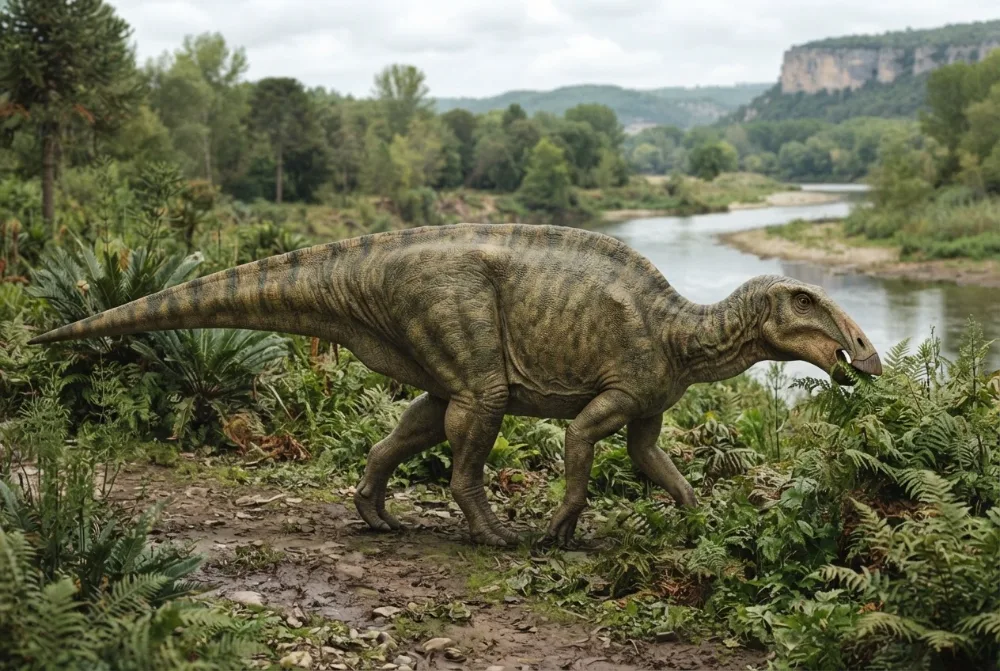
Pararhabdodon was a big duck-billed dinosaur that lived in Spain near the end of the Age of Dinosaurs. It walked on two legs or all fours and munched on plants with its toothy beak.1
Ankakhala liti?
Anali wamkulu bwanji?
Anali wautali bwanji?
 wautali ngati magalimoto 2 oimikidwa pamzere🍌wautali ngati nthochi 50 zotsatizana🏃akanatha kuthamanga mamita 100 m'masekondi 15 (munthu waliwiro kwambiri amafunika 9.6)
Pararhabdodon anali wamkulu bwanji poyerekeza ndi IWEYO?
Ndi masamu chabe mu msakatuli wako. Palibe chimene chimasungidwa kapena kutumizidwa kwina kulikonse.
Anali ndi liwiro lotani?


Mfundo zosangalatsa
Pararhabdodon was one of the very last non-bird dinosaurs, living just before the big extinction 66 million years ago.1
It was the first lambeosaurine hadrosaur ever found on the European continent.1
Even though it lived on an island, it did not shrink like some other island dinosaurs; it may have grown as large as its relatives in North America and Asia.1
Scientists think it could walk on two legs or on all fours, depending on what it was doing.1
Some bones from France and other Spanish sites were once thought to belong to Pararhabdodon, but later studies questioned those ideas.1
A bonebed called Basturs Poble has many hadrosaur bones, and some scientists thought they belonged to Pararhabdodon, but that is not certain.1
Mafunso ofunsidwa kwambiri okhudza Pararhabdodon
?How big was Pararhabdodon?
The holotype specimen was about 6 metres (20 ft) long, but it was not fully grown. Adults likely reached around 9 metres (30 ft), similar to relatives like Corythosaurus and Tsintaosaurus.1
?What did Pararhabdodon eat?
It was a herbivore, meaning it ate plants. It used its toothy beak to munch on vegetation.1
?Where was Pararhabdodon found?
Its fossils were discovered in the Tremp Group of Spain, near Isona in the Pyrenees. Some bones from France were once thought to belong to it, but that is now questioned.1
?Is Pararhabdodon a dinosaur?
Yes, it is a dinosaur. Specifically, it is a lambeosaurine hadrosaurid, a type of duck-billed dinosaur.1
Wothetsa nthano zabodza
Nthano: Some people think Pararhabdodon was a small dinosaur because it lived on an island.
Zoona: The holotype was not fully grown, and adults likely reached about 9 metres long, similar to other lambeosaurines.1
Kwa akatswiri a madino
- Dzina la sayansi
- Pararhabdodon
- Anapatsidwa dzina ndi
- Casanovas Cladellas 19922
- Gulu
- Milomo ya bakha
- Banja / kladi
- Hadrosauridae2
- Magawidwe a sayansi
- Ornithischia > Ornithopoda > Iguanodontia > Hadrosauridae2
- Zaka za miyala
- zaka 72 mpaka 66 miliyoni (Maastrichtian)2
- Mapangidwe a miyala
- Conques, Talarn, La Posa2
- Mayiko
- Sipeyini2
- Zolemba za mafosili
- 7 mu The Paleobiology Database2
- Kupezeka
- Fossils were first dug up in 1985 at Sant Romà d'Abella in Spain, and in 1993 scientists named the species Pararhabdodon isonensis.1
- Akukambiranabe
- Scientists still debate whether some other Spanish hadrosaurs, like Blasisaurus and Arenysaurus, were actually the same animal as Pararhabdodon.1
Kumene mfundo zimachokera
- Pararhabdodon (en.wikipedia.org)
- Pararhabdodon in The Paleobiology Database (CC BY 4.0): zaka, malo, mapangidwe a miyala, magawidwe a sayansi.
Mfundo iliyonse patsamba lino ili ndi nambala yosonyeza kumene yachokera. Ngati talakwitsa kanthu, pepa, ndife okonda madino, osati magazini ya sayansi. Tiuze pa [email protected] ndipo tikonza.
 Rex ali ndi njala! Dino Wiki ndi ntchito ya bambo kwa mwana wawo wamwamuna wokonda madainoso, yaulere popanda zotsatsa ndi zokazonda. Akuluakulu angadyetse Rex zokhwasula-khwasula kuti tsambali lipitirize kupezeka pa intaneti.Dyetsa Rex
 Parasaurolophus
 Edmontosaurus
 Saurolophus
 Hypacrosaurus
 Corythosaurus
 Kritosaurus
 Tyrannosaurus
 Triceratops
 Velociraptor
 Spinosaurus
 Ankylosaurus
 Pteranodon