 Kwizi ya Ndiwe dino uti?
 Nkhondo ya madino
 Mpikisano wa madino
 Masewera ang'onoang'ono a madino
 Chimbale cha zomata
 Mindandanda ya TOP ya madino
 Ndidabwitse!
Ankakhala liti?

Anali wamkulu bwanji?
Anali wautali bwanji?
Msinkhu wake unali wautali bwanji?
kuyerekeza
Ankalemera bwanji?
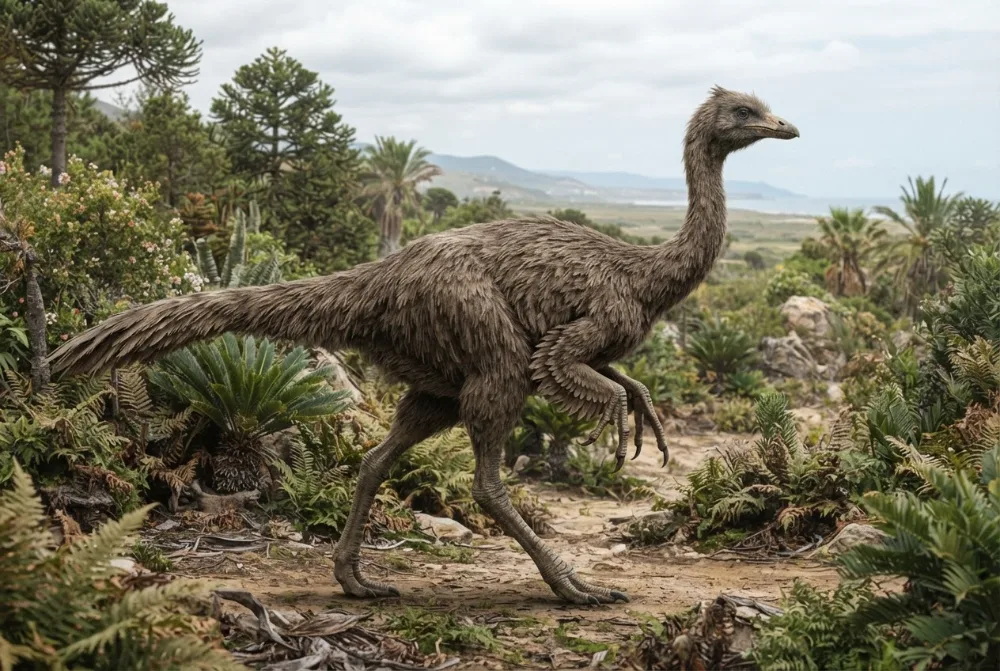
 wautali ngati agalu 6 otsatizana mphuno ndi mchira🍌wautali ngati nthochi 32 zotsatizana🍉wolemera ngati mavwende 120🧸wolemera ngati ana a sukulu ya mkaka 32🎒wolemera ngati ana a sukulu 19🏃akanatha kuthamanga mamita 100 m'masekondi 6.8 (munthu waliwiro kwambiri amafunika 9.6)
Paraxenisaurus anali wamkulu bwanji poyerekeza ndi IWEYO?
Ndi masamu chabe mu msakatuli wako. Palibe chimene chimasungidwa kapena kutumizidwa kwina kulikonse.
Anali ndi liwiro lotani?


Mfundo zosangalatsa
Paraxenisaurus is the only member of its family, Deinocheiridae, known from the ancient continent of Laramidia.1
Its tail was very long and stiff, with little up-and-down movement, unlike many other ornithomimosaurs.1
It still had a first toe, a feature lost in many other ornithomimosaurs.1
The species name 'normalensis' honors the Benemérita Normal School of Coahuila, where the fossils are kept.1
Its fossils were found in rocks that were once a coastal floodplain with rivers and forests.1
Mafunso ofunsidwa kwambiri okhudza Paraxenisaurus
?How big was Paraxenisaurus?
It was about 5.7 metres (19 feet) long and weighed around 600 kilograms (1,300 pounds). That's roughly as big as a close relative called Beishanlong.1
?What did Paraxenisaurus eat?
It was probably an herbivore or omnivore, meaning it ate plants and maybe small animals. It had clawed hands that could grab food.3
?When did Paraxenisaurus live?
It lived during the Late Cretaceous Period, about 72 to 66 million years ago.1
?Where was Paraxenisaurus found?
Its fossils were found in the Cerro del Pueblo Formation in Coahuila, Mexico. That area was once a coastal floodplain with rivers and forests.1
Kwa akatswiri a madino
- Dzina la sayansi
- Paraxenisaurus
- Anapatsidwa dzina ndi
- Serrano-Brañas et al. 20203
- Gulu
- Madino a nthiwatiwa
- Banja / kladi
- Deinocheiridae3
- Magawidwe a sayansi
- Theropoda > Ornithomimosauria3
- Zaka za miyala
- zaka 84 mpaka 72 miliyoni (Campanian)3
- Mapangidwe a miyala
- Cerro del Pueblo3
- Mayiko
- Mekisiko3
- Zolemba za mafosili
- 1 mu The Paleobiology Database3
- Kupezeka
- Paraxenisaurus was named in 2020 by Mexican paleontologists Claudia Serrano-Brañas and colleagues, based on bones collected in the 1990s from three sites in Coahuila, Mexico.1
- Akukambiranabe
- Scientists are not sure how big Paraxenisaurus grew, because only a few bones have been found.1
Kumene mfundo zimachokera
- Paraxenisaurus (en.wikipedia.org)
- PBDB Taxon (paleobiodb.org)
- Paraxenisaurus in The Paleobiology Database (CC BY 4.0): zaka, malo, mapangidwe a miyala, magawidwe a sayansi.
Mfundo iliyonse patsamba lino ili ndi nambala yosonyeza kumene yachokera. Ngati talakwitsa kanthu, pepa, ndife okonda madino, osati magazini ya sayansi. Tiuze pa [email protected] ndipo tikonza.
 Rex ali ndi njala! Dino Wiki ndi ntchito ya bambo kwa mwana wawo wamwamuna wokonda madainoso, yaulere popanda zotsatsa ndi zokazonda. Akuluakulu angadyetse Rex zokhwasula-khwasula kuti tsambali lipitirize kupezeka pa intaneti.Dyetsa Rex
 Gallimimus
 Ornithomimus
 Struthiomimus
 Deinocheirus
 Dromiceiomimus
 Archaeornithomimus
 Tyrannosaurus
 Triceratops
 Velociraptor
 Spinosaurus
 Ankylosaurus
 Parasaurolophus