 Kwizi ya Ndiwe dino uti?
 Nkhondo ya madino
 Mpikisano wa madino
 Masewera ang'onoang'ono a madino
 Chimbale cha zomata
 Mindandanda ya TOP ya madino
 Ndidabwitse!
Qiupanykus
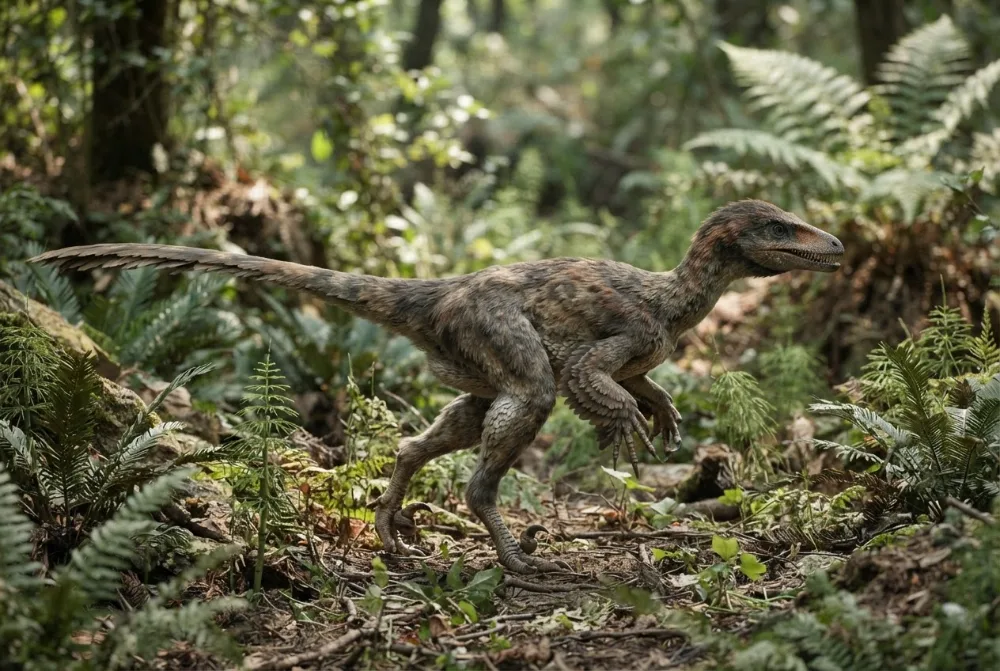
Qiupanykus was a tiny, speedy dinosaur that lived at the very end of the age of dinosaurs. It had strong claws on its short arms and may have used them to crack open eggs for a snack. This little hunter was one of the last non-bird dinosaurs to walk the Earth.1
Ankakhala liti?
Anali wamkulu bwanji?
Ankalemera bwanji?
Qiupanykus anali wamkulu bwanji poyerekeza ndi IWEYO?
Ndi masamu chabe mu msakatuli wako. Palibe chimene chimasungidwa kapena kutumizidwa kwina kulikonse.
Anali ndi liwiro lotani?


Mfundo zosangalatsa
Qiupanykus was very small, weighing less than a kilogram (about 2 pounds). Its leg bones were only about 25 cm (10 inches) long.1
Its fossils were found right next to broken eggshells from an oviraptorosaur. Scientists think Qiupanykus used its strong claws to crack those eggs open.12
Qiupanykus lived about 72 to 66 million years ago, during the Maastrichtian stage of the Late Cretaceous. That means it was alive right before the big dinosaur extinction.13
Like other alvarezsaurids, Qiupanykus had a special foot called an arctometatarsus, which helped it run fast.1
No skull bones of Qiupanykus have been found yet, so scientists are not sure what its head looked like.1
The name Qiupanykus means 'claw from the Qiupa Formation', because its fossils were found in the Qiupa Formation in China.1
Wothetsa nthano zabodza
Nthano: Some people think all small dinosaurs were plant-eaters.
Zoona: Qiupanykus was a small dinosaur, but it was a meat-eater. It may have eaten eggs and small animals.1
Kwa akatswiri a madino
- Dzina la sayansi
- Qiupanykus
- Anapatsidwa dzina ndi
- Lü et al. 20184
- Gulu
- Madino odya nyama
- Banja / kladi
- Alvarezsauroidea4
- Magawidwe a sayansi
- Theropoda4
- Zaka za miyala
- zaka 72 mpaka 66 miliyoni (Maastrichtian)4
- Mapangidwe a miyala
- Qiupa4
- Mayiko
- China4
- Zolemba za mafosili
- 1 mu The Paleobiology Database4
- Kupezeka
- Qiupanykus was named in 2018 by Lü Junchang and his team. The fossils were found near the village of Guanping in Luanchuan County, Henan Province, China. The species name zhangi honors Shuancheng Zhang, who helped find the fossils.1
- Akukambiranabe
- Scientists are not sure whether Qiupanykus mostly ate eggs or also hunted small animals. They also debate if the eggshells found with it belonged to another dinosaur or to Qiupanykus itself.1
Kumene mfundo zimachokera
- Qiupanykus (en.wikipedia.org)
- A new alvarezsaurid dinosaur from the Late Cretaceous Qiupa Formation of Luanchuan, Henan Province, central China (exa.ai)
- PBDB Taxon (paleobiodb.org)
- Qiupanykus in The Paleobiology Database (CC BY 4.0): zaka, malo, mapangidwe a miyala, magawidwe a sayansi.
Mfundo iliyonse patsamba lino ili ndi nambala yosonyeza kumene yachokera. Ngati talakwitsa kanthu, pepa, ndife okonda madino, osati magazini ya sayansi. Tiuze pa [email protected] ndipo tikonza.
 Rex ali ndi njala! Dino Wiki ndi ntchito ya bambo kwa mwana wawo wamwamuna wokonda madainoso, yaulere popanda zotsatsa ndi zokazonda. Akuluakulu angadyetse Rex zokhwasula-khwasula kuti tsambali lipitirize kupezeka pa intaneti.Dyetsa Rex
 Allosaurus
 Carnotaurus
 Dilophosaurus
 Giganotosaurus
 Compsognathus
 Paronychodon
 Tyrannosaurus
 Triceratops
 Velociraptor
 Spinosaurus
 Ankylosaurus
 Parasaurolophus