 Kwizi ya Ndiwe dino uti?
 Nkhondo ya madino
 Mpikisano wa madino
 Masewera ang'onoang'ono a madino
 Chimbale cha zomata
 Mindandanda ya TOP ya madino
 Ndidabwitse!
Ankakhala liti?

Anali wamkulu bwanji?
Anali wautali bwanji?
Msinkhu wake unali wautali bwanji?
Ankalemera bwanji?
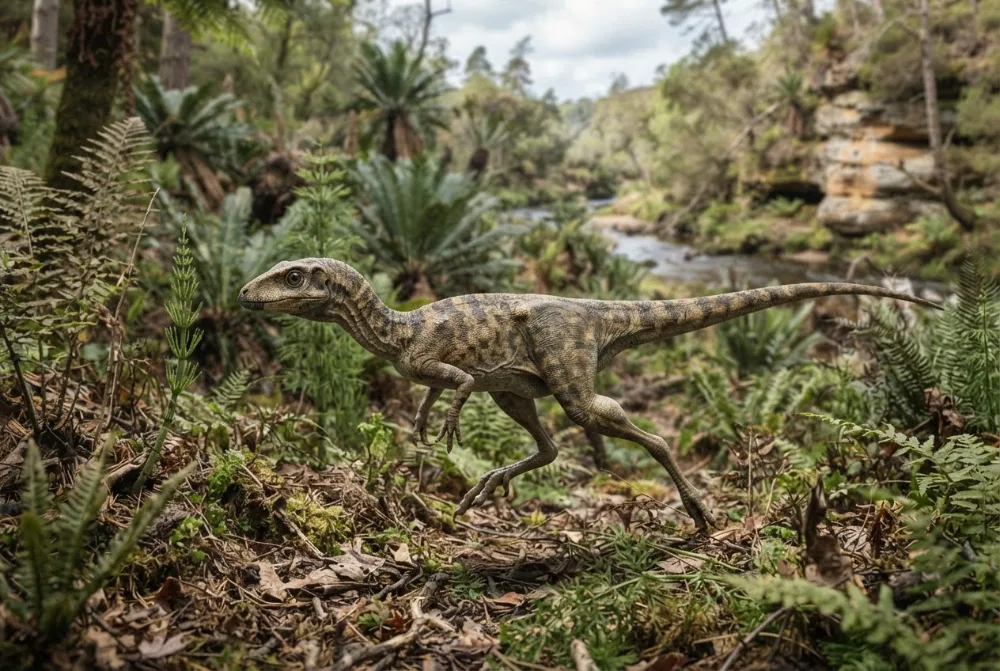
 wautali ngati amphaka a pakhomo 2 otsatizana mphuno ndi mchira🍌wautali ngati nthochi 6 zotsatizana🪶wopepuka kuposa mphaka wa pakhomo🍌wolemera ngati nthochi 8🪑wamng'ono moti angayende pansi pa mpando🏃akanatha kuthamanga mamita 100 m'masekondi 24 (munthu waliwiro kwambiri amafunika 9.6)
Saltopus anali wamkulu bwanji poyerekeza ndi IWEYO?
Ndi masamu chabe mu msakatuli wako. Palibe chimene chimasungidwa kapena kutumizidwa kwina kulikonse.
Anali ndi liwiro lotani?


Mfundo zosangalatsa
Saltopus had hollow bones, just like birds and many other dinosaurs, which made it light and fast.1
The only known fossil of Saltopus was discovered in 1867 by William Taylor, but it was not named until 1910 by Friedrich von Huene.1
Saltopus had five fingers on each hand, but the fourth and fifth fingers were smaller than the others.1
Scientists are not sure if Saltopus was a true dinosaur or a very close relative. Some think it might be the closest relative of all dinosaurs.1
The fossil of Saltopus is mostly impressions and natural casts in sandstone, with very little actual bone preserved.1
Saltopus lived between 237 and 205 million years ago, during the Carnian to Norian stages of the Late Triassic.3
Mafunso ofunsidwa kwambiri okhudza Saltopus
?How big was Saltopus?
About 80 to 100 centimetres (31 to 39 inches) long, about the size of a domestic cat. It may have weighed around 1 kilogram (2.2 pounds).1
?Was Saltopus a dinosaur?
Scientists are not sure. It is a dinosauriform, a close relative of dinosaurs, and some studies think it might be the closest relative of true dinosaurs, while others think it was an early archosaur.1
?What did Saltopus eat?
It was a carnivore, or meat-eater, and it may have eaten mostly insects and other small prey.2
?When did Saltopus live?
It lived during the Late Triassic period, about 237 to 205 million years ago.1
?Where was Saltopus found?
Its only fossil was found in Scotland, in the Lossiemouth Sandstone Formation.1
?Why is it called Saltopus?
The name means 'hopping foot', from Latin and Greek words, because it probably hopped or jumped around.1
Kwa akatswiri a madino
- Dzina la sayansi
- Saltopus
- Anapatsidwa dzina ndi
- Huene 19103
- Gulu
- Madainoso oyamba
- Banja / kladi
- Saurischia3
- Zaka za miyala
- zaka 237 mpaka 206 miliyoni (Carnian / Norian)3
- Mapangidwe a miyala
- Lossiemouth Sandstone3
- Mayiko
- United Kingdom3
- Zolemba za mafosili
- 1 mu The Paleobiology Database3
- Kupezeka
- The only fossil of Saltopus was found in 1867 by William Taylor in Scotland. It was first thought to be another animal, but in 1910 Friedrich von Huene named it Saltopus elginensis.1
- Akukambiranabe
- Scientists still debate whether Saltopus was a true dinosaur or a dinosauriform (a close relative). Some recent studies suggest it might be one of the earliest ornithischian dinosaurs.1
Kumene mfundo zimachokera
- Saltopus (en.wikipedia.org)
- Saltopus Fact Sheet (enchantedlearning.com)
- Saltopus in The Paleobiology Database (CC BY 4.0): zaka, malo, mapangidwe a miyala, magawidwe a sayansi.
Mfundo iliyonse patsamba lino ili ndi nambala yosonyeza kumene yachokera. Ngati talakwitsa kanthu, pepa, ndife okonda madino, osati magazini ya sayansi. Tiuze pa [email protected] ndipo tikonza.
 Rex ali ndi njala! Dino Wiki ndi ntchito ya bambo kwa mwana wawo wamwamuna wokonda madainoso, yaulere popanda zotsatsa ndi zokazonda. Akuluakulu angadyetse Rex zokhwasula-khwasula kuti tsambali lipitirize kupezeka pa intaneti.Dyetsa Rex
 Herrerasaurus
 Tawa
Tawa Chindesaurus
 Nyasasaurus
 Staurikosaurus
 Alwalkeria
 Nothosaurus
 Massospondylus
 Plateosaurus
 Coelophysis
 Podokesaurus
 Simosaurus