 Kwizi ya Ndiwe dino uti?
 Nkhondo ya madino
 Mpikisano wa madino
 Masewera ang'onoang'ono a madino
 Chimbale cha zomata
 Mindandanda ya TOP ya madino
 Ndidabwitse!
Saraikimasoom
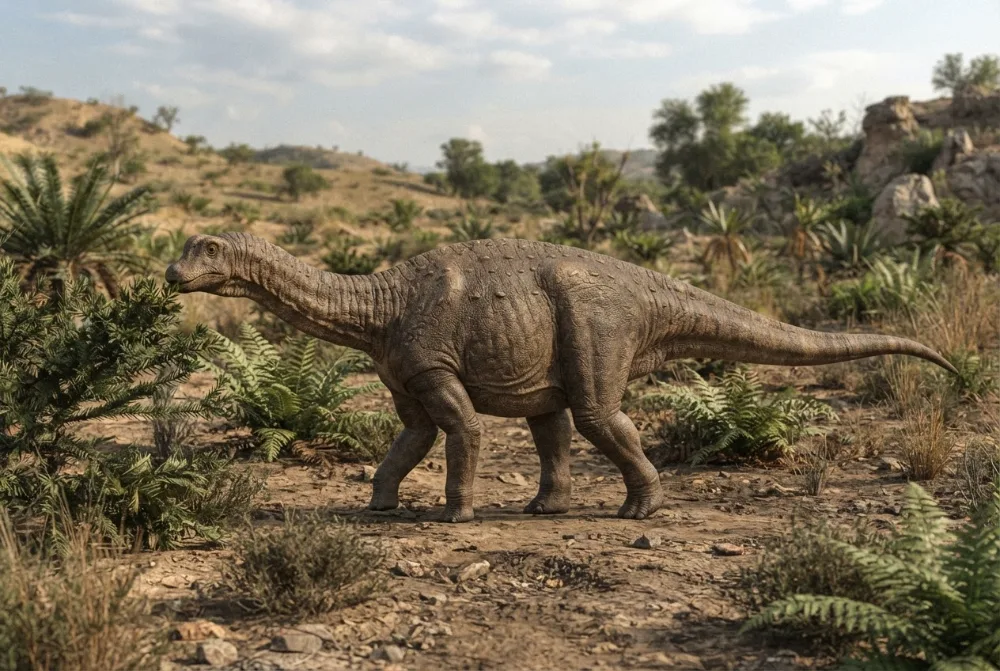
Saraikimasoom was a small, stocky long-necked dinosaur that lived about 72 to 66 million years ago in what is now Pakistan. It had a small skull, a long neck, a round body, and short legs, making it one of the smallest titanosaurs ever found in the Indo-Pakistan region.21
Ankakhala liti?
Anali wamkulu bwanji?
Anali wautali bwanji?
Msinkhu wake unali wautali bwanji?
Ankalemera bwanji?
 wautali ngati magalimoto 2 oimikidwa pamzere🍌wautali ngati nthochi 56 zotsatizana
 wolemera pafupifupi ngati njovu🍉wolemera ngati mavwende 1000🎒wolemera ngati makalasi athunthu a ana a sukulu 6🐻❄️wolemera ngati zimbalangondo zoyera 11🏃akanatha kuthamanga mamita 100 m'masekondi 19 (munthu waliwiro kwambiri amafunika 9.6)
Saraikimasoom anali wamkulu bwanji poyerekeza ndi IWEYO?
Ndi masamu chabe mu msakatuli wako. Palibe chimene chimasungidwa kapena kutumizidwa kwina kulikonse.
Anali ndi liwiro lotani?


Mfundo zosangalatsa
Saraikimasoom had a very small skull, only about 15 to 18 centimeters long and 7 to 9 centimeters high, which is tiny for a dinosaur of its size.1
Its teeth were small, circular, and slightly curved, and they tapered gradually from base to tip, unlike some other titanosaurs whose teeth were more uniform.1
The skull's upper and lower tooth rows were U-shaped, which is a feature shared with its close relative Gspsaurus, but unlike Gspsaurus, the lower tooth row was also U-shaped.1
It had a dental formula of 4, 13/9 to 13, meaning it had 4 premaxillary teeth, 13 maxillary teeth, and 9 to 13 dentary teeth on each side.1
Saraikimasoom is the smallest titanosaur known from the Indo-Pakistan subcontinent, and it was a stocky animal with a round body and short legs.1
Its tail vertebrae were procoelous (hollow in front), except for the first one which was biconvex, a feature that helps scientists classify it as a titanosaur.1
The name Saraikimasoom comes from the Saraiki language, where 'masoom' means innocent, and the species name 'vitakri' honors the Vitakri Formation where it was found.1
Mafunso ofunsidwa kwambiri okhudza Saraikimasoom
?How big was Saraikimasoom?
About 8 to 10 metres long, 2 metres tall at the hip, and weighed around 5 tonnes. That is roughly the length of a school bus.1
?Was Saraikimasoom a dinosaur?
Yes, it was a small, stocky sauropod dinosaur from the Late Cretaceous.13
?What did Saraikimasoom eat?
It was a plant-eater. Its small, conical teeth were good for stripping leaves and soft plants.1
?When did Saraikimasoom live?
It lived about 72 to 66 million years ago, during the very end of the Cretaceous Period.3
?Where was Saraikimasoom found?
Its fossils were discovered in the Vitakri Formation of Balochistan, Pakistan.13
?Is Saraikimasoom the smallest titanosaur?
It is the smallest titanosaur known from the Indo-Pakistan subcontinent, but scientists are not sure if it is the smallest of all titanosaurs.1
?Why is it called Saraikimasoom?
The name comes from the Saraiki language of Pakistan, where 'masoom' means innocent. The species name 'vitakri' honors the Vitakri Formation where it was found.1
?Did Saraikimasoom have feathers?
No, it did not have feathers. It was a sauropod dinosaur, and sauropods are not known to have had feathers.1
Wothetsa nthano zabodza
Nthano: Some people think all titanosaurs were giant, but Saraikimasoom was actually quite small for a titanosaur.
Zoona: Saraikimasoom was about 8 to 10 meters long and weighed about 5 tons, which is small compared to giants like Argentinosaurus, but still big compared to a car.1
Kwa akatswiri a madino
- Dzina la sayansi
- Saraikimasoom
- Anapatsidwa dzina ndi
- Malkani 20143
- Gulu
- Makosi atali
- Banja / kladi
- Gspsauridae3
- Magawidwe a sayansi
- Sauropodomorpha > Sauropoda > Titanosauria > Macronaria3
- Zaka za miyala
- zaka 72 mpaka 66 miliyoni (Maastrichtian)3
- Mapangidwe a miyala
- Vitakri3
- Mayiko
- Pakisitani3
- Zolemba za mafosili
- 12 mu The Paleobiology Database3
- Kupezeka
- Saraikimasoom was first described by M. S. Malkani in 2014, based on a partial skull and other bones found in the Vitakri Formation of Balochistan, Pakistan. The type specimen is stored in the museum of the Geological Survey of Pakistan in Quetta.21
- Akukambiranabe
- Scientists still debate whether Saraikimasoom belongs in its own family, Gspsauridae, or if it is a more primitive titanosaur, and some details of its skull and teeth are still being studied.21
Kumene mfundo zimachokera
- Smallest Titanosaur from Indo-Pakistan Landmass (scirp.org)
- PBDB Taxon (paleobiodb.org)
- Saraikimasoom in The Paleobiology Database (CC BY 4.0): zaka, malo, mapangidwe a miyala, magawidwe a sayansi.
Mfundo iliyonse patsamba lino ili ndi nambala yosonyeza kumene yachokera. Ngati talakwitsa kanthu, pepa, ndife okonda madino, osati magazini ya sayansi. Tiuze pa [email protected] ndipo tikonza.
 Rex ali ndi njala! Dino Wiki ndi ntchito ya bambo kwa mwana wawo wamwamuna wokonda madainoso, yaulere popanda zotsatsa ndi zokazonda. Akuluakulu angadyetse Rex zokhwasula-khwasula kuti tsambali lipitirize kupezeka pa intaneti.Dyetsa Rex
 Brachiosaurus
 Diplodocus
 Brontosaurus
 Argentinosaurus
 Camarasaurus
 Morosaurus
 Tyrannosaurus
 Triceratops
 Velociraptor
 Spinosaurus
 Ankylosaurus
 Parasaurolophus